A wonderful trip to Emilia Romagna
/Tom, Oliver, and I are recently back from a much-needed family vacation and were lucky to spend eight days in Italy. They were itching to use their beautiful new Italian passports (I am hoping to get mine some time in August), I was eager to use my knowledge of the language in real time on the ground, and none of us has been to the homeland since I last went to Florence in 2022.
For this adventure we chose the Emilia Romagna region in part because it is such an excellent destination for food lovers and also because both Ducati and Ferrari have their headquarters and histories there. As I am sure you all know by now, we are big eaters. You probably also know that Oliver is obsessed with motorcycles, particularly Ducatis. And perhaps not surprisingly, he and Tom are Formula 1 maniacs. This means that I have come to appreciate motorcycles and enjoy F1 too.
In any case, as Oliver is one of the least materialistic people ever (which makes him extremely hard to shop for) and his birthday always falls right at the start of spring break, we often consider experiences for his gifts and plan around that. Emilia Romagna fit the bill completely, and I planned a trip that started in Bologna (food and Ducati) and then took us through Maranello (Ferrari), Modena and Parma for food, and Dozza (near Bologna) for a tiny, off-the-beaten-path town for a night before returning home.
Fair warning: this is a huge, lengthy post with many photos. Settle in.
Days 1-4: Bologna
We stayed in the Centro Storico district and although it is a touristy area, it is absolutely abuzz, not least because of its proximity to the University of Bologna. Founded in 1088, Bologna’s University is the oldest continuously operating uni in the world. As our eldest attends St. Andrews, a uni founded in 1413, we thought we knew old. But add a few centuries, and you get the school in Bologna.
As seems to happen every spring break, Oliver was sick before we left and add to that an overnight flight to Munich on which he slept very little, by the time we got to Italy, he was struggling. Our first day was, therefore, primarily one of rest and settling in. We did go to lunch and immediately ordered the two most traditional pasta dishes from the region: tortellini en brodo (meat tortellini in meat broth) and tagliatelle bolognese. As I skew largely vegetarian, I chose the tortelli di zucca (tortelli stuffed with pumpkin).
Afterwards, we walked around Piazza Maggiore and gazed fondly at the Garisenda and Asinelli towers, both symbols of Bologna and both listing in delightfully wonky fashion. Think Leaning Tower of Pisa. They stand at the point where the Via Emilia, an historic Roman road commissioned in 187 B.C. by Marcus Aemilius Lepidus to connect critical military and commercial sites, entered Bologna. It runs east-west through Emilia Romagna, from the Adriatic Coast to the Po River. We encountered it in every city and town we visited. Fortunately, both towers are being restored right now; unfortunately that meant we couldn’t climb either. The views are probably spectacular.
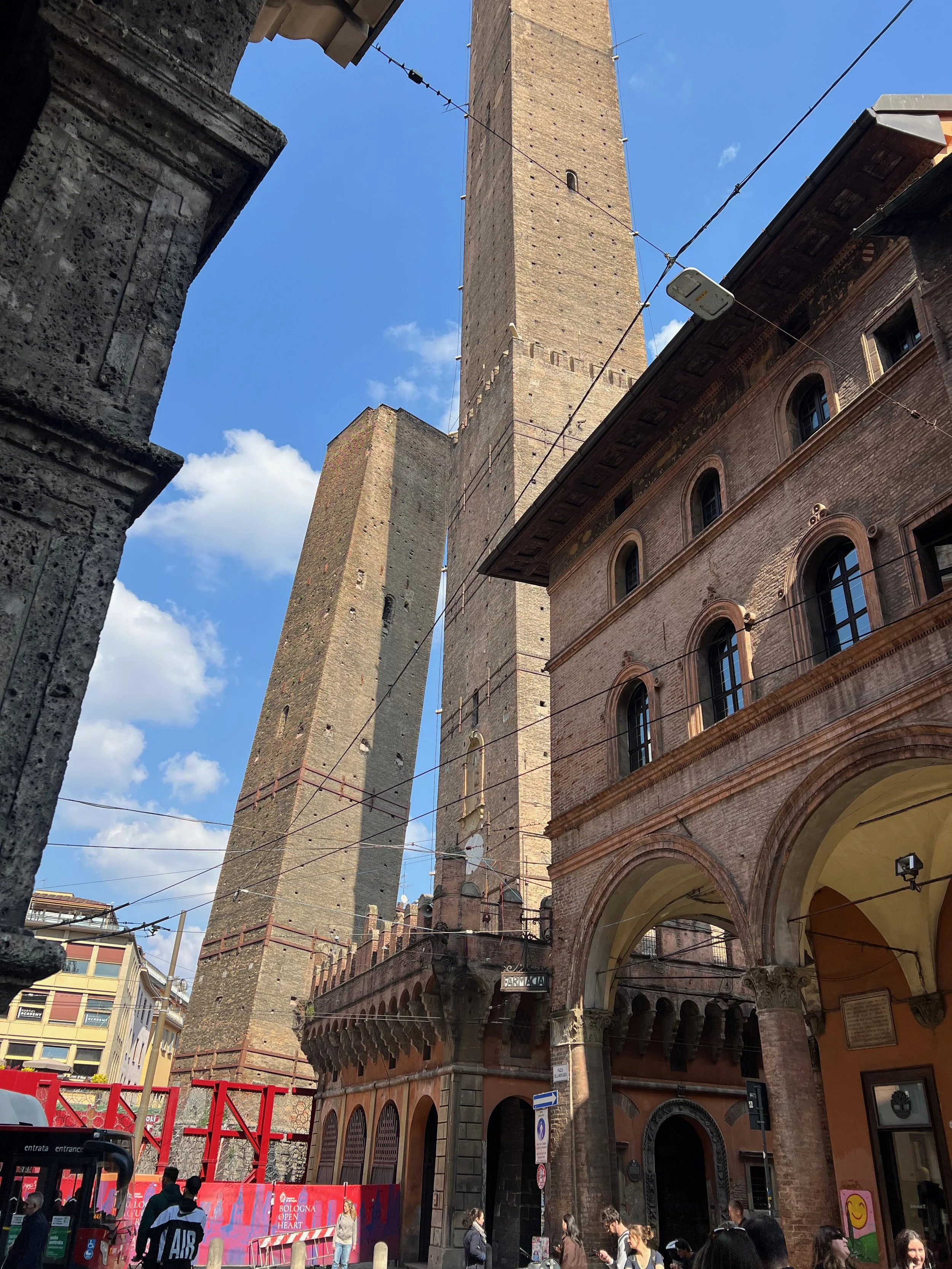
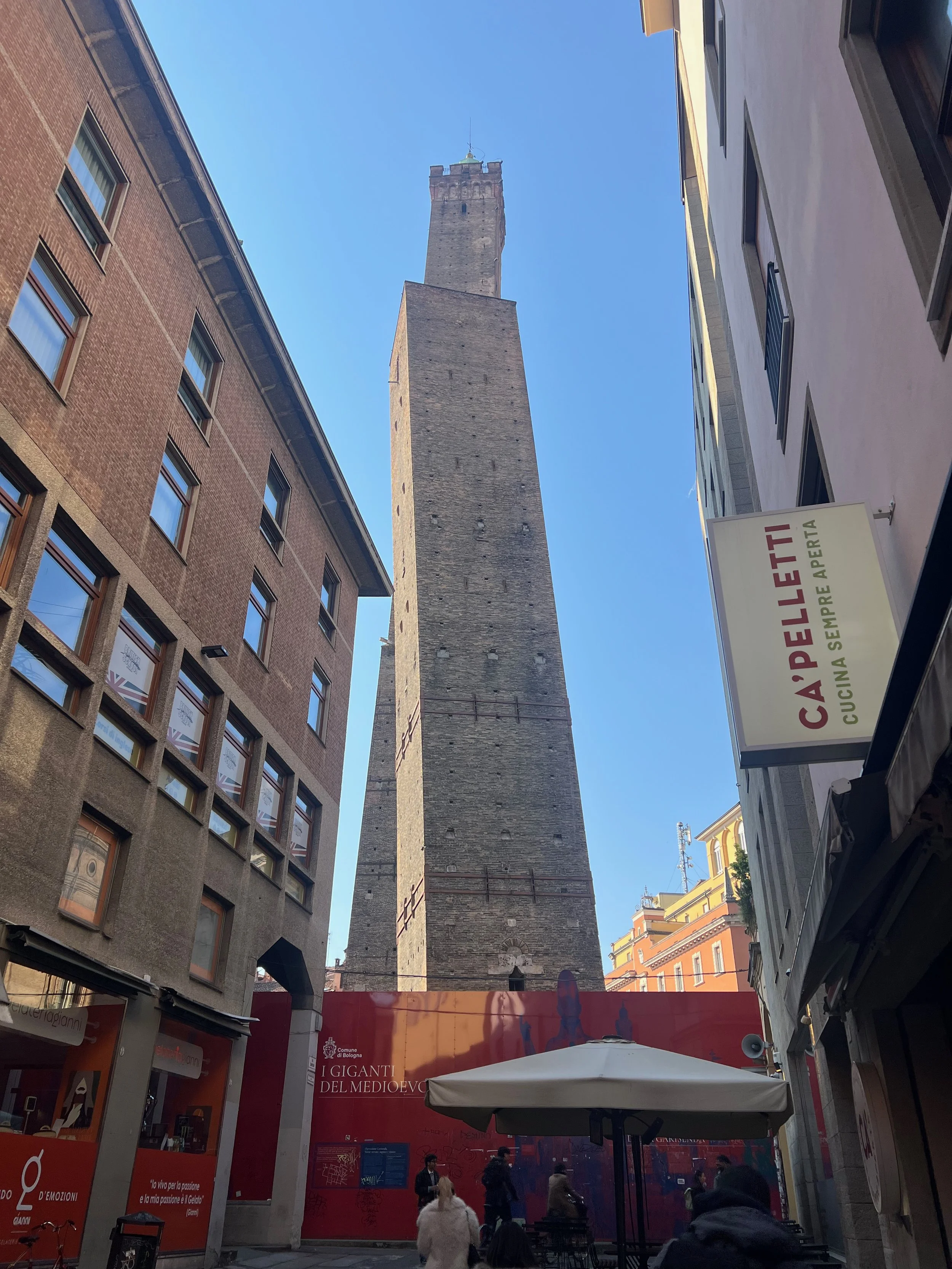
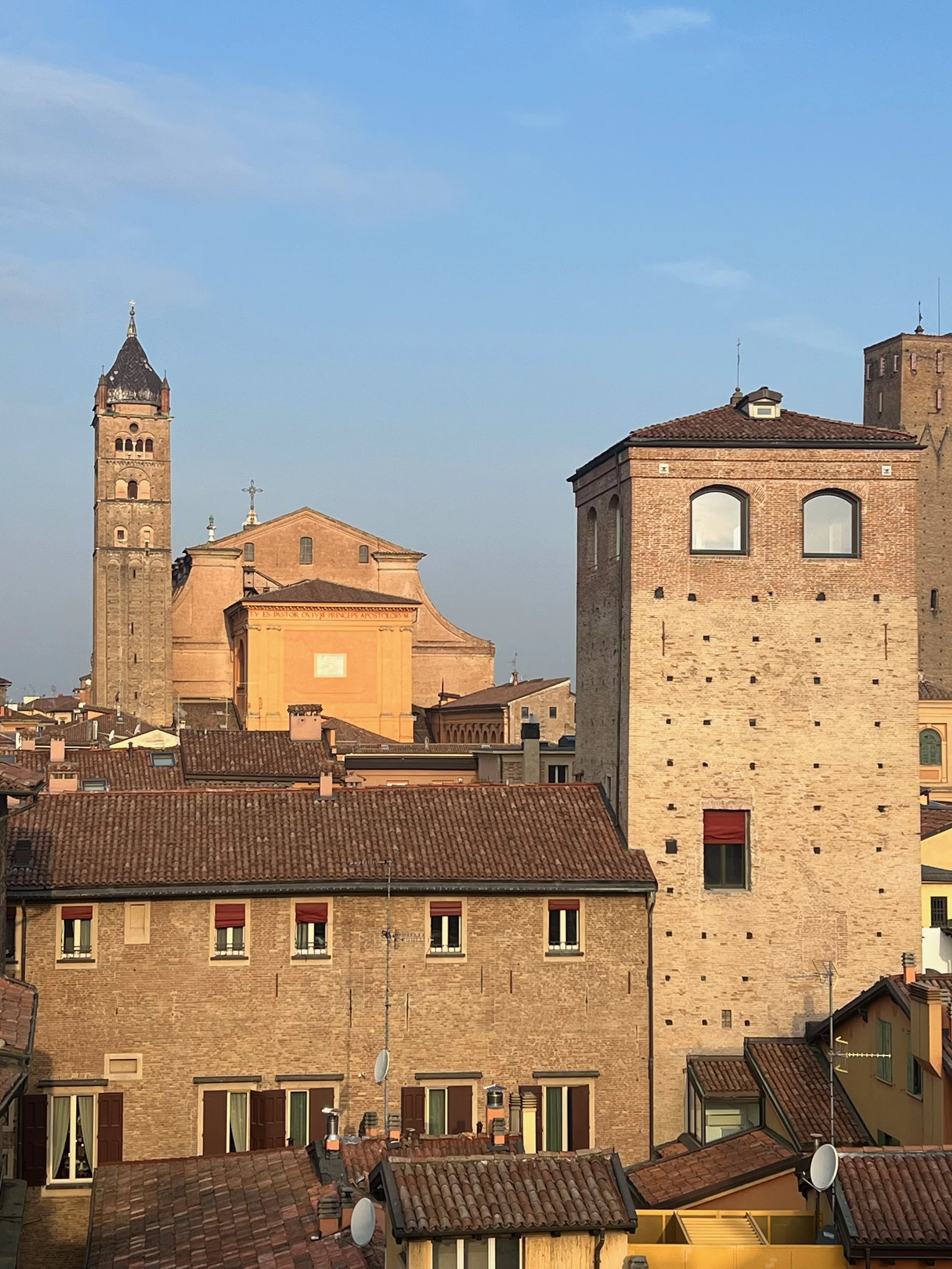
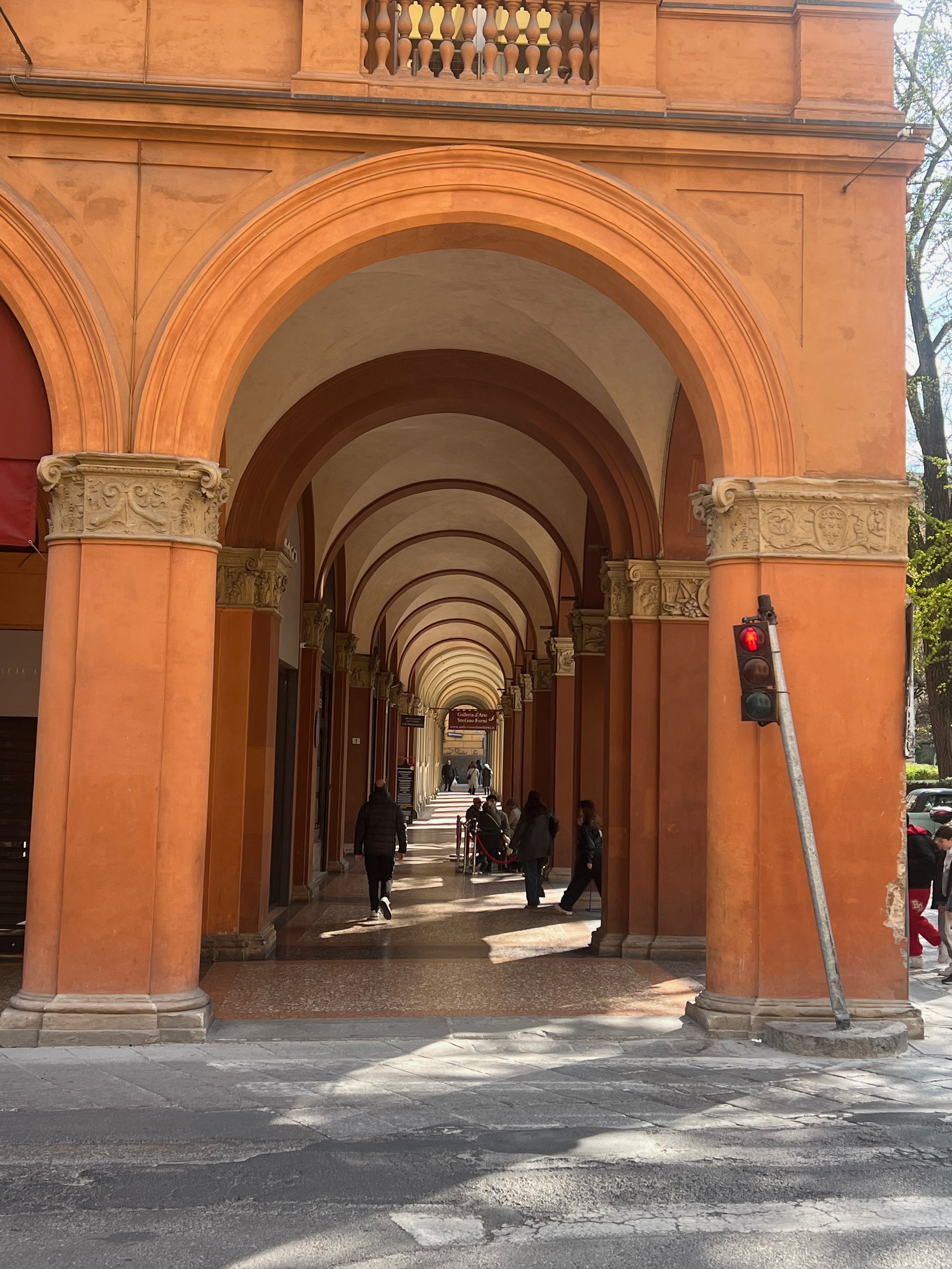
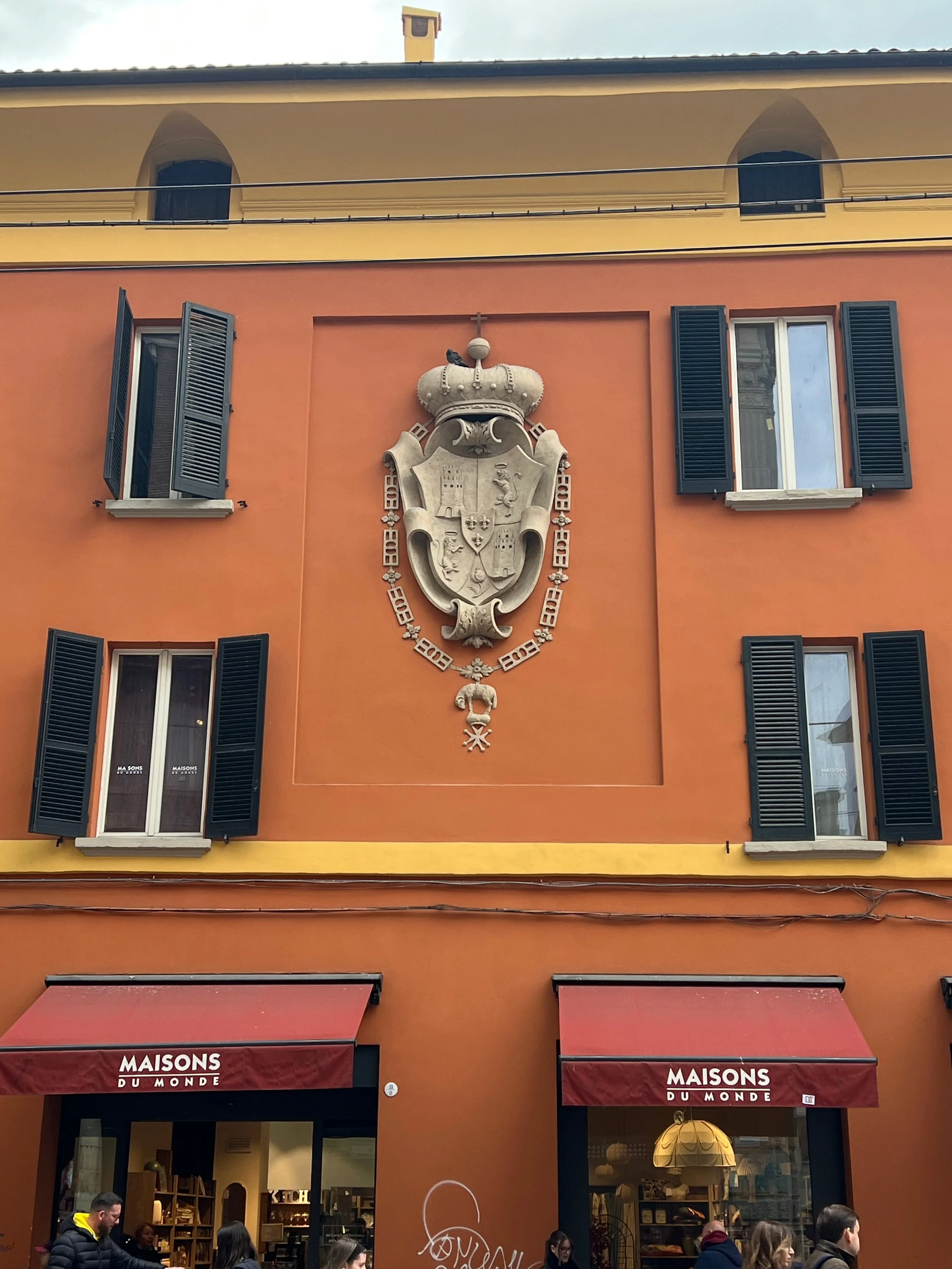
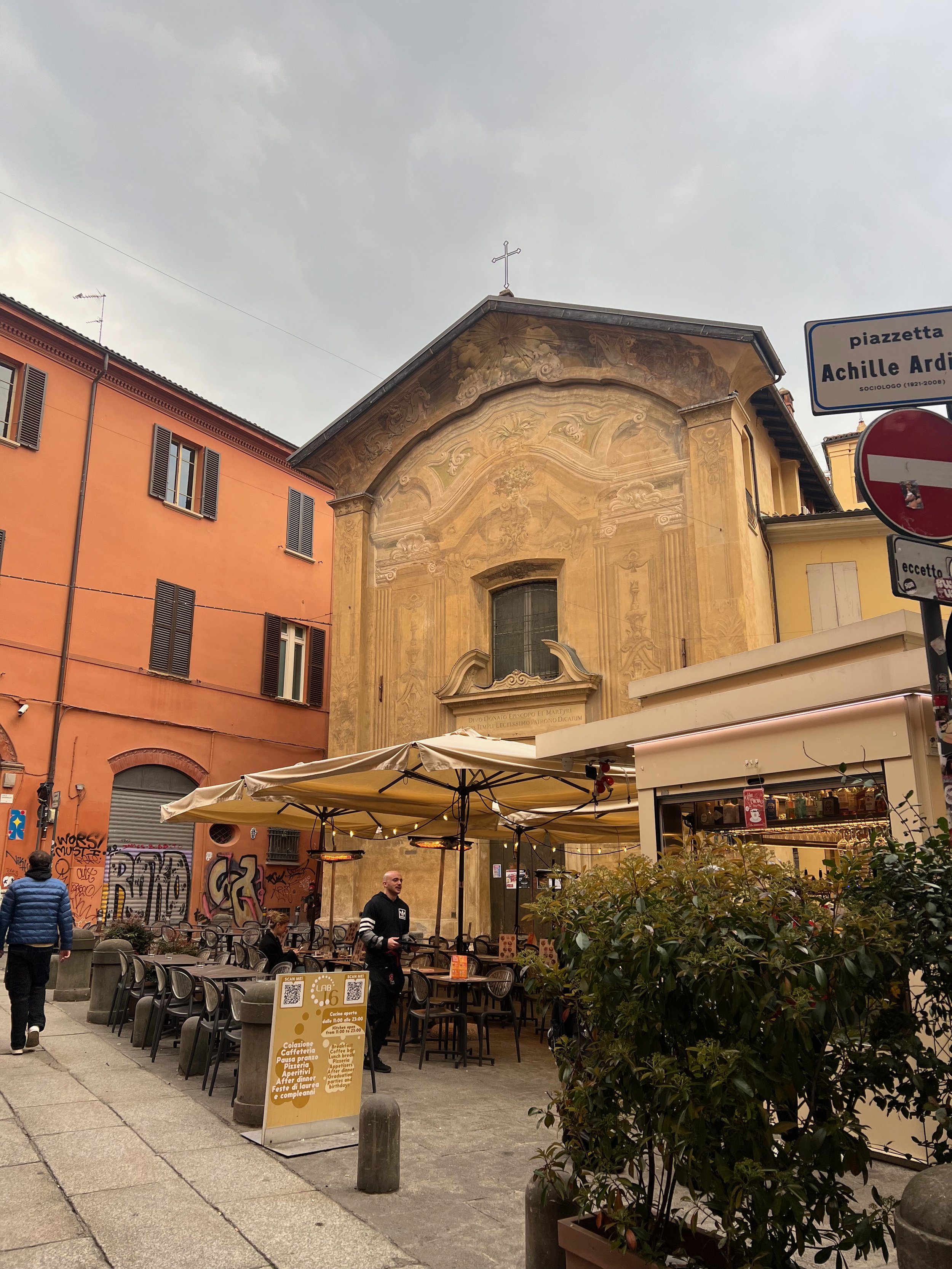
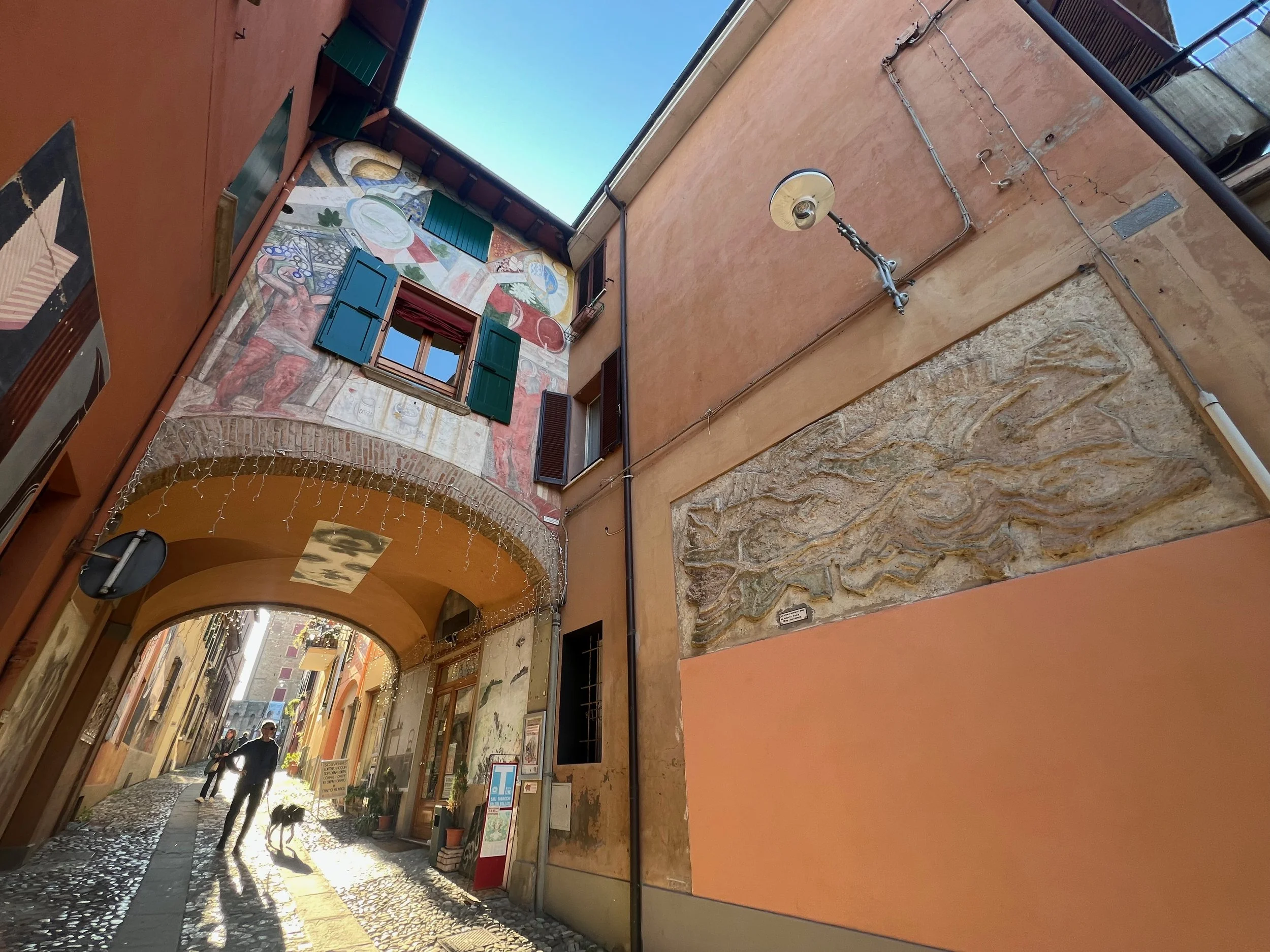
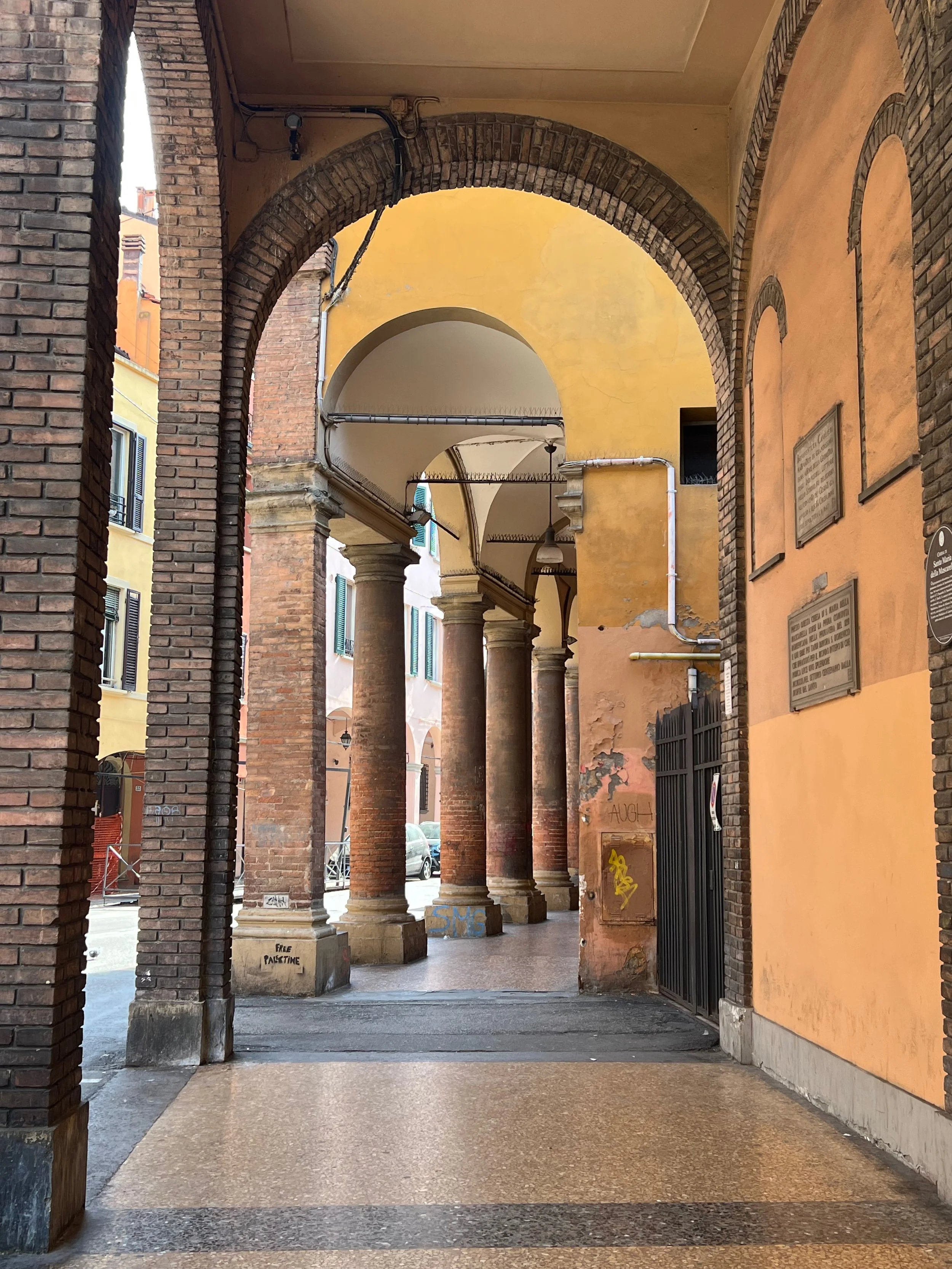
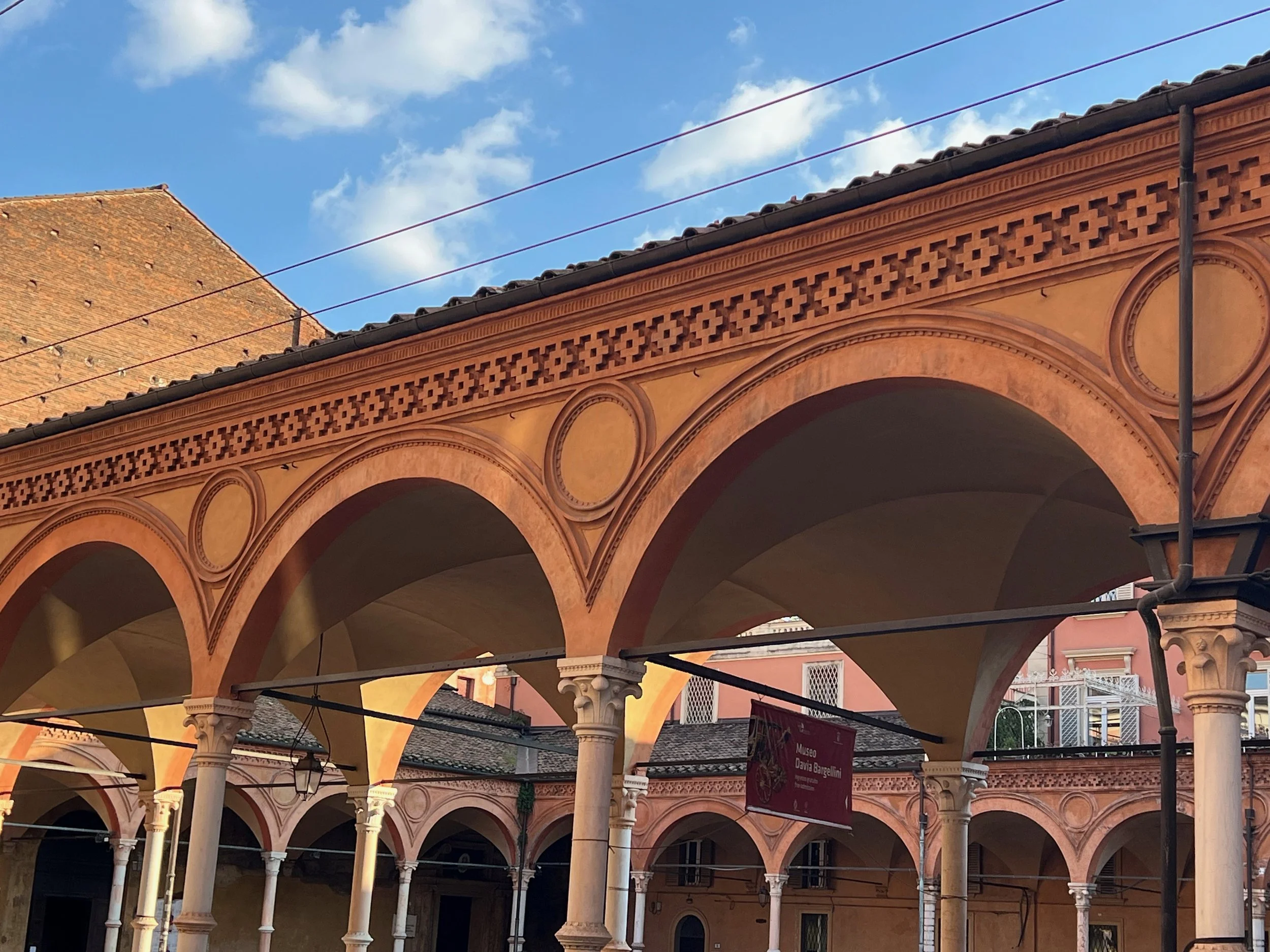
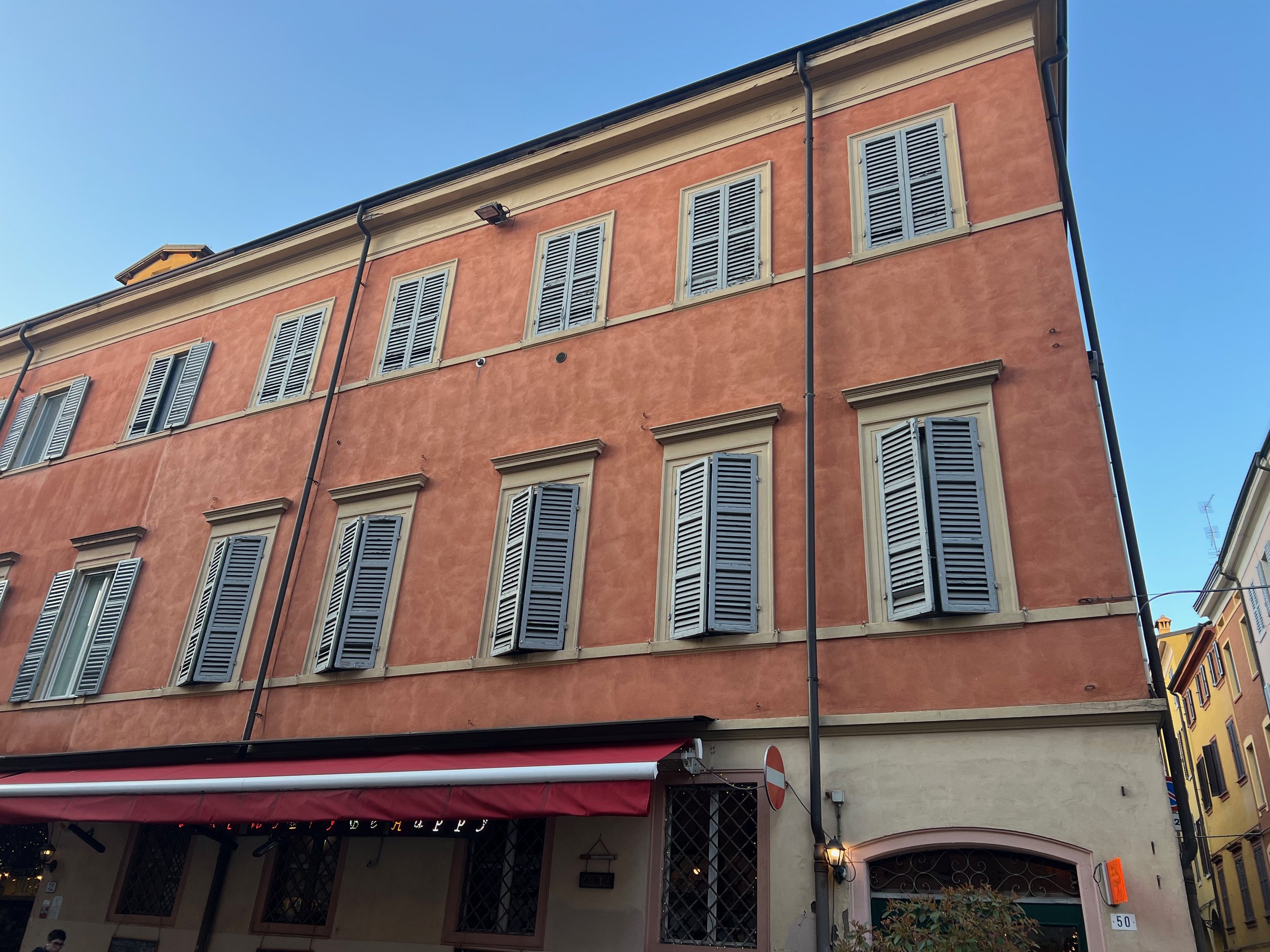
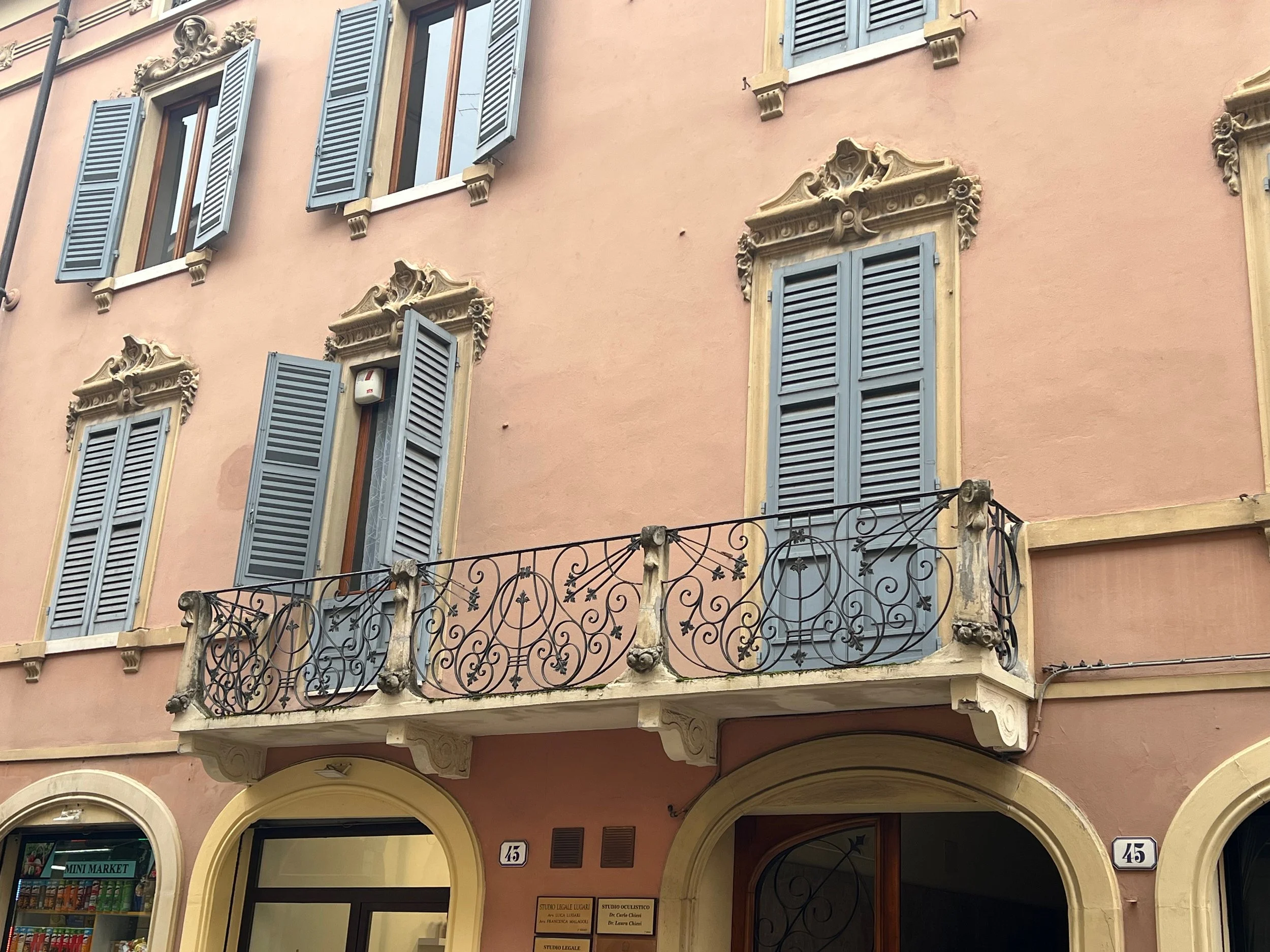
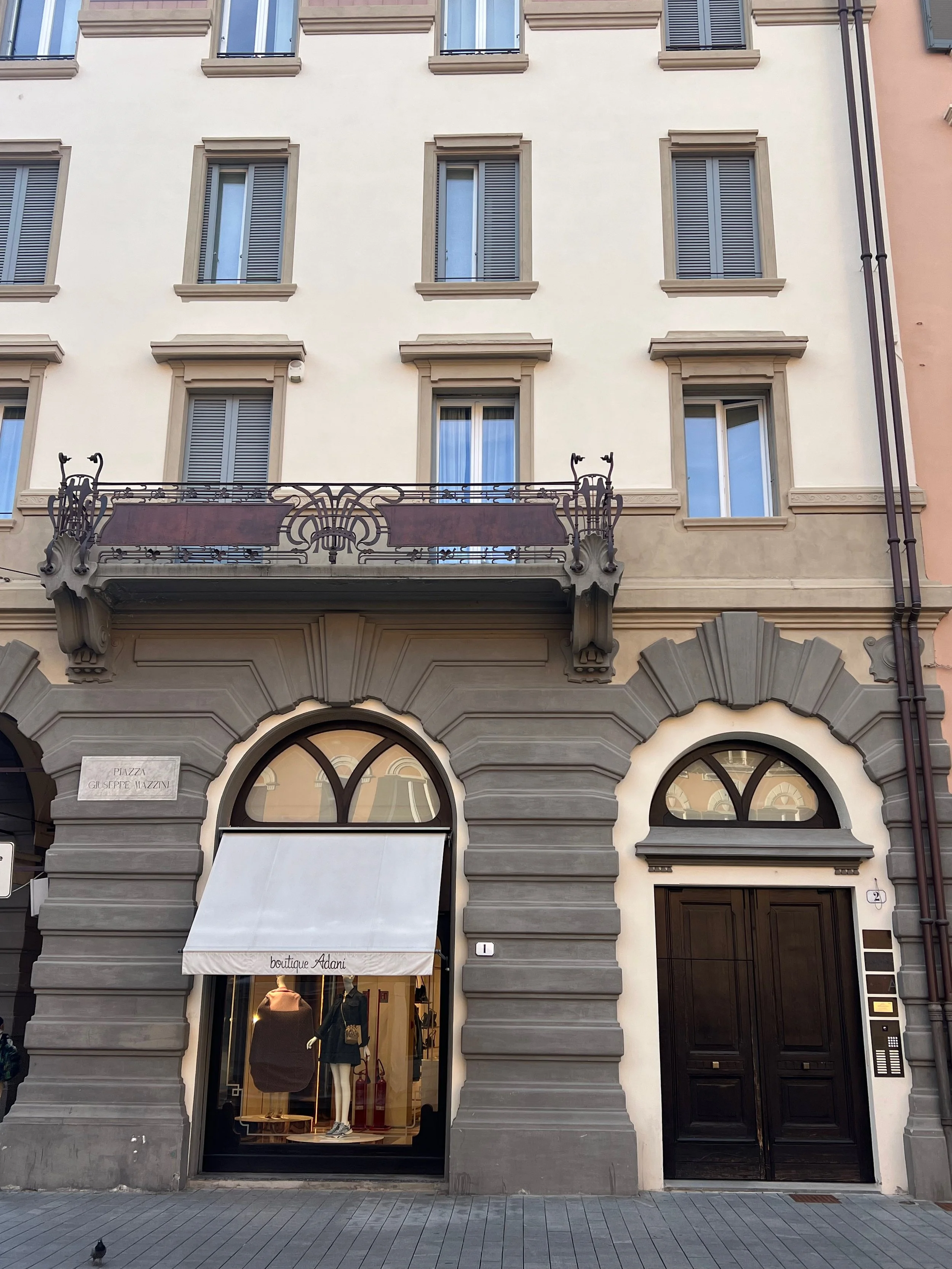
One thing for which my awe never wanes is the way the light in Italy bounces and plays off the stucco in which so many of its buildings are clad. They positively glow and radiate, and the rich sunset-inspired colors cannot be beat. If I built a square home here in Maryland and painted it orange with green shutters, it would not look good. At all. But it is magic in Italy.
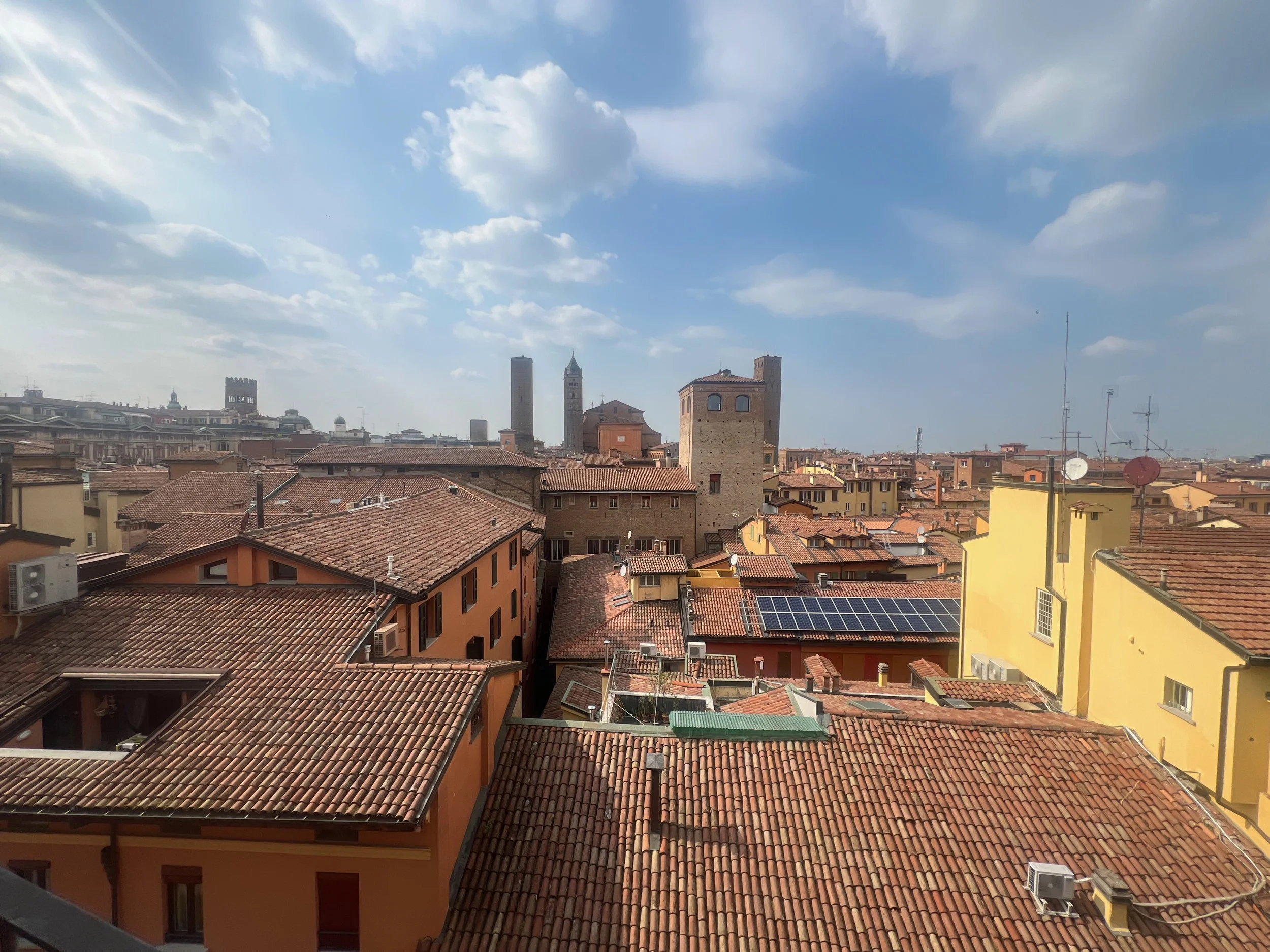
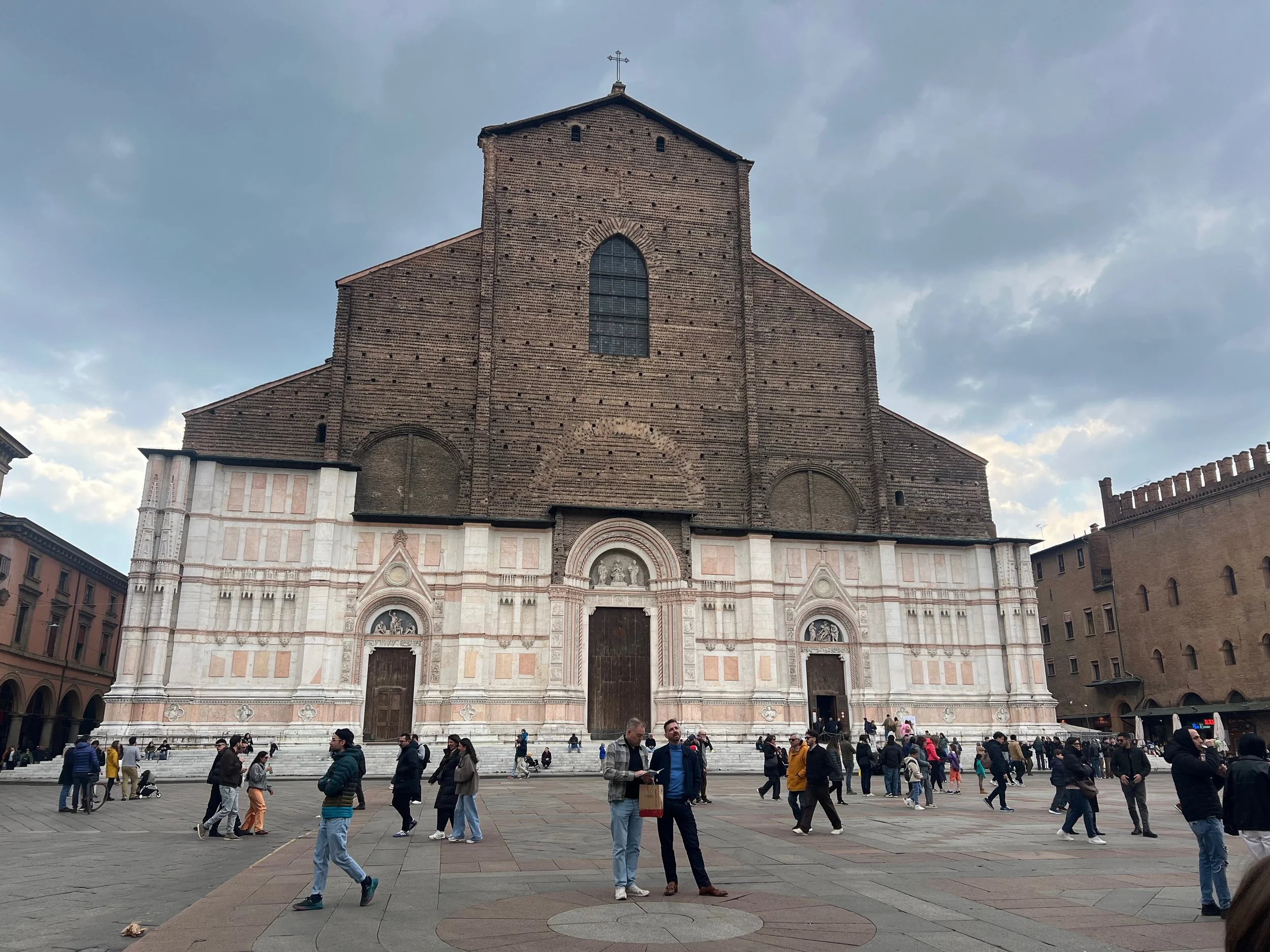
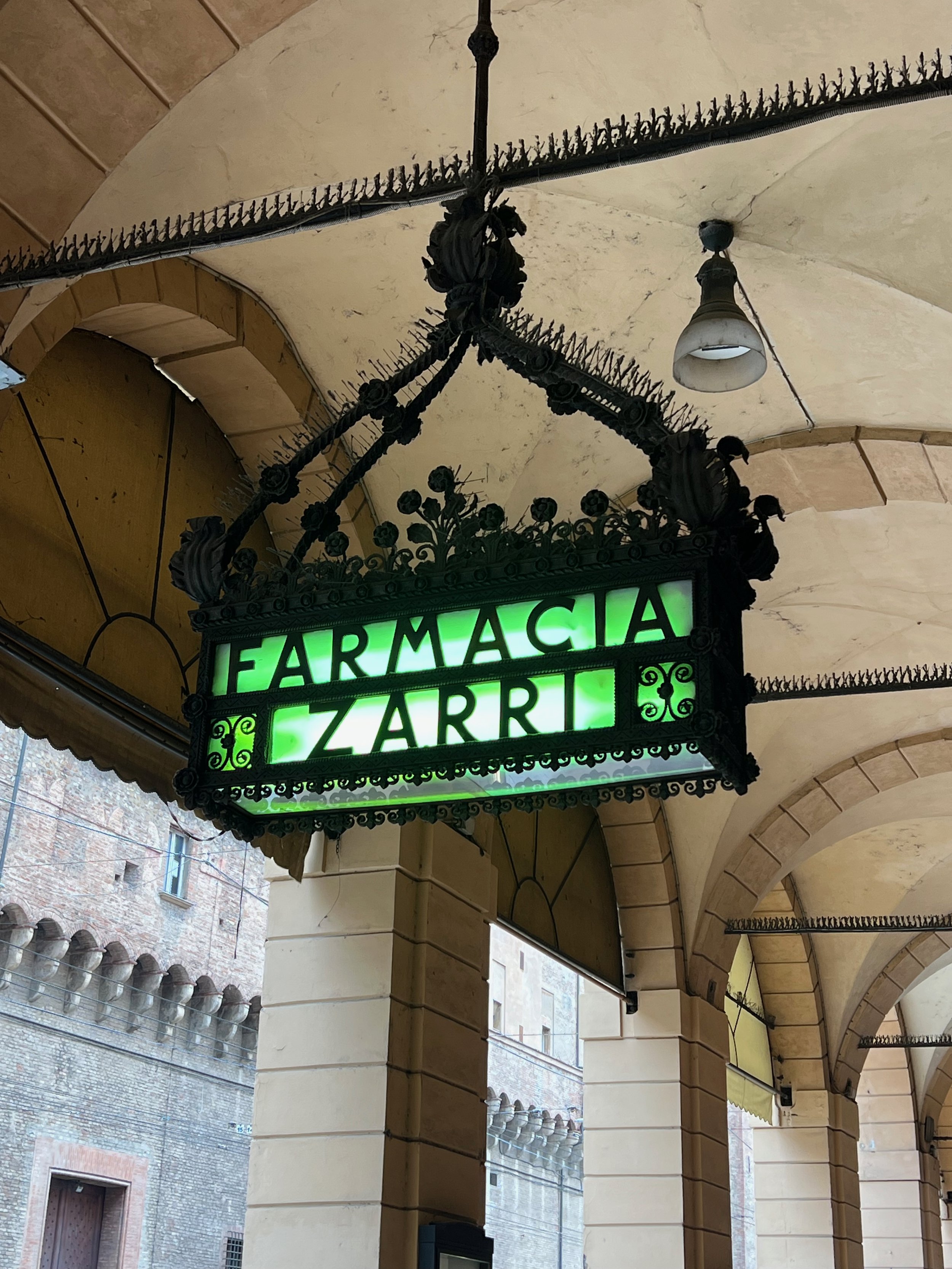
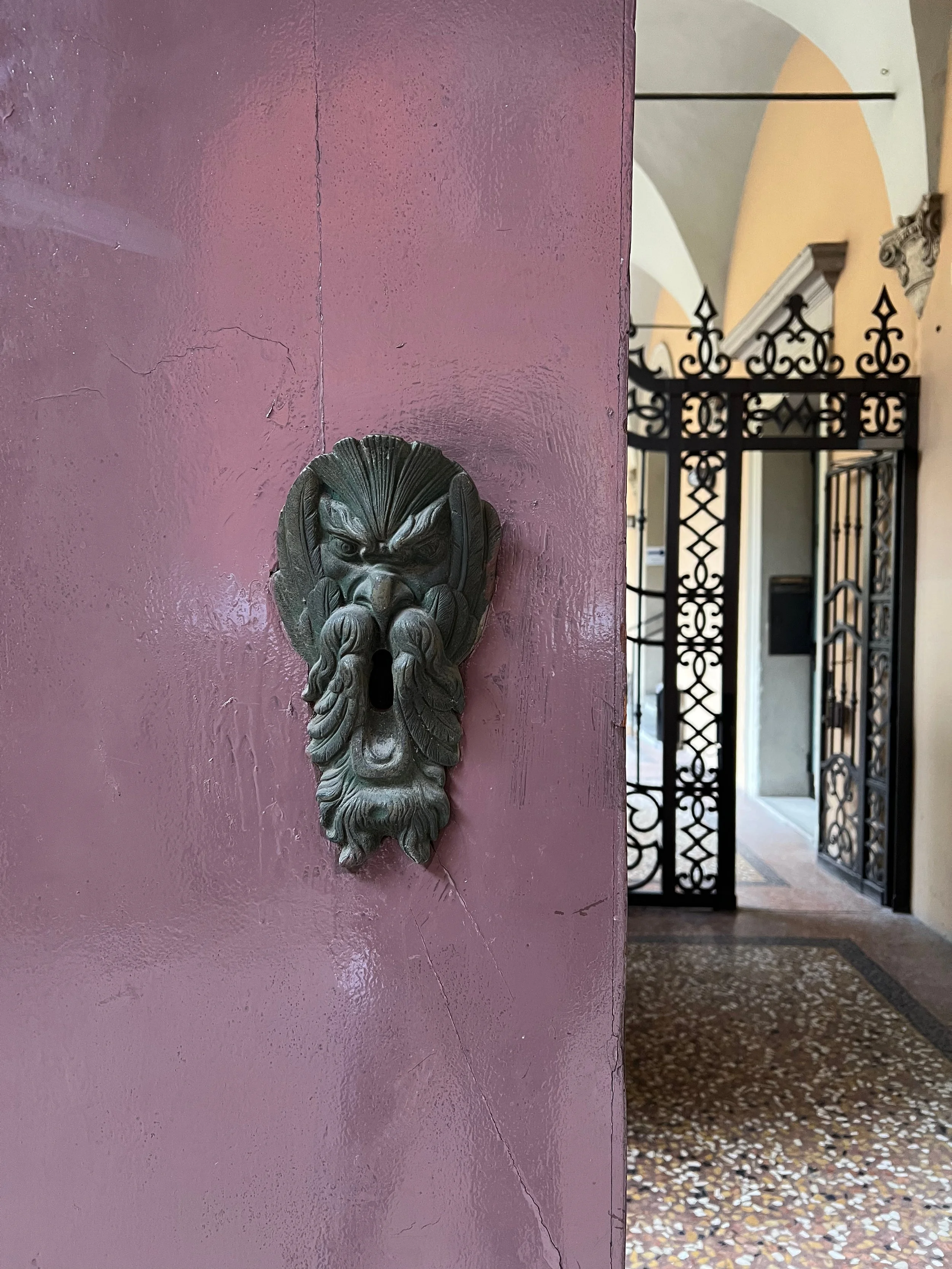
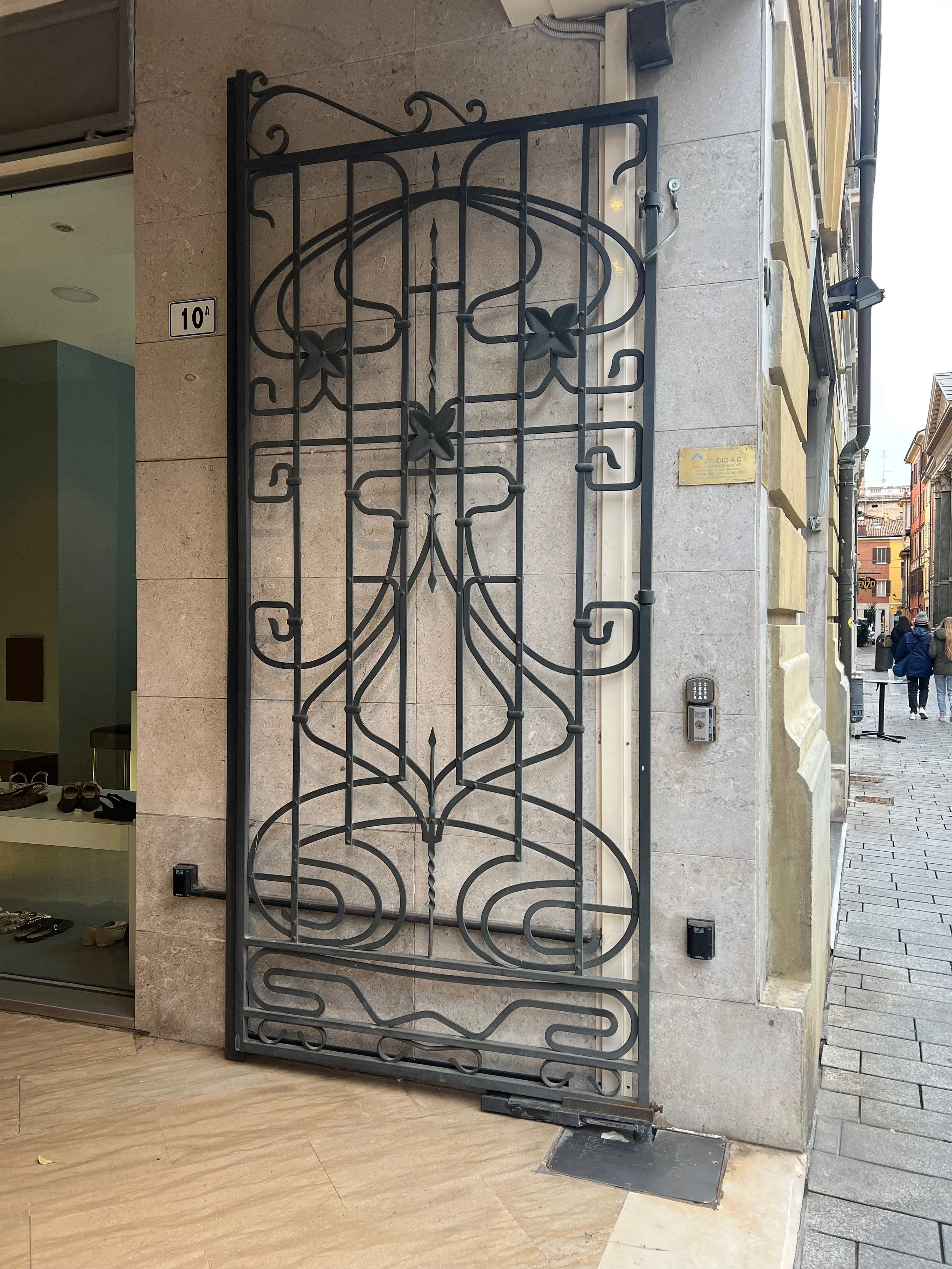
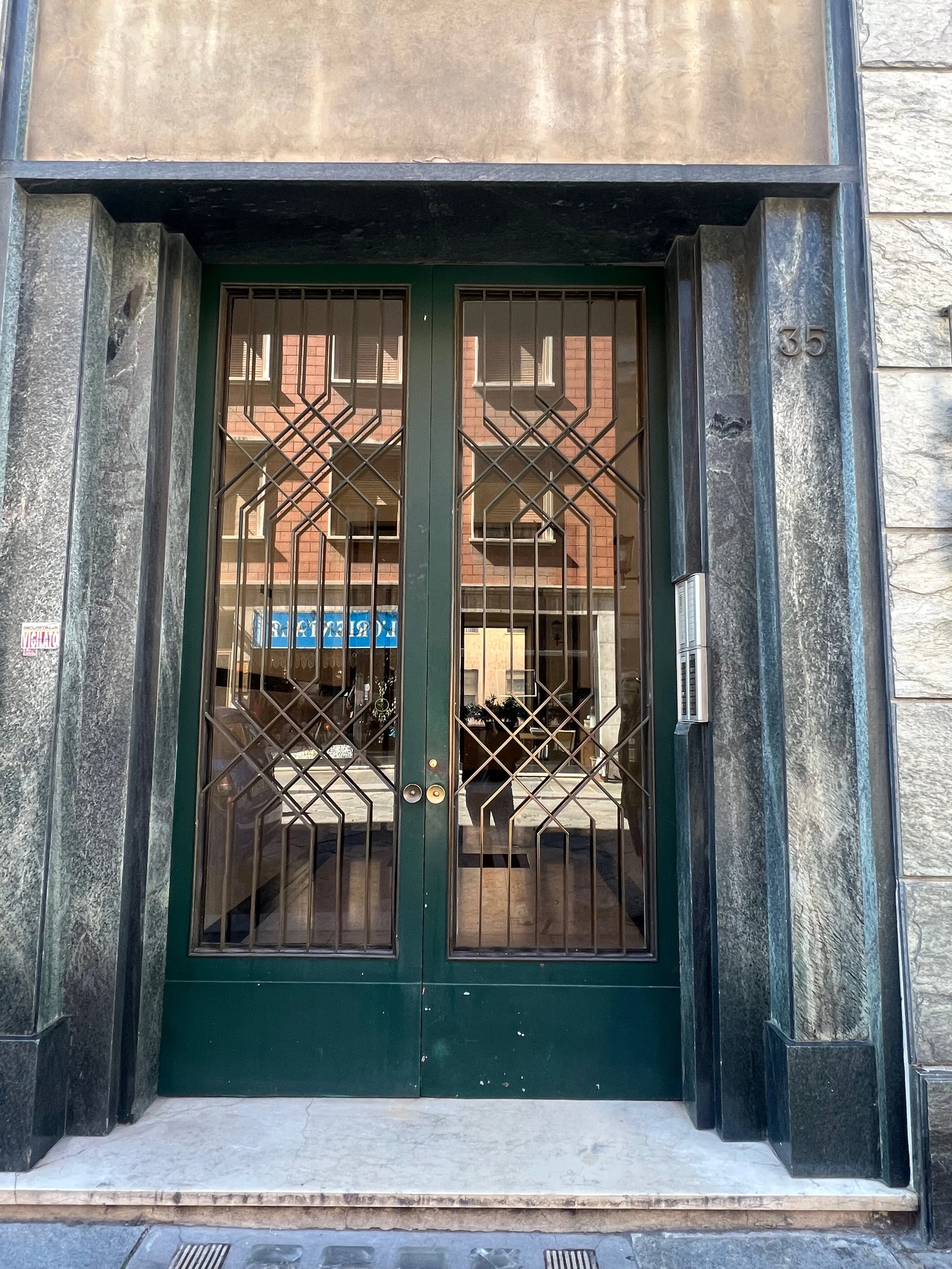
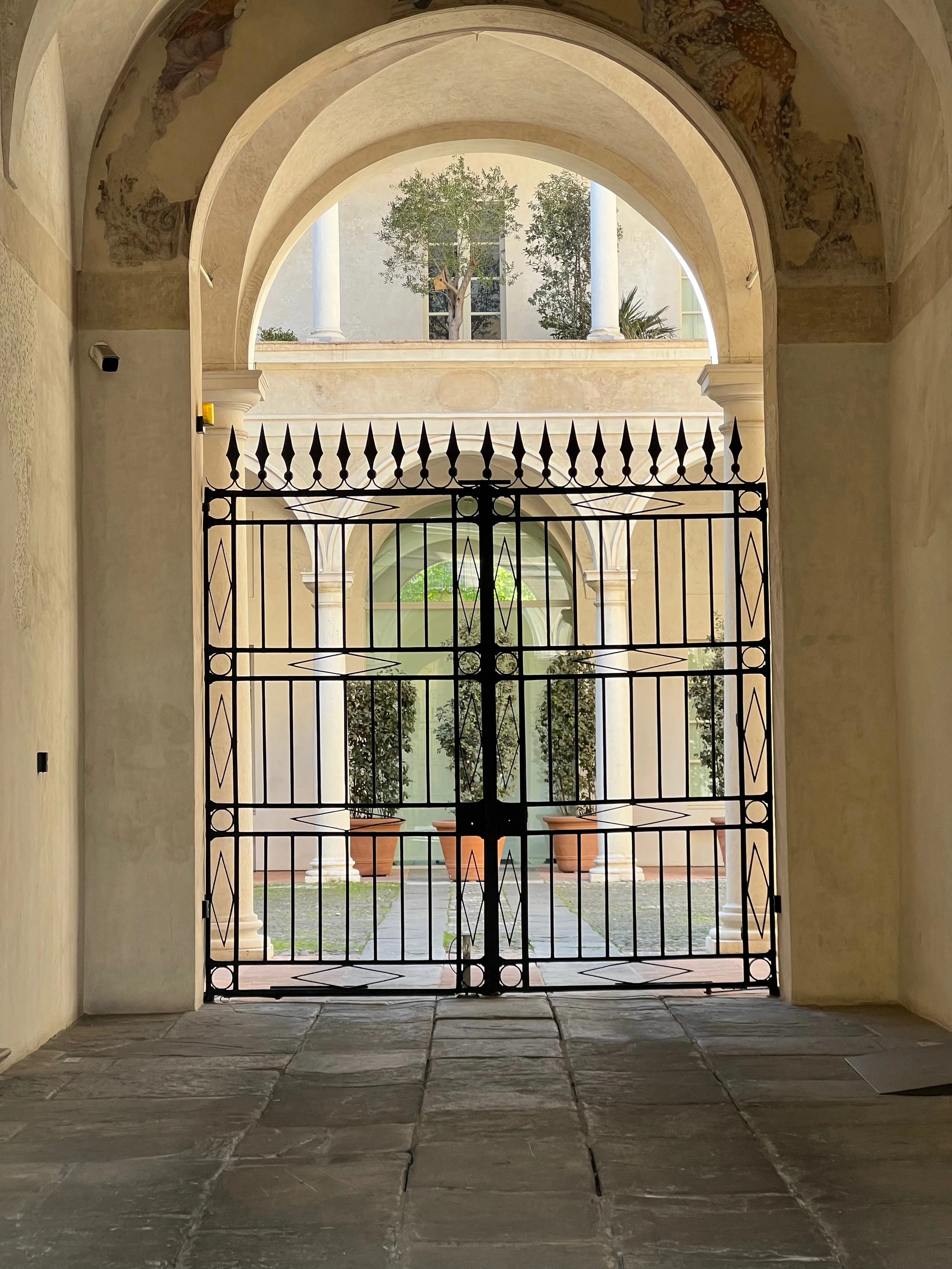
And don’t even get me started on the phenomenal iron work there. It is art. As an aside, we shopped at Farmacia Zarri, and I am telling you that it was the loveliest, most efficient, helpful pharmacy experience I have, perhaps, ever had. You left a prescription in the States and have proof of the script? Down the hatch the med came (literally, a cute little chute). You need to know the best X for Y symptoms? Certo. Here you go. We got everything we needed and walked out for €17. America could learn something.
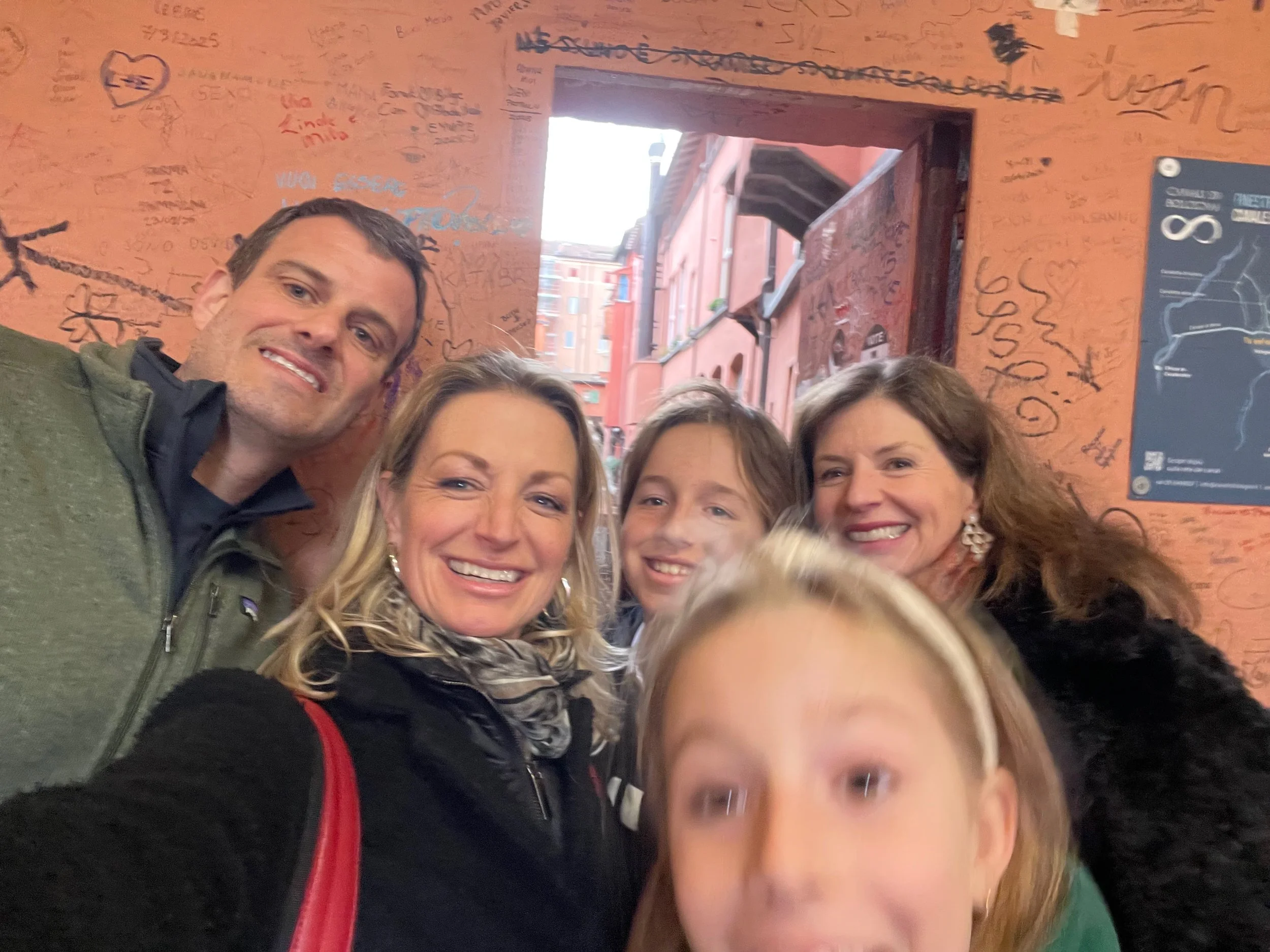
On our second day, my sister, niece, and nephew came to visit from Florence, and we had a marvelous time together. I was sad to see them go after just five hours but am thankful we could cross paths. In addition to lunch, we visited Piazza Nettuno where there is a huge statue of Neptune; if you stand in just the right place, you’ll see that Neptune’s thumb looks incredibly suggestive. When my nephew finally found the spot, he was like “OH!” Indeed. We also looked for the whispering walls but came up short, but did find the secret window overlooking a canal.
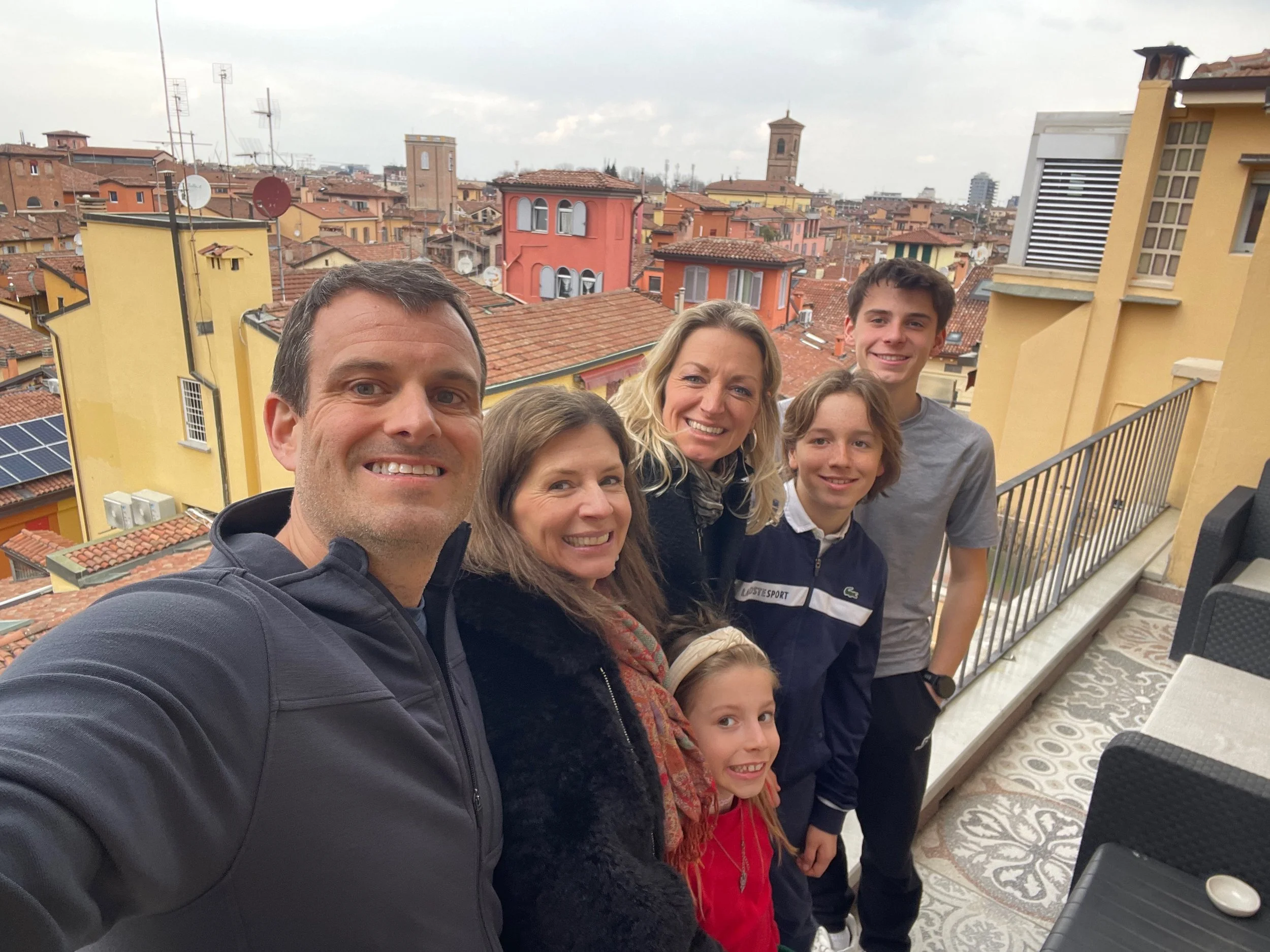
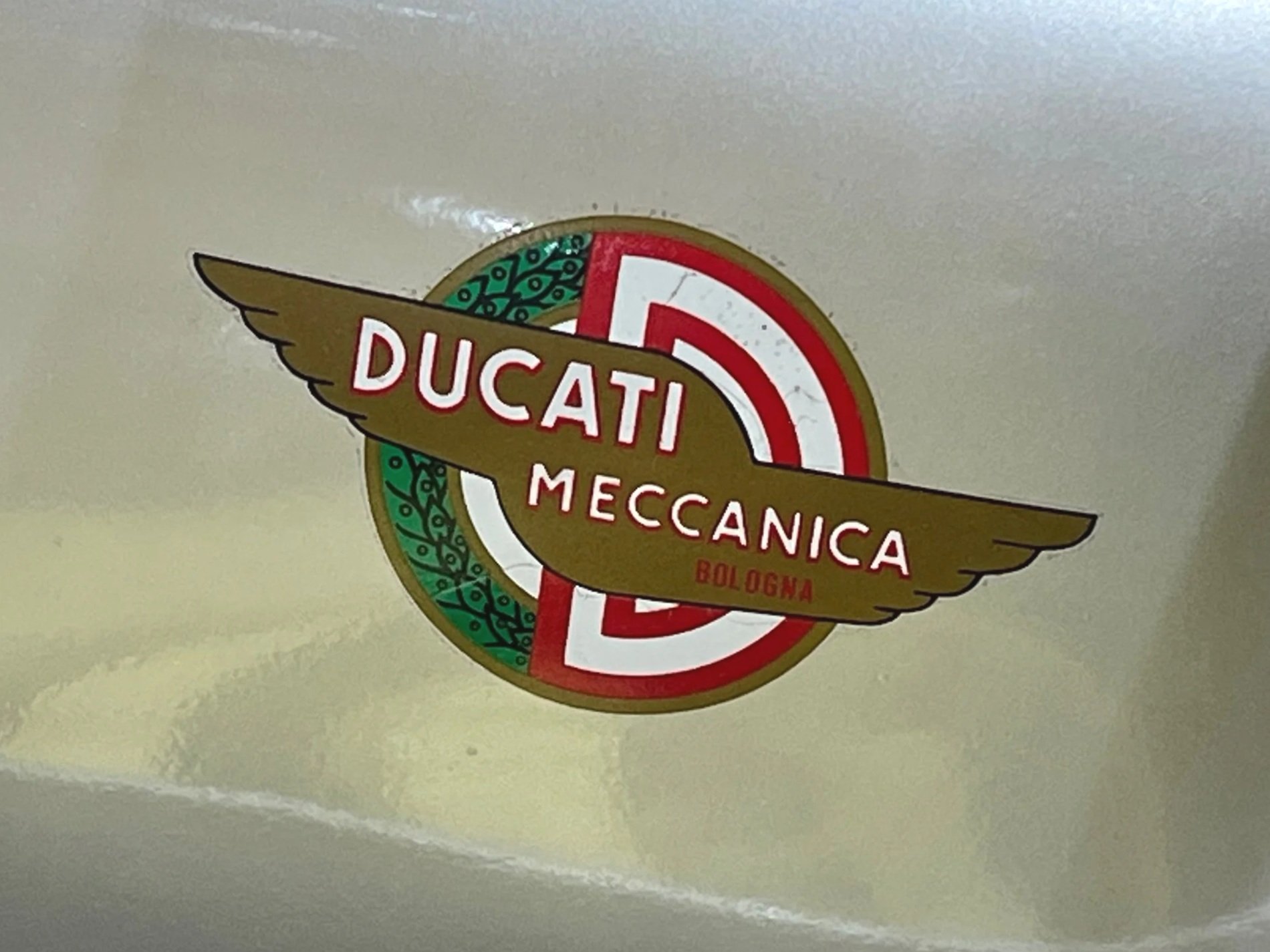
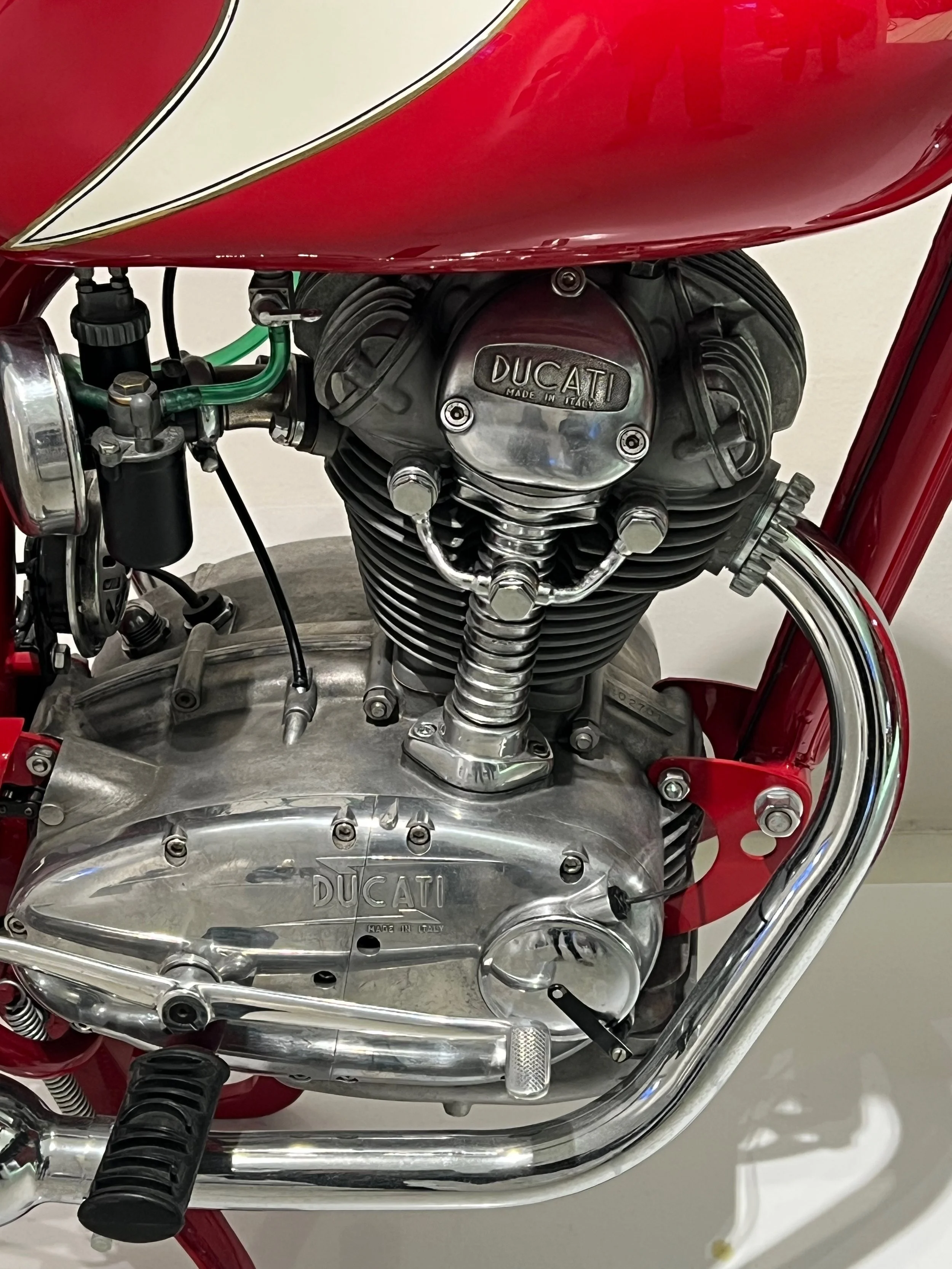
Monday was Ducati day. Founded in 1926 by brothers Adriano, Marcello, and Bruno, Ducati originally produced radios and related components. The company grew quickly and built a factory in Borgo Panigale area of Bologna, and it remains there today. Heavily bombed during WWII, the company rebuilt afterwards and also introduced a small 48-cc engine, the cucciolo or puppy, that motorized regular bicycles. The cucciolo was an enormous hit and in 1950, Ducati released its first motorcycle, a 60-cc bike. In 1953, the company split into Ducati Meccanica and Ducati Elettronica. The brothers retained control of the former and the rest is history, in terms of the company with which Oliver is obsessed and that you might know of today.
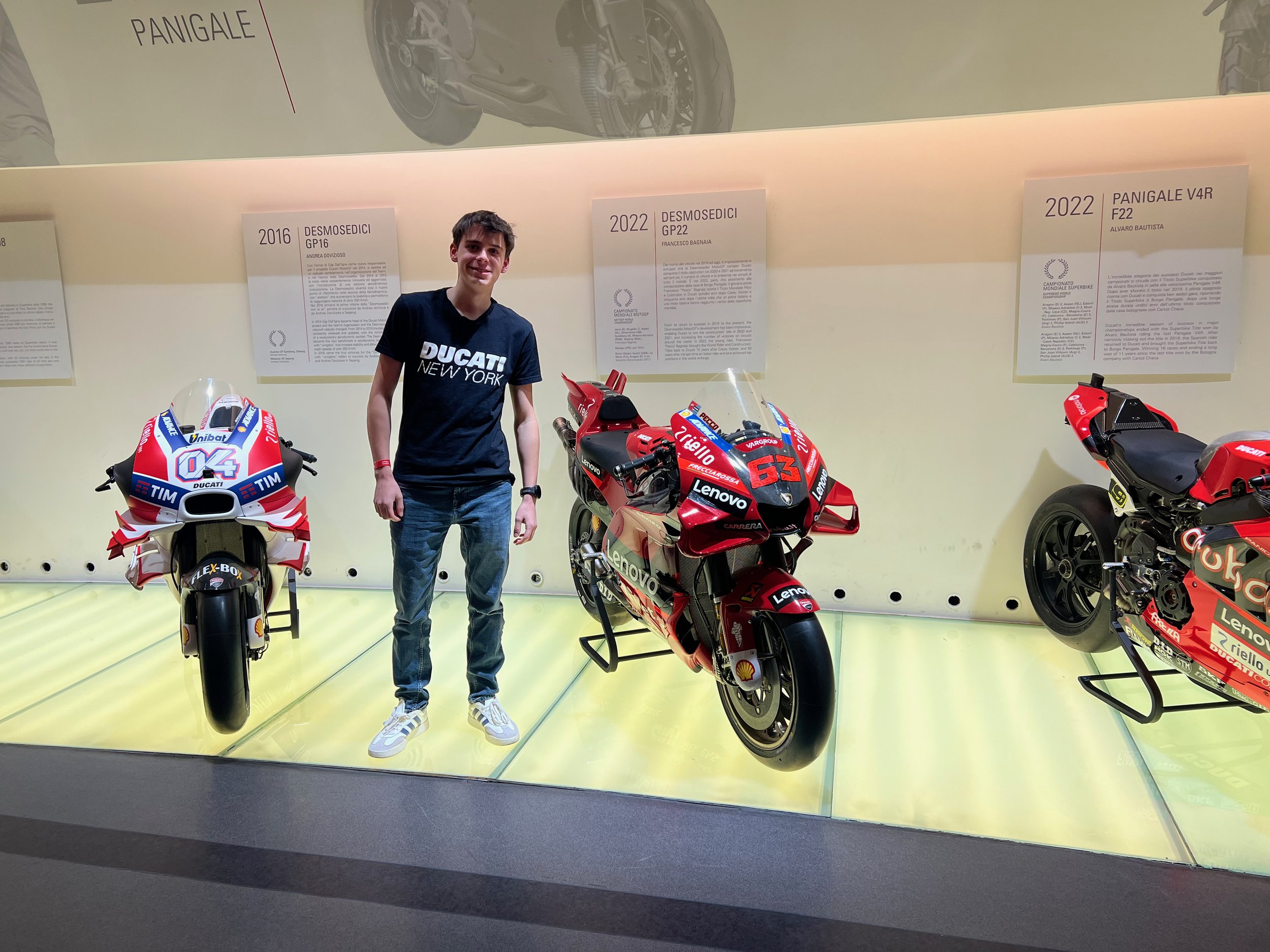
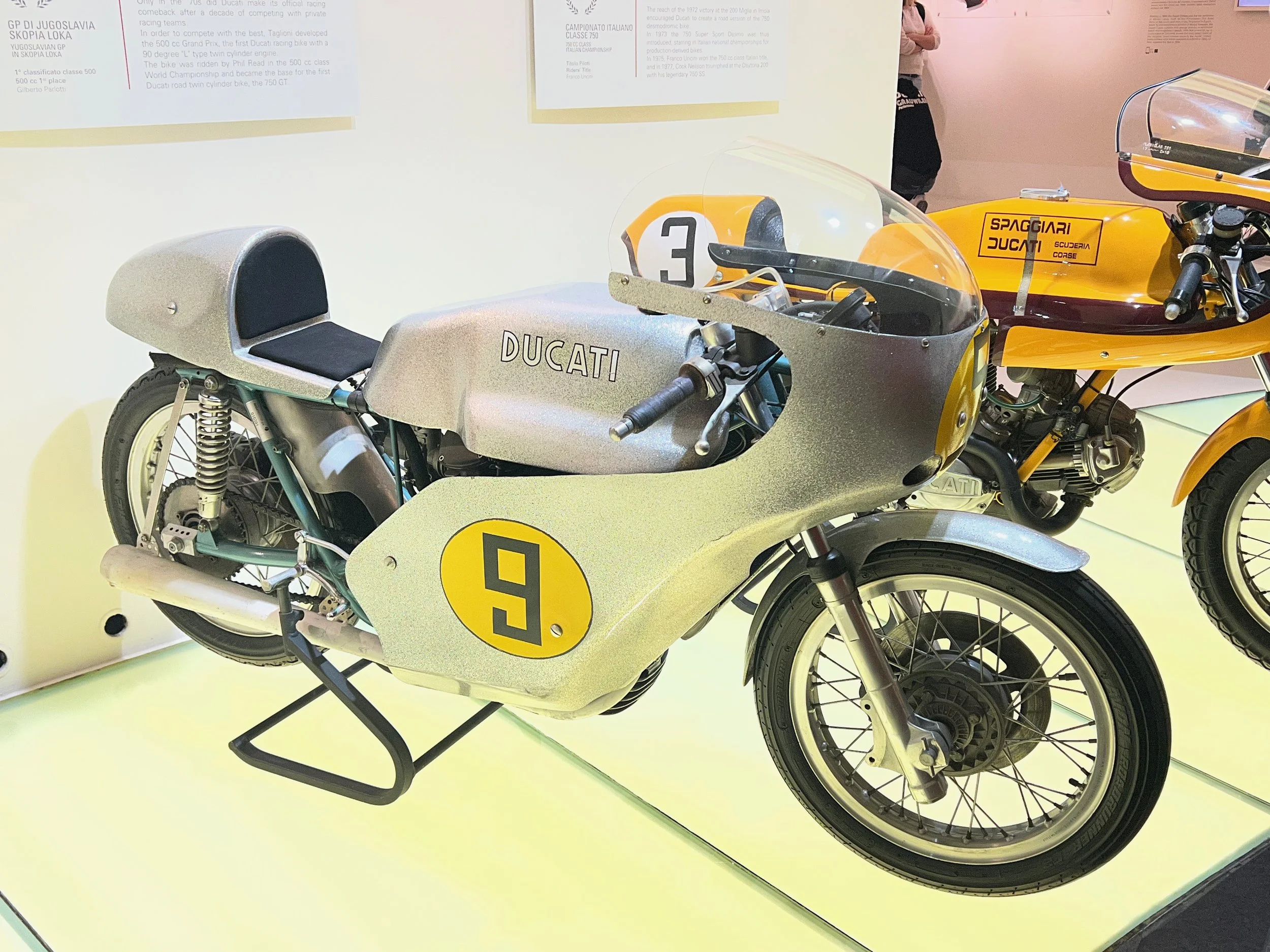
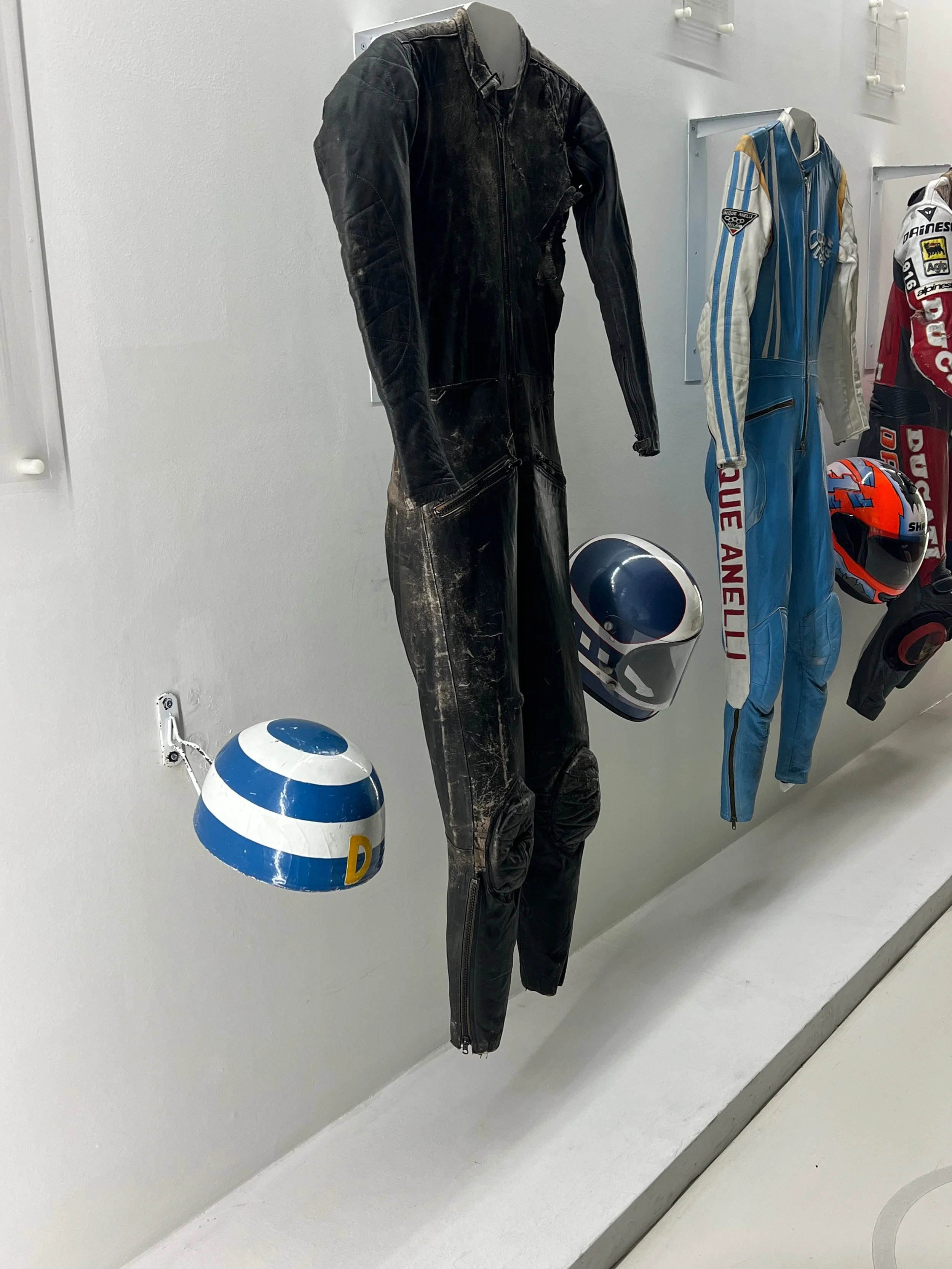
In addition to the factory tour, we greatly enjoyed the museum. Oliver has astonishingly encyclopedic knowledge of all Ducati bikes, from standard motorcycles to those used only in MotoGP, and he regaled us with all manner of factoid, proprietary Ducati parts, famous racers from history, and so forth. The bikes have evolved in fascinating, sophisticated ways; the helmets, too (see below. The blue and white “protective headgear” looks like something Coyote would wear in the cartoons).
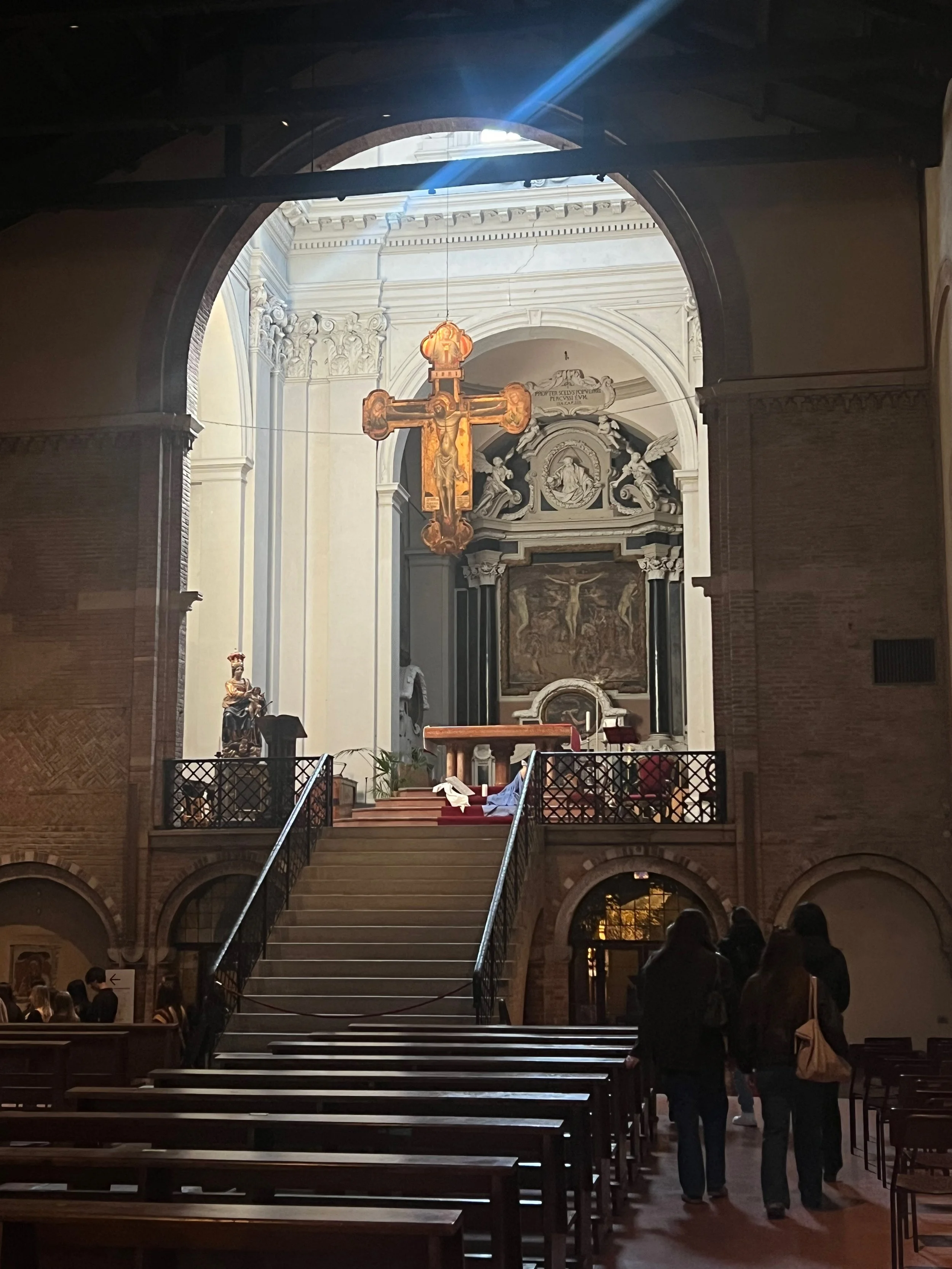
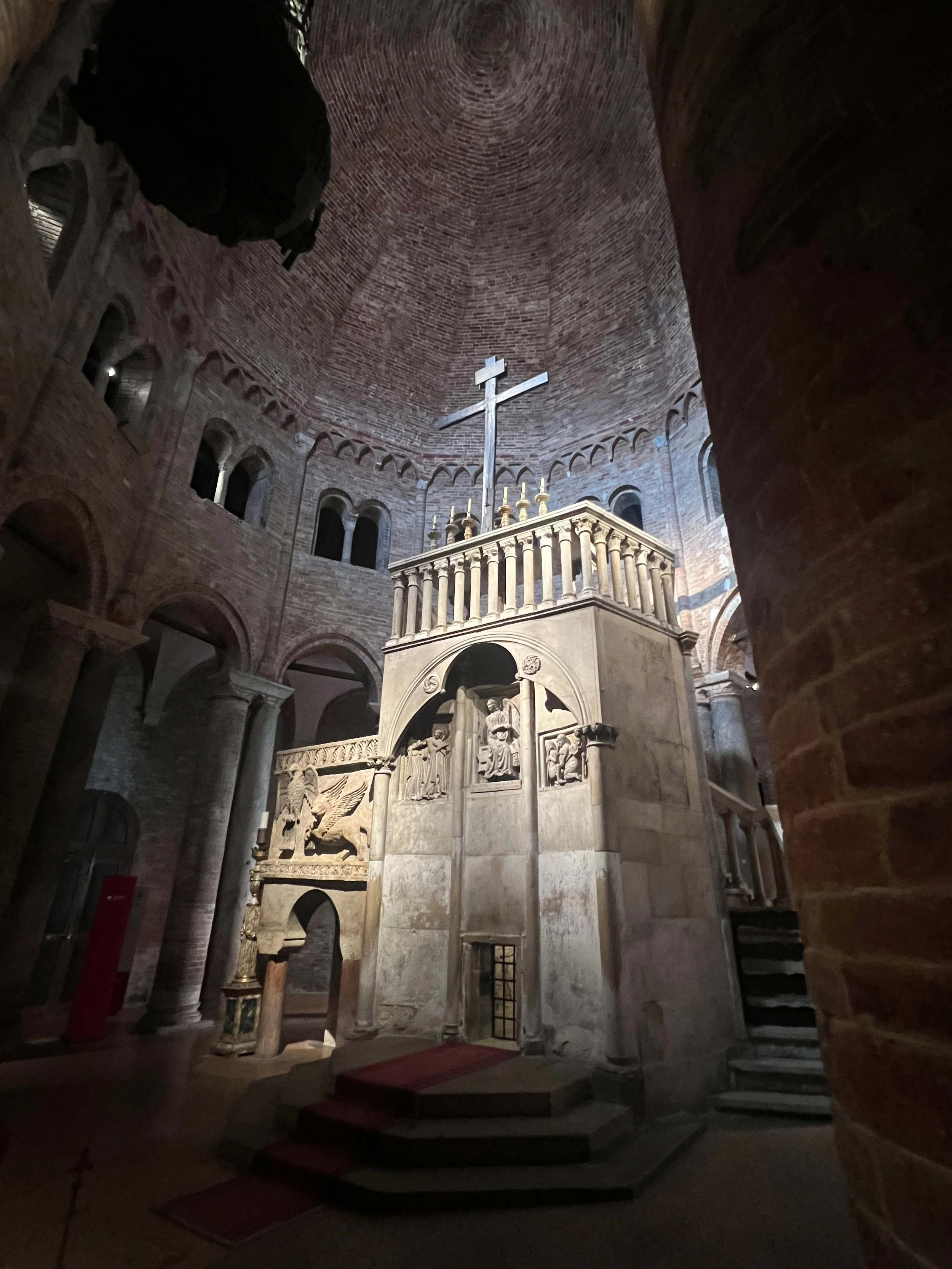
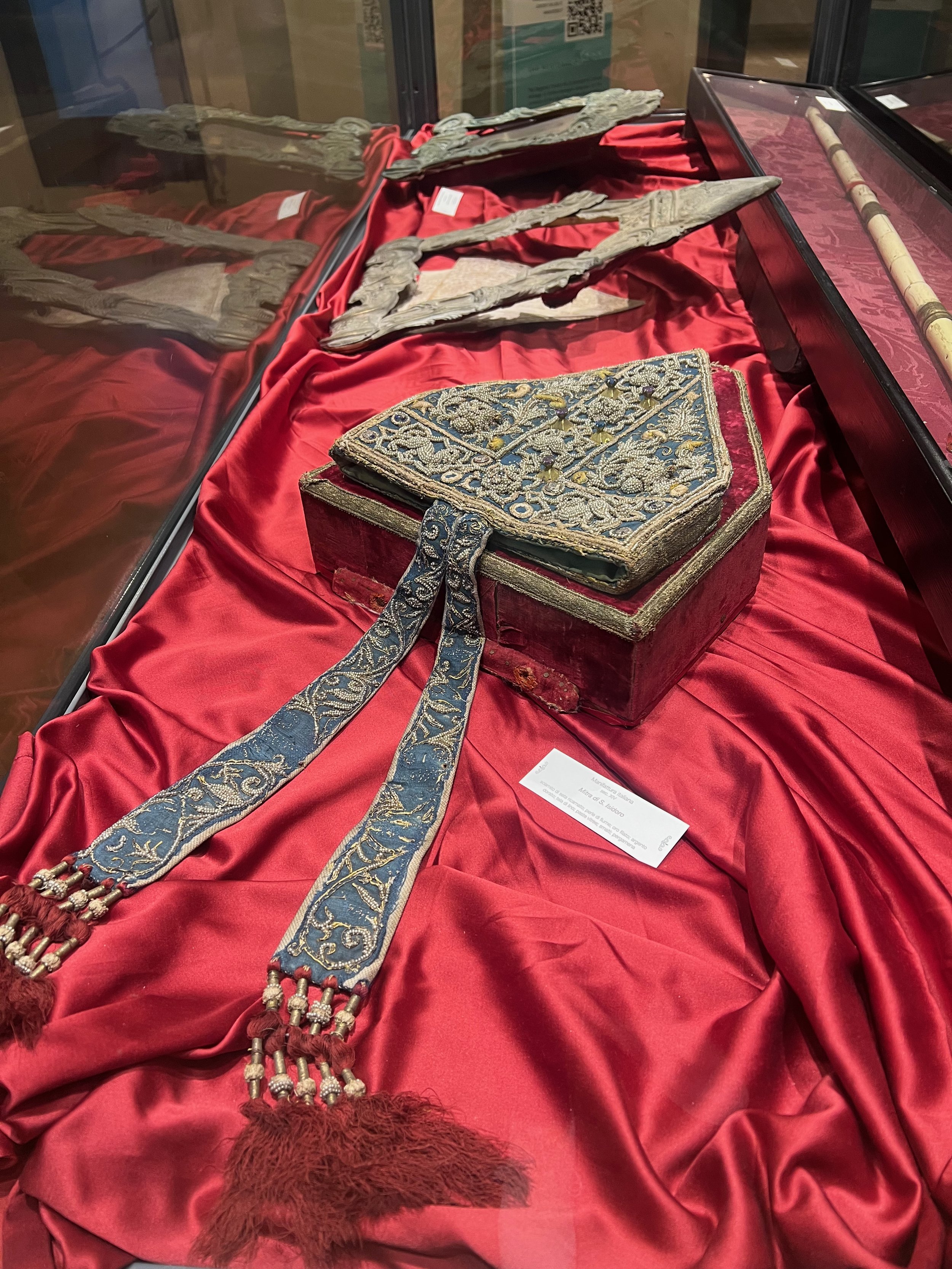
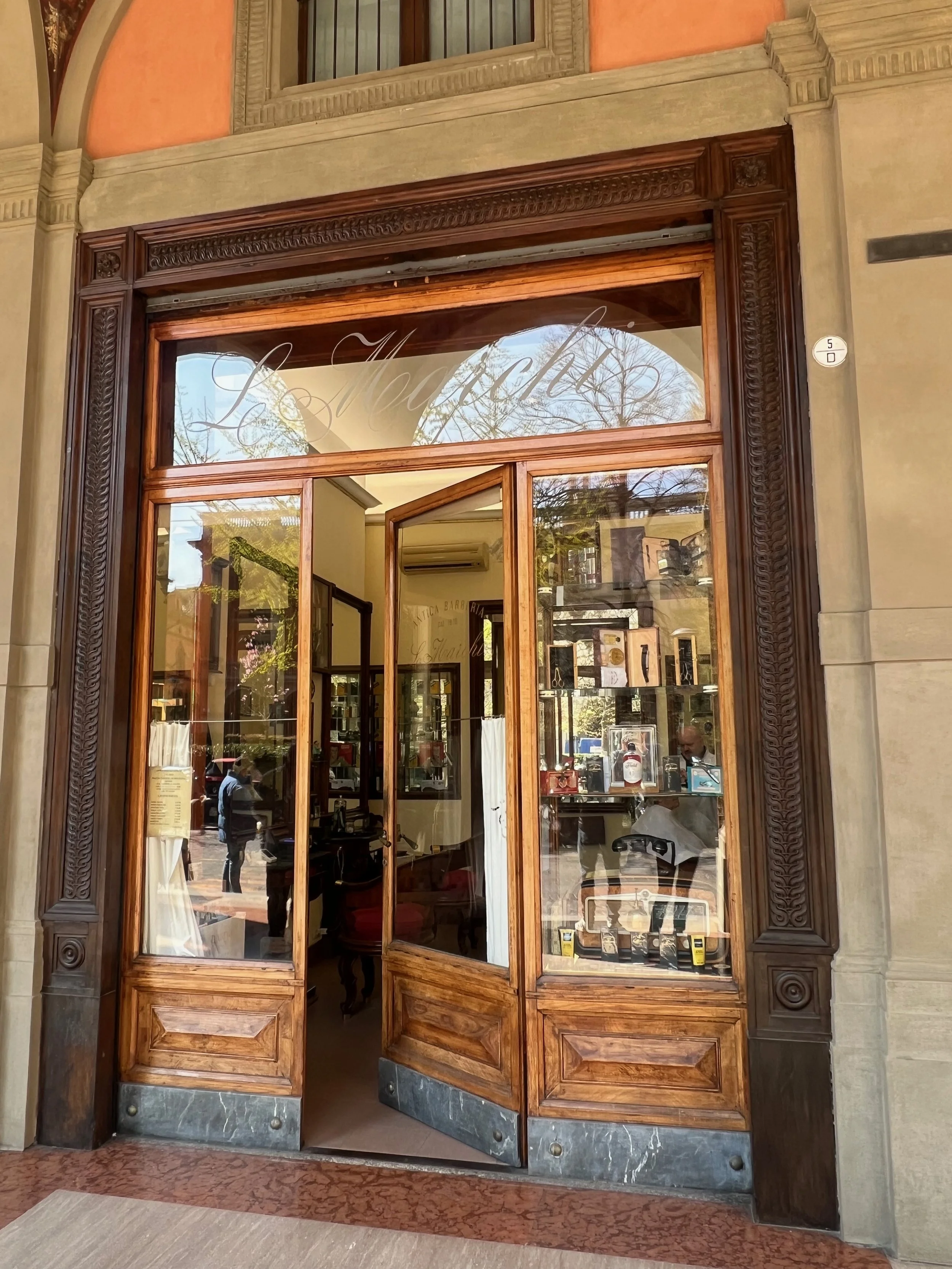
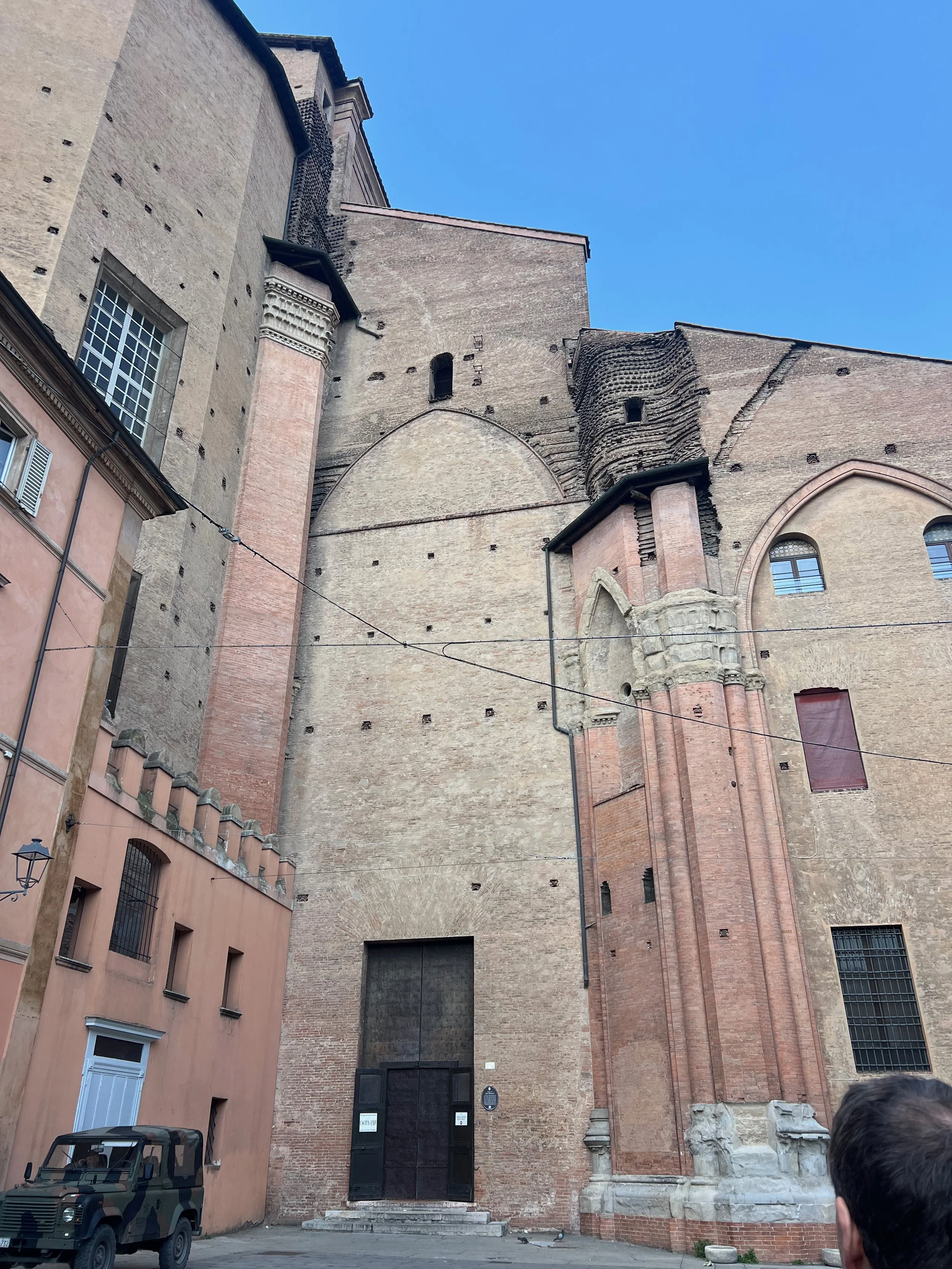
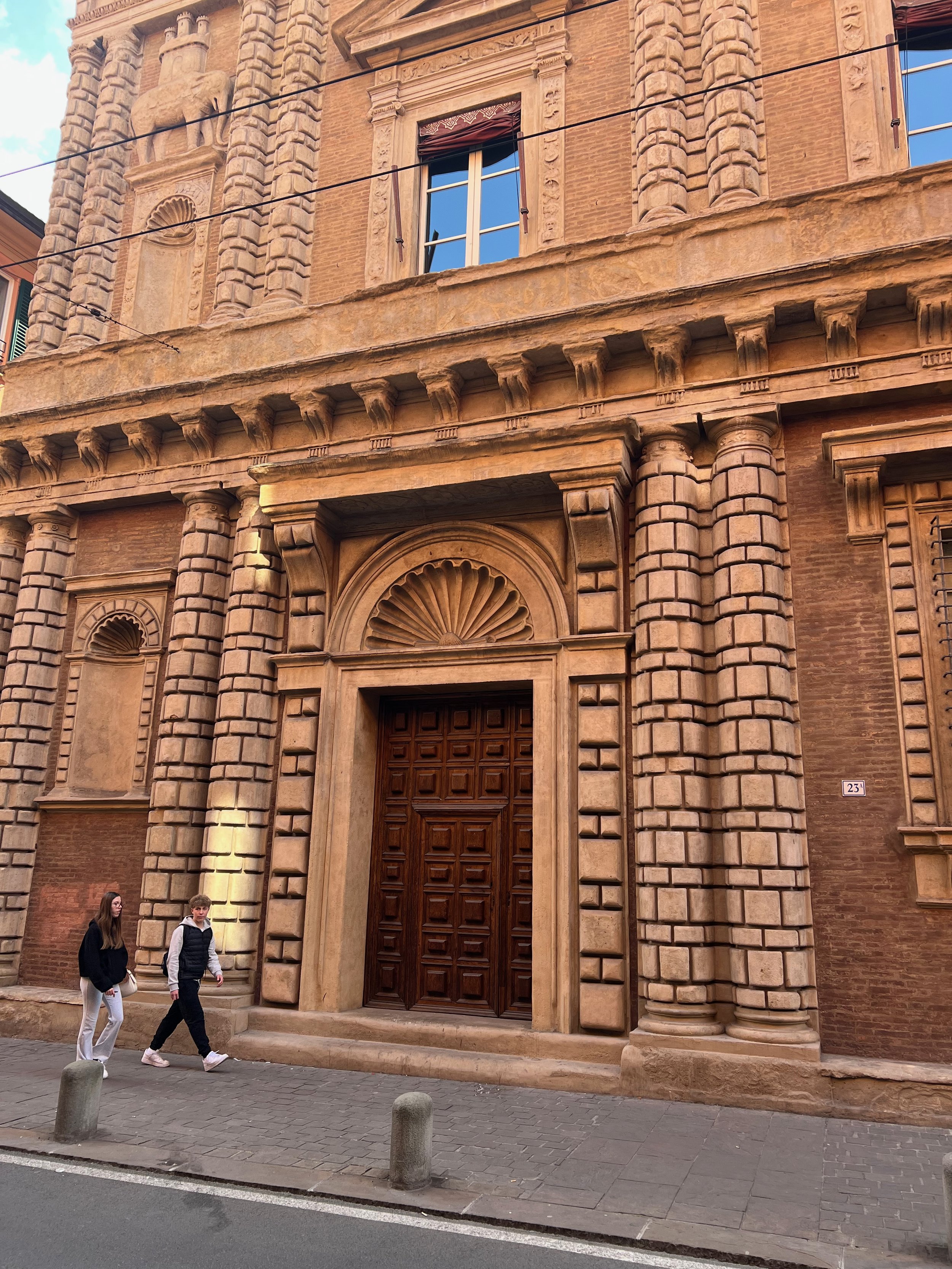
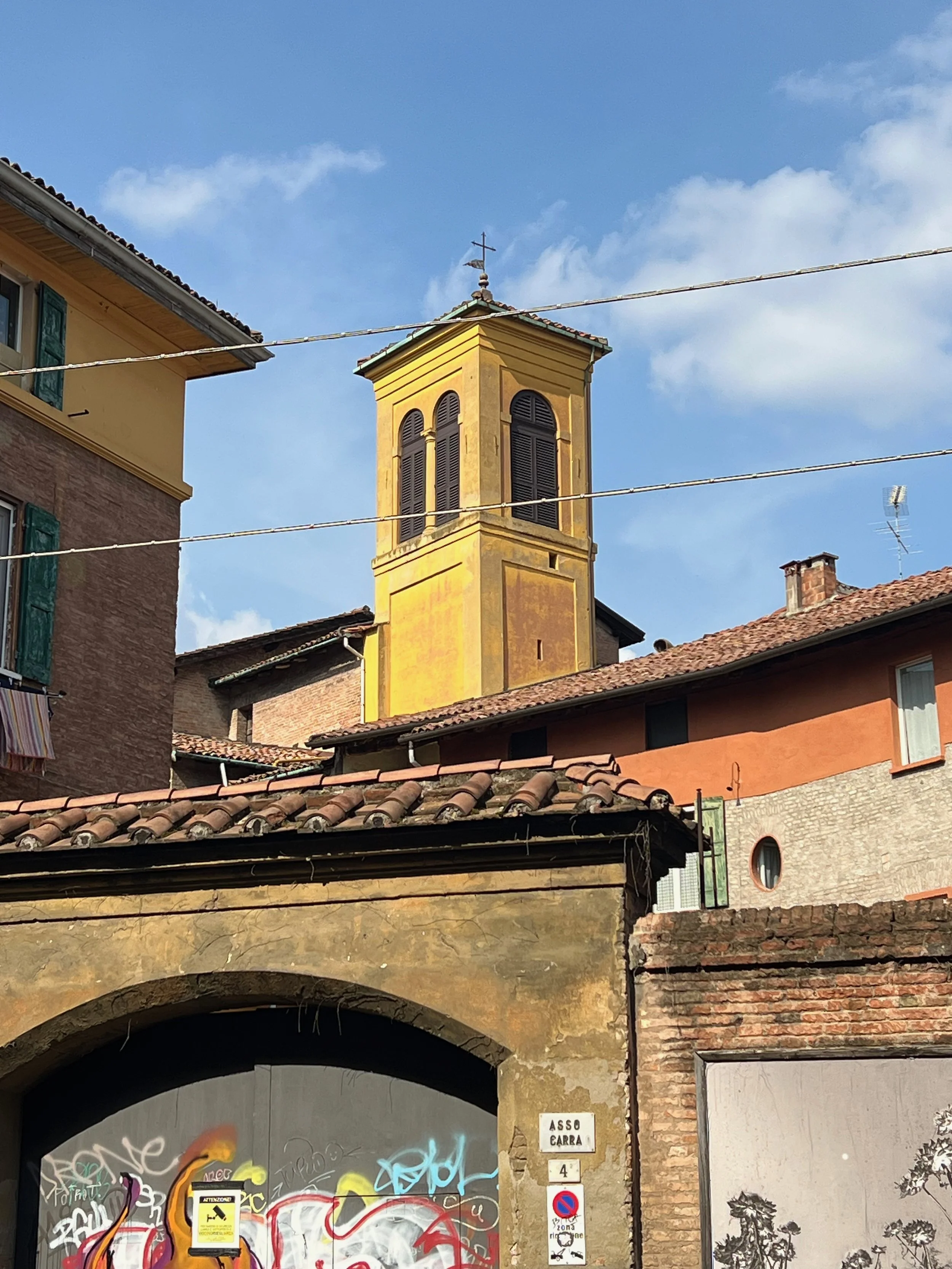
For the rest of our time in Bologna, we explored other neighborhoods, primarily the Quadrilatero, Ghetto Ebraico, and University areas, ate, and people watched. What must have been a U of Bologna graduation was going on, and we delighted in seeing graduates wearing laurel wreaths on their heads and celebrating with their families. The Quadrilatero has been, since medieval times, the site of busting food markets, so we ate and shopped enthusiastically there and appreciated the beauty all around. Near Piazza Maggiore is the Basilico di Santo Stefano, a religious complex founded in the 5th century and rebuilt in the 12th. Inside the church hangs a crucifix and sits a pontifical mitre, both from the 14th century (maybe 1380?) which is just phenomenal to consider.
I don’t know that Tom and Ol loved Bologna, and my sister never has, but I did enjoy it. It’s more diverse and a bit grittier than Florence and it has a relaxed, happy vibe and so many gorgeous buildings.
Days 5-6: Maranello/Ferrari and Modena
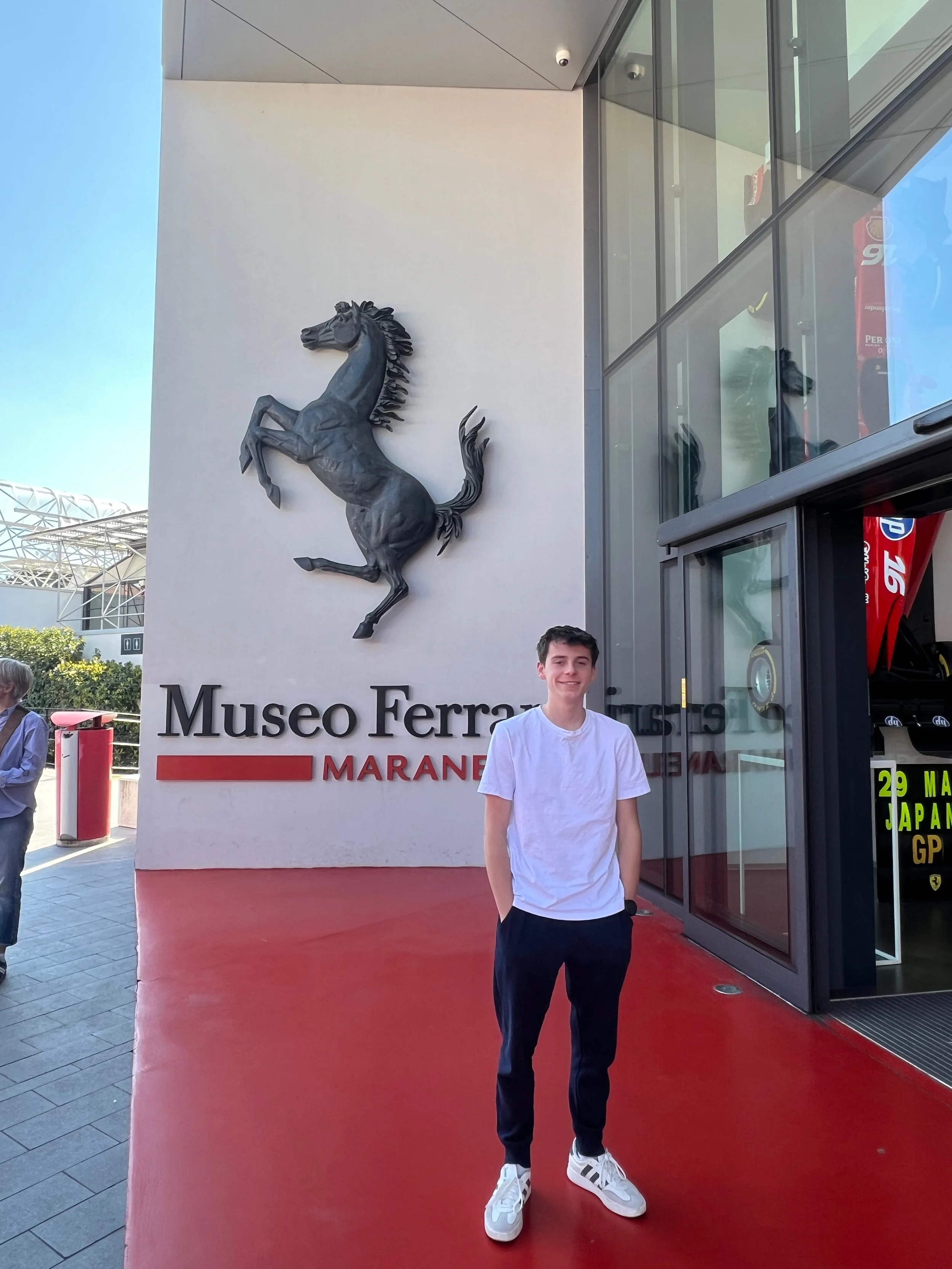
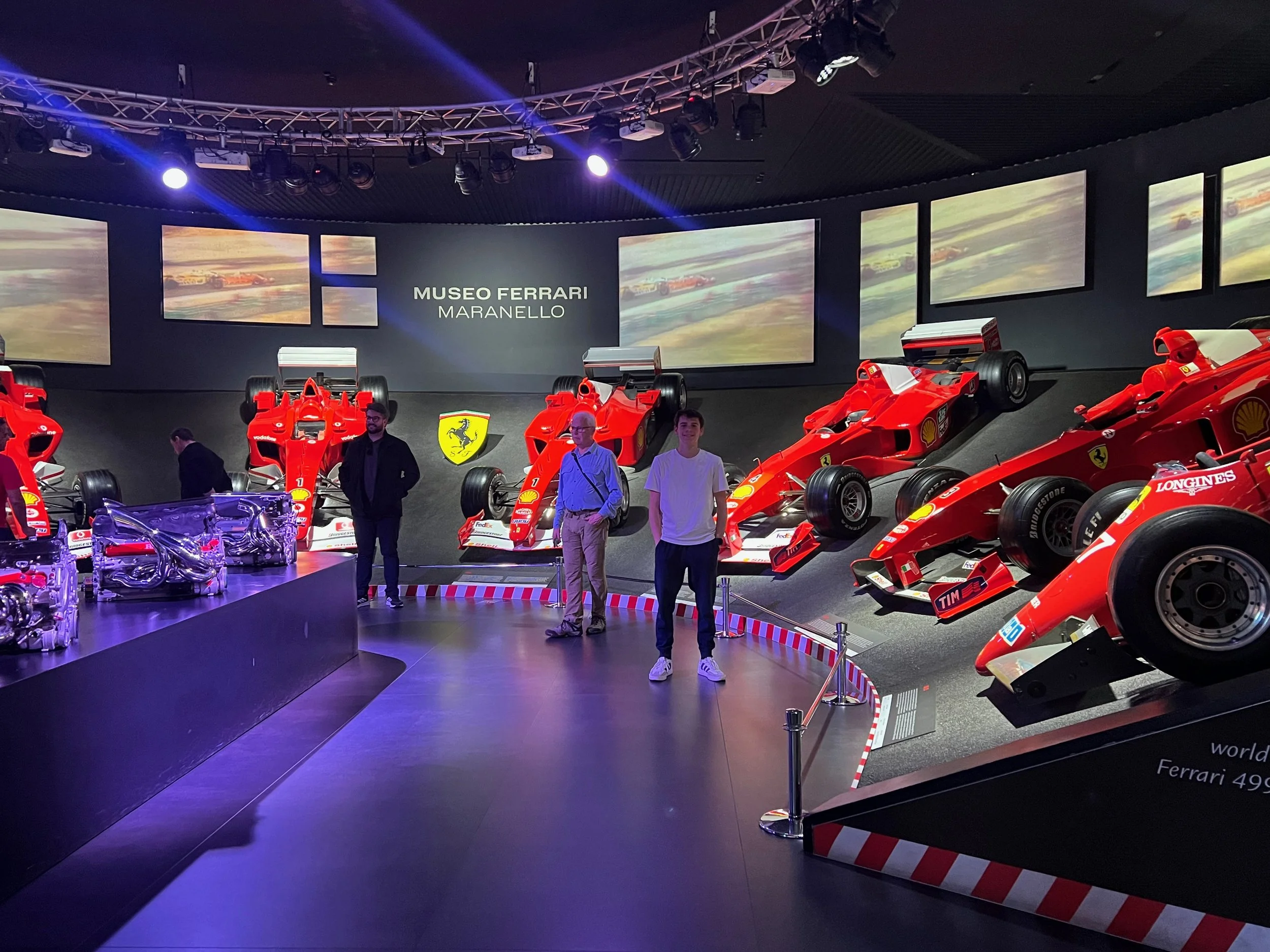
On Wednesday, we rented a car on the way out of town and drove to Maranello, a roughly 60-minute drive west. Maranello is, and has always been, the home of Ferrari. The motivation for this visit was more Formula 1 than the regular Ferraris themselves, but each vehicle is an absolute work of art and both factory and museum were cool to see. You are not allowed inside or to photograph the factory, but our guide was wonderful, and a special bonus was seeing a client test drive a new car on the track. That’s not a guarantee, and it was thrilling. T and O drove in the F1 simulators and found them super fun and very hard. Tom crashed repeatedly.
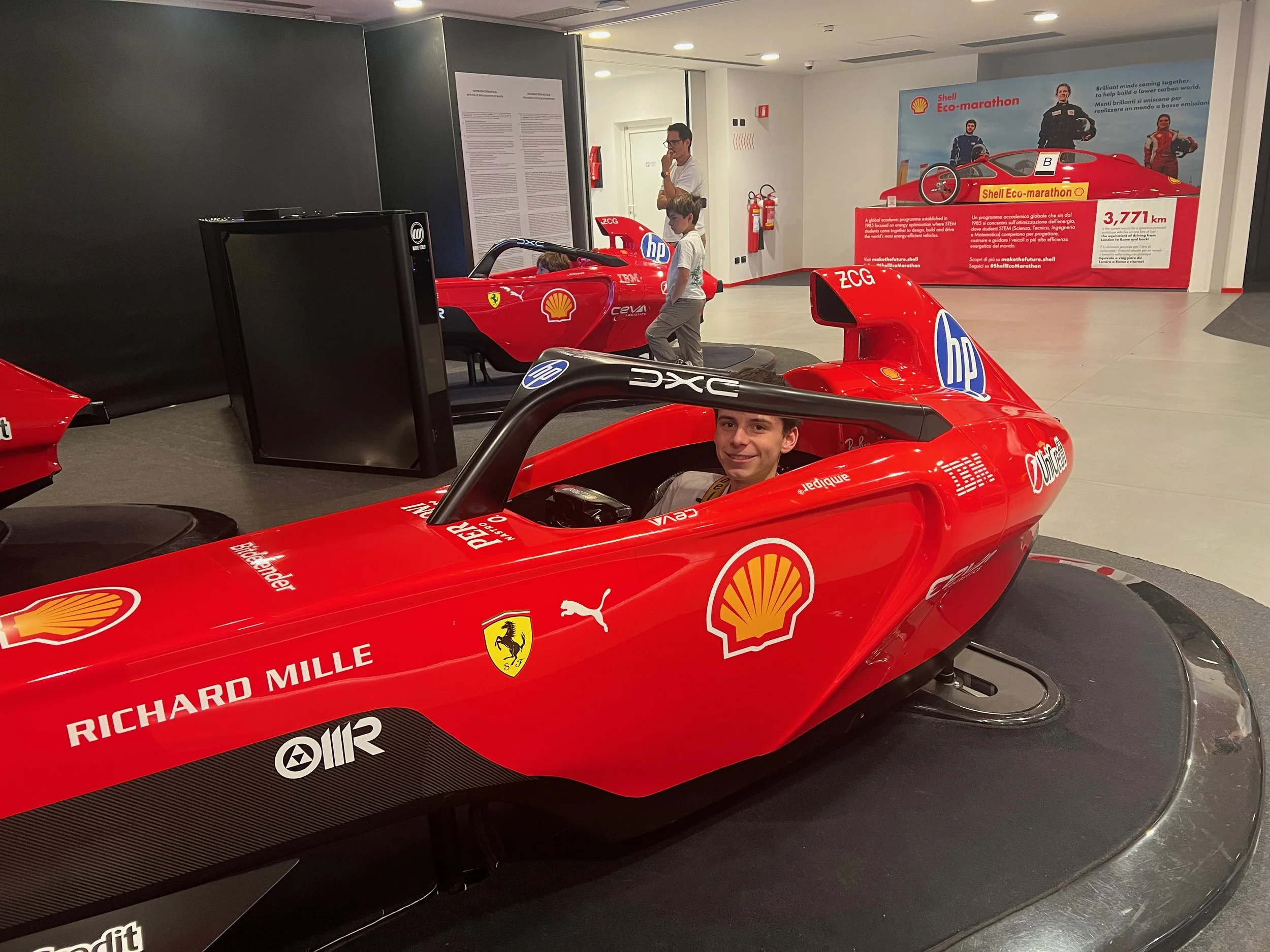
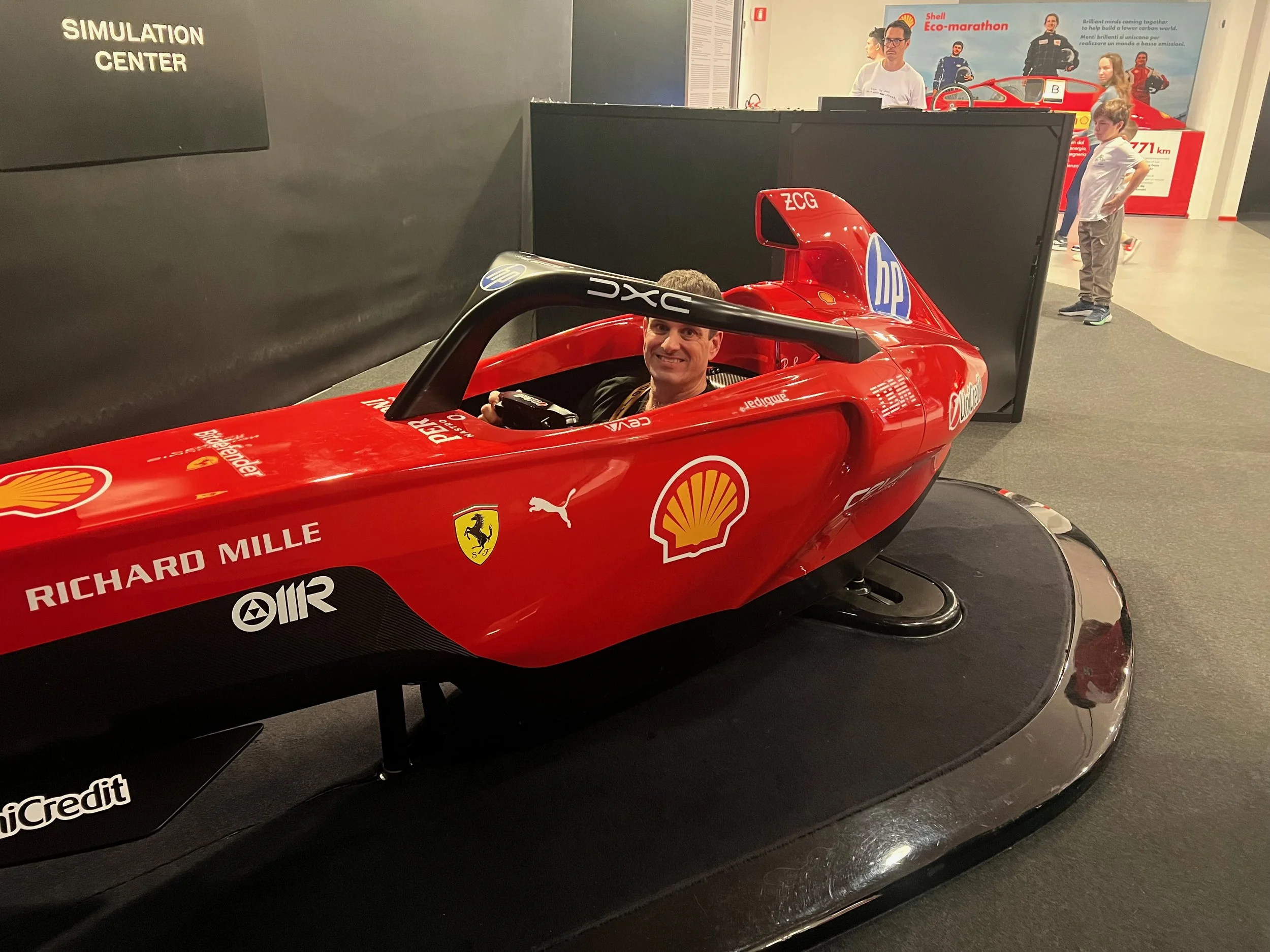
From Maranello, we drove a quick half hour to Modena, the home of balsamic vinegar and another huge food lover’s destination. We again stayed in the centro, just off the Piazza Grande. Modena is immediately charming and inviting, and we loved it. A city with a population of roughly 200,000, it is beautiful, friendly, and full (!) of restaurants, gelaterias, and markets. I had arranged a three-hour food-based walking tour for our first full day there, and it was a delight. Our guide reminded me of a plump Isabella Rossellini and was immensely fun to hang out with. There were only two other people in our group, obsessive eaters from Boston to whom we took an immediate liking. Like us, they were there to eat, and were hilarious, smart, and Trump-hating. All in all, it made for a very fun morning that began with a thorough tasting of balsamic vinegars, from the most niche and serious (DOP) to less intense “I still would not use this for salad” to “Ok, this you can use for salad.” We subsequently enjoyed a very large charcuterie board (pork is king in the region; I myself do not much care for pork, but bygones.) and parmesan tasting with Lambrusco, a full lunch of pasta or risotto and wine, a segue for “white cow” cheese tasting, and, of course, gelato and then coffee. Along the way, I swooned over more stucco, iron work, and the small details that no one seems to incorporate into design and build anymore. Such a loss.
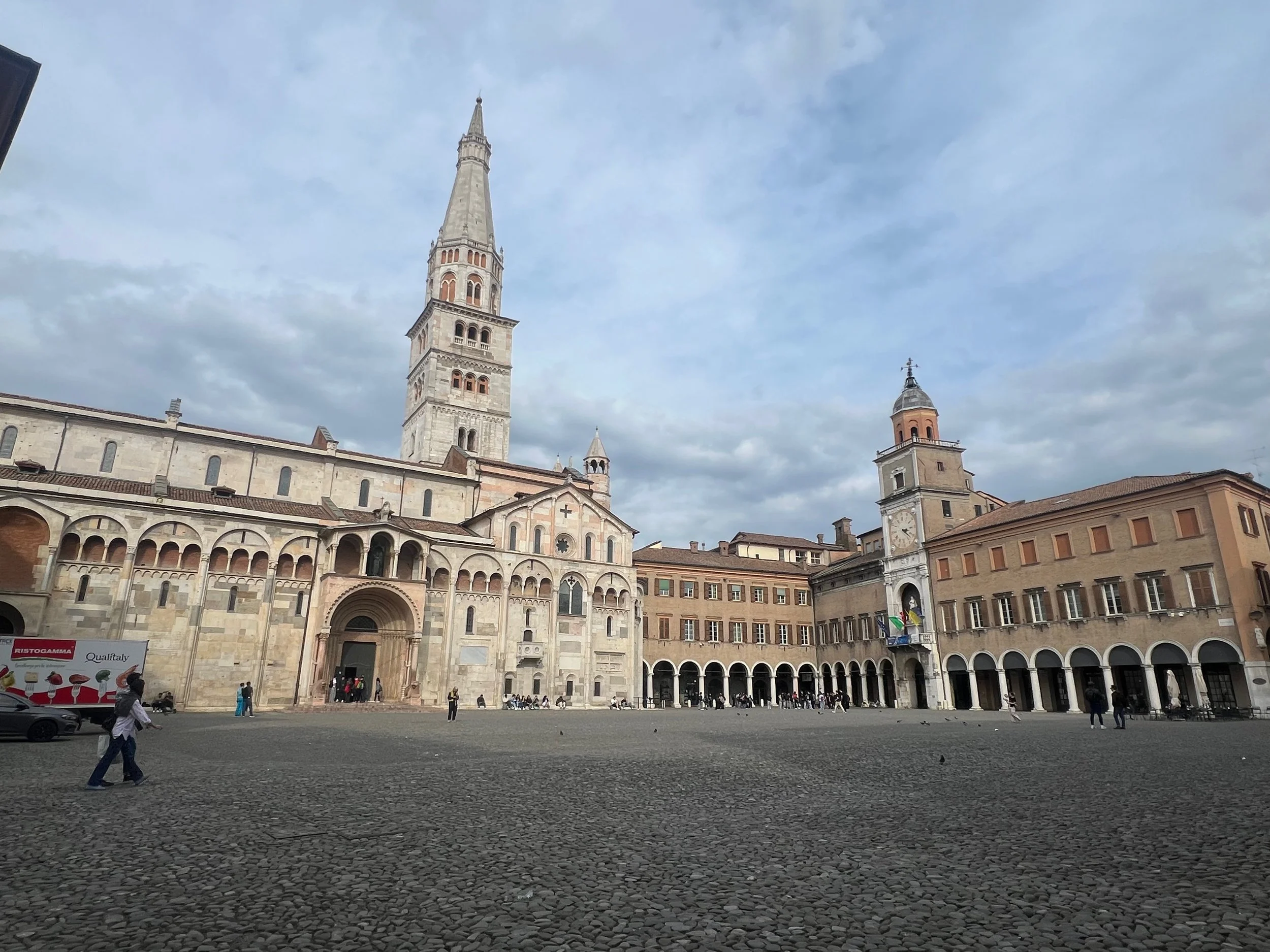
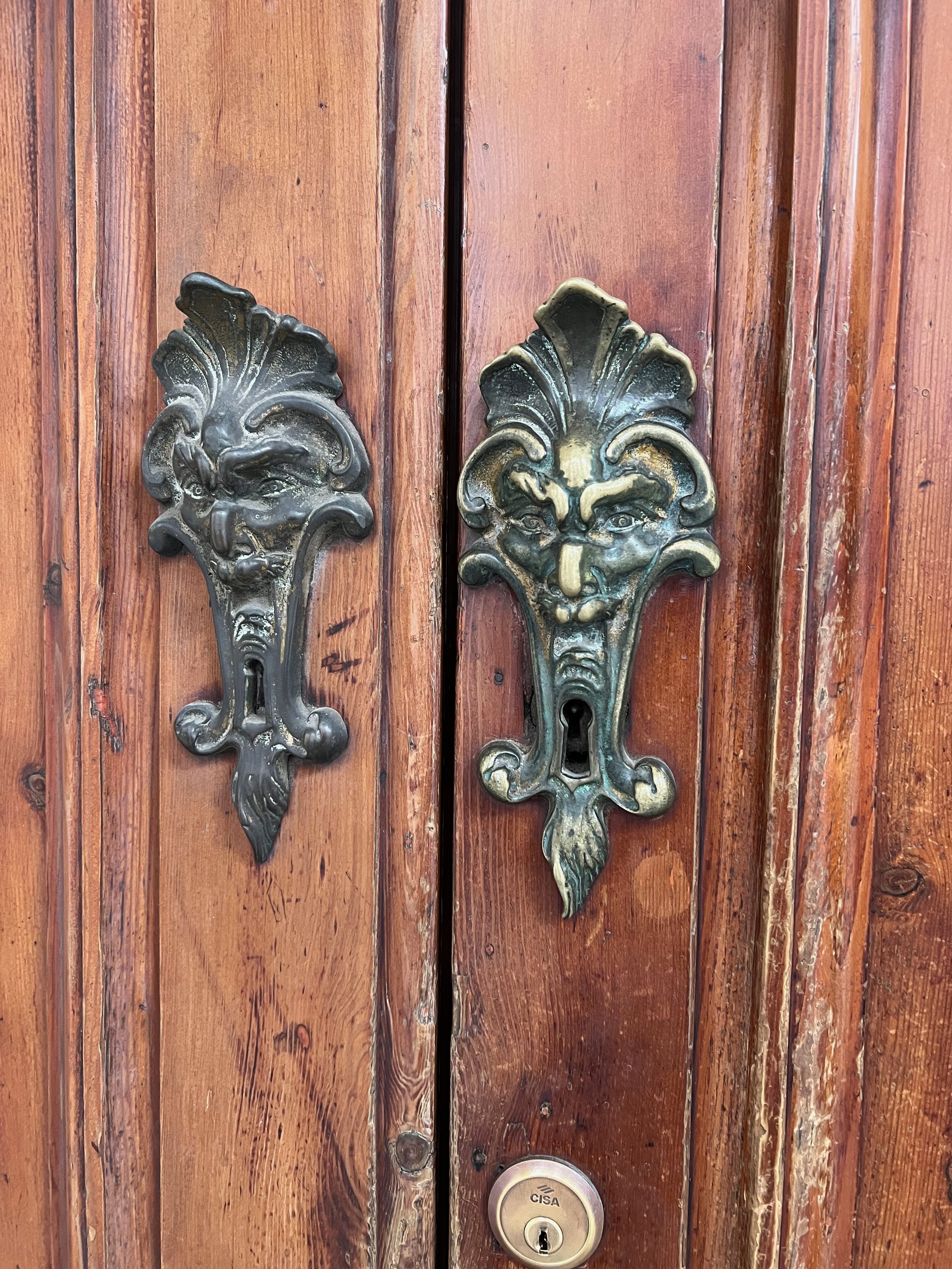
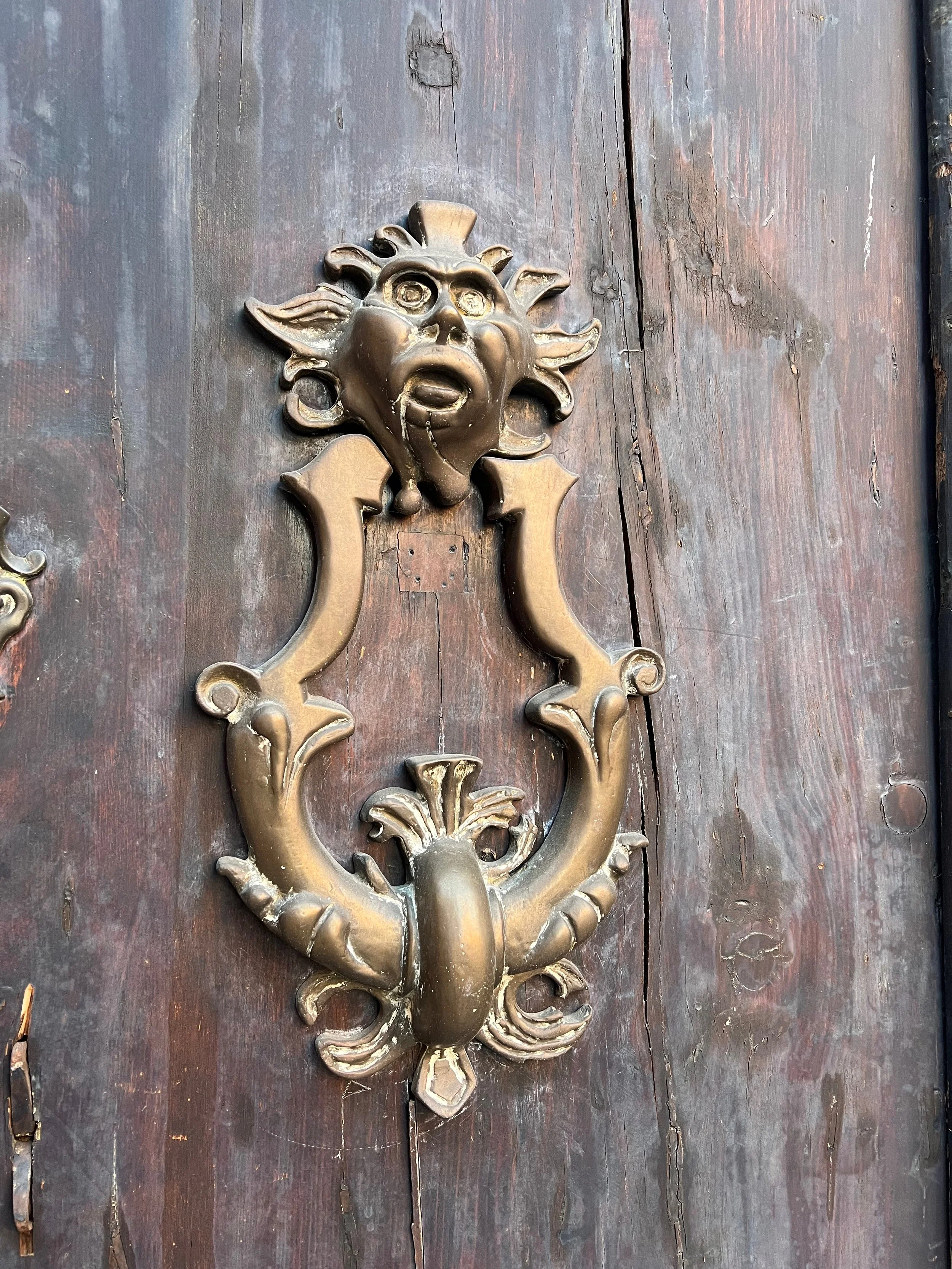
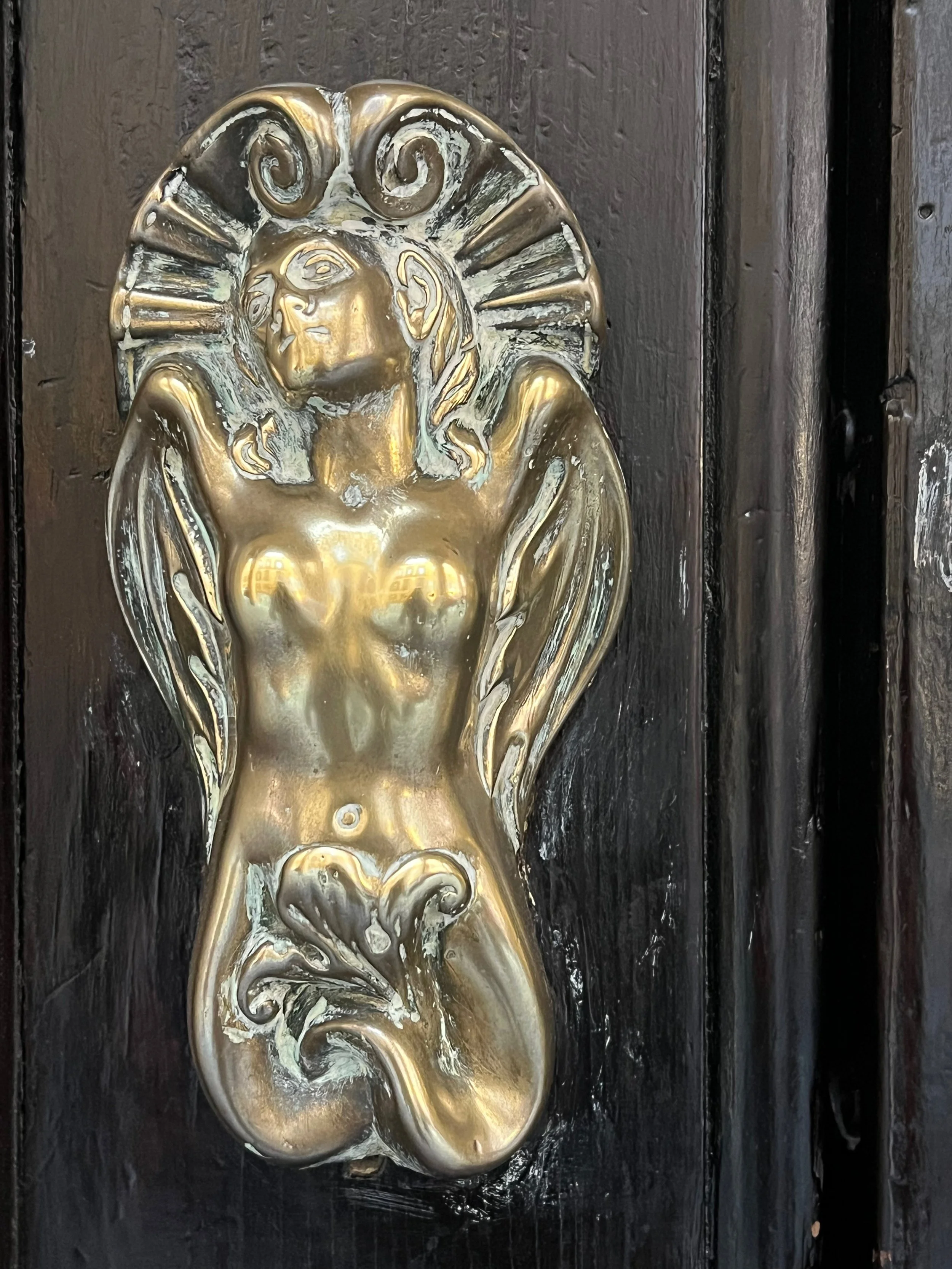
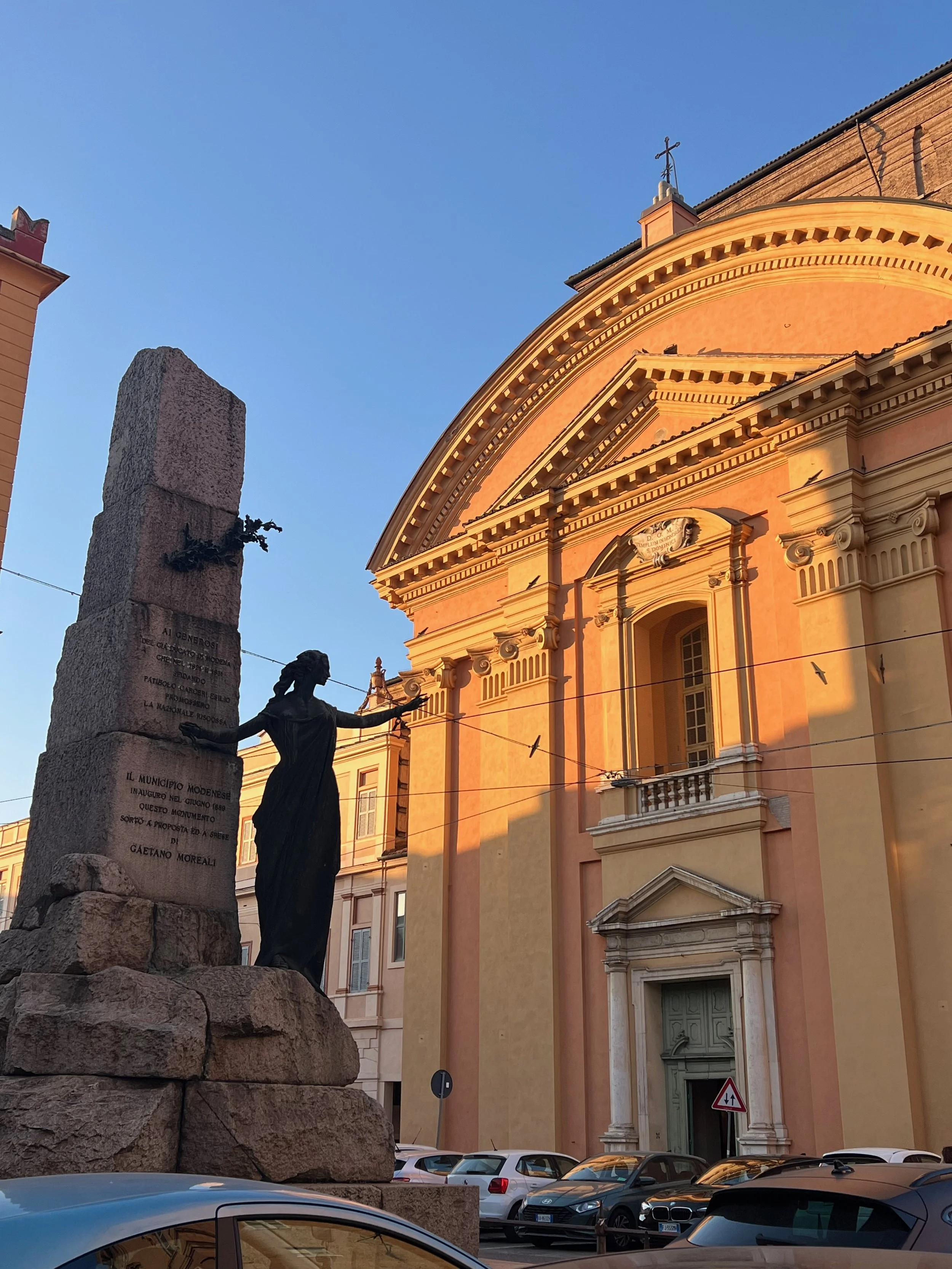
As we waited in Piazza Grande that morning, for the tour to begin, we repeatedly heard a very loud thud. It was a pair of automatic doors into a bank that had gone haywire: they kept trying to close, failed to realize they’d done so, slammed themselves together, reopened, and rinse and repeat. We took note of this as it was both hilarious and irritating and assumed it would be repaired post haste.
That evening, back in Piazza Grande, those doors were still trying desperately to close themselves, and we simply laughed. No one in the States would let that go on for a half hour, much less all day. The next morning we found that a block had been wedged into the gap between the doors. Not repaired, just a stop gap.
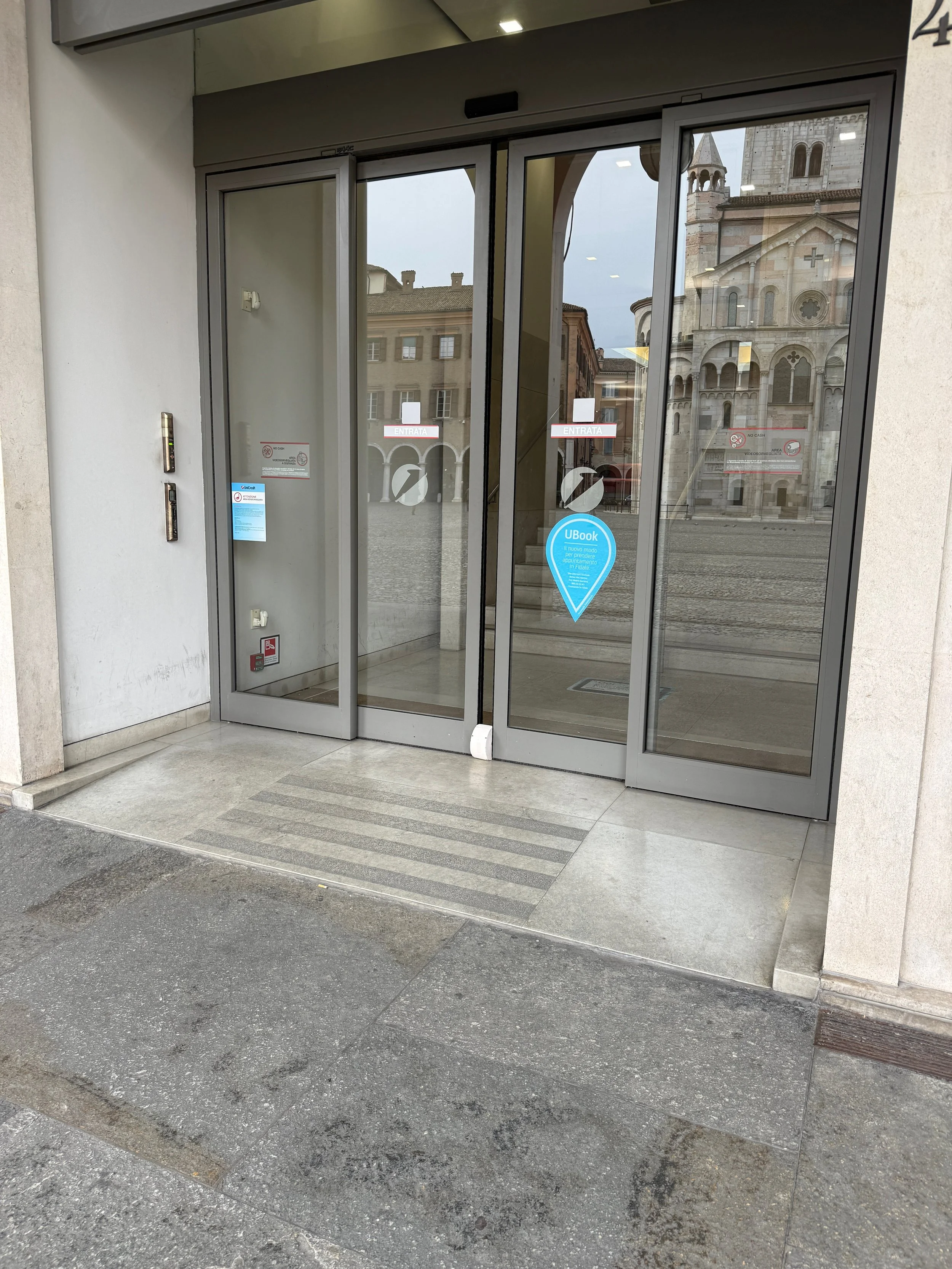
We were in hysterics
All in all, go to Modena! A+ destination.
Days 7-8: Parma and Dozza
We left Modena in somewhat begrudging fashion, but with even less time allotted in Parma, I hurried us along. Oliver was improving by this point but was fairly wiped out by having been very sick, and I think all of us were growing vaguely tired. We were to have one day and one night in Parma, an afternoon and a night in Dozza, and then needed to return the car at the Bologna airport the next morning. Regardless, when we arrived in Parma, despite everyone telling us that it is fab, we were immediately underwhelmed. We then moved into our apartment which, while centrally located, was on a dim alley next door to a horse butcher and had depressingly minute “windows.” Oliver flung himself onto the pullout couch that was only springs, and I began doing some embroidery like I was possessed by a negative spirit. Tom was heartened that we had a washing machine, so tucked all socks, undies, and Oliver’s clothes into it while Ol and I moped pitifully.
We decided to eat. This was an excellent decision and was the first of only fabulous meals we had in Parma, home of Parmegiana-Reggiano and Parma ham. A quick hop from our place was da Michele, a Neapolitan pizzeria in Piazza Garibaldi with a bazillion great reviews. They are warranted. Lucky for us, the Parma outpost of da Michele just opened in 2025, and it was sublime. The crust was to die for. The mozzarella di bufala to kill for. This pizza righted out souls.
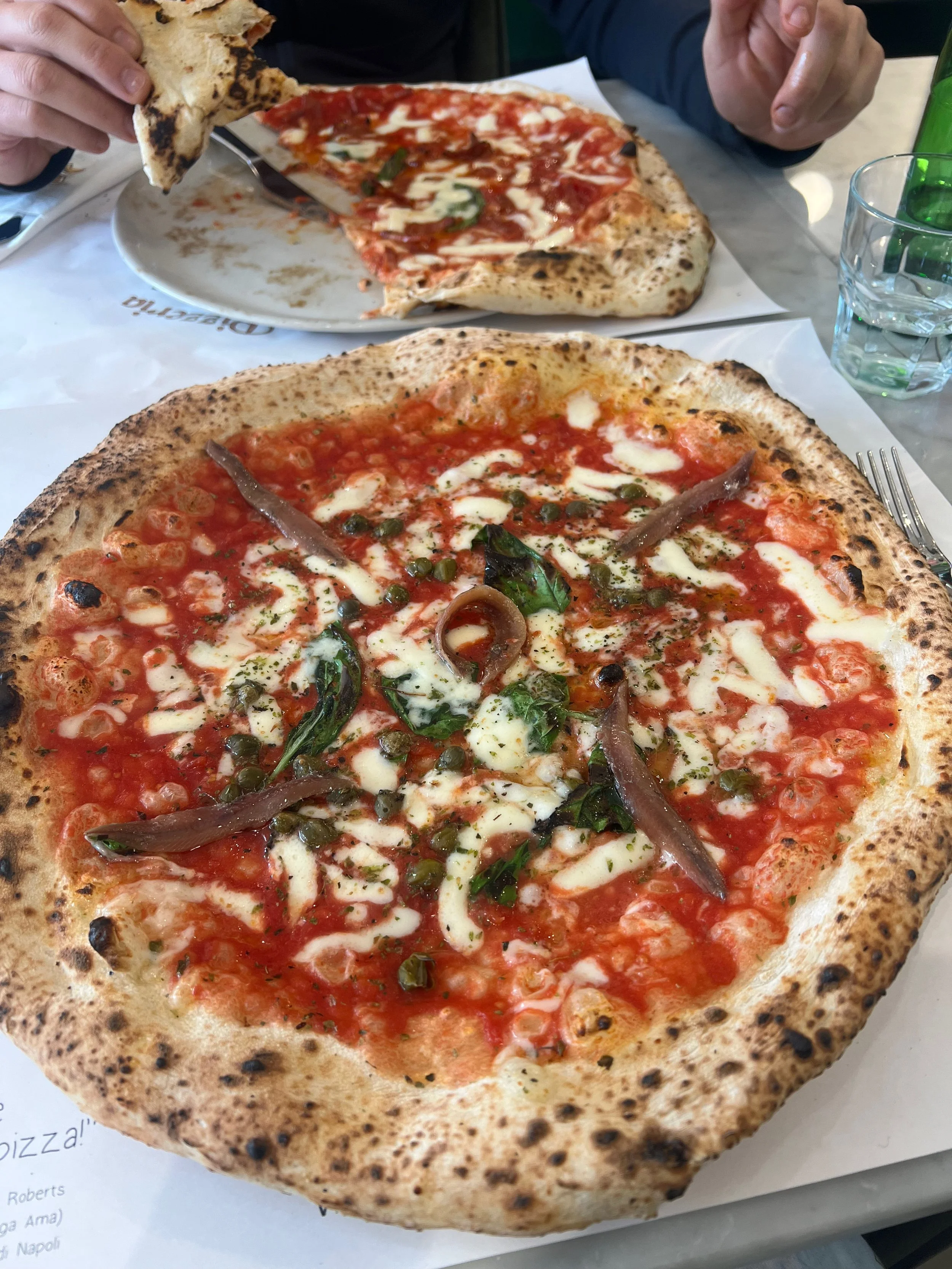
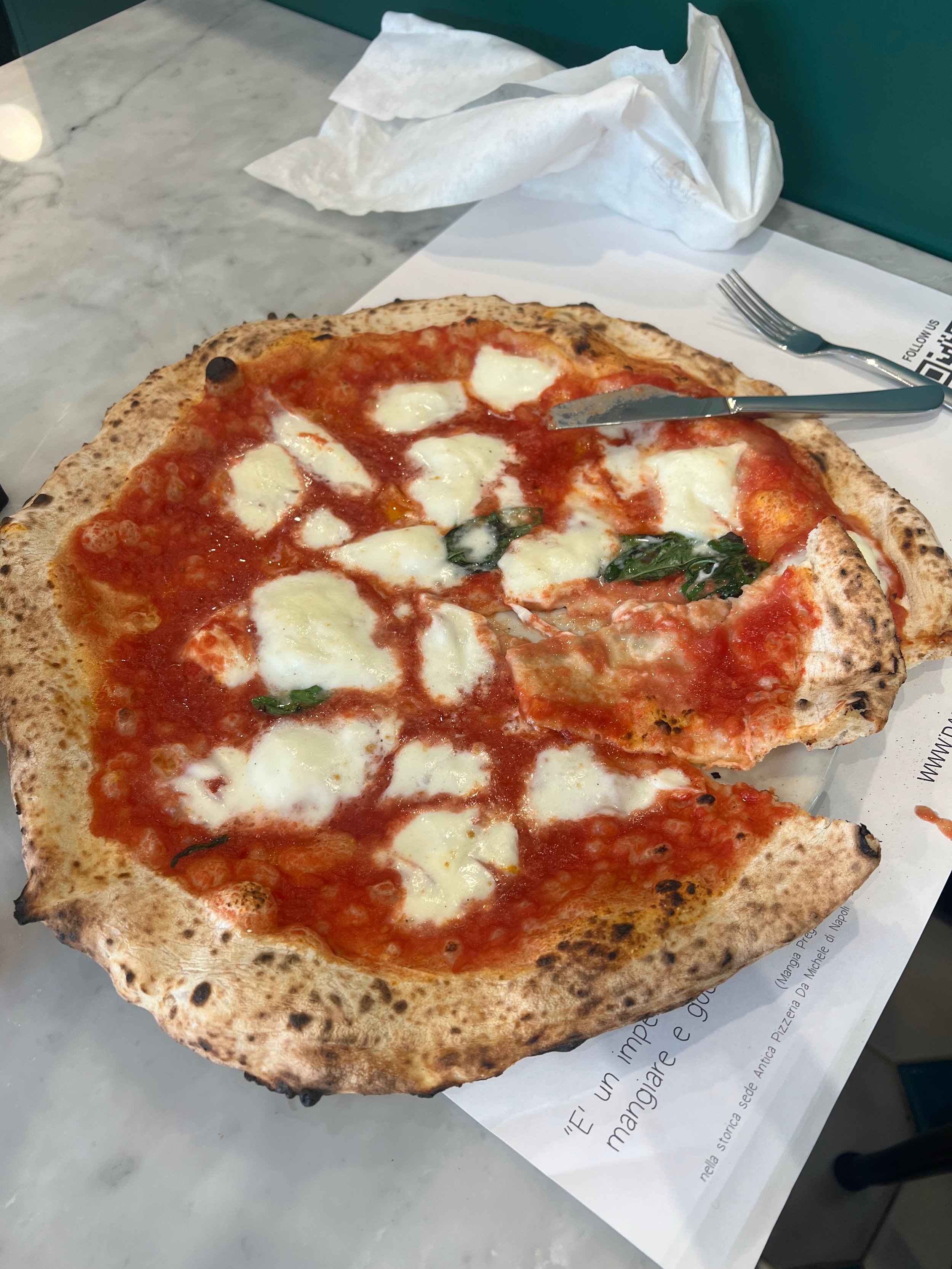
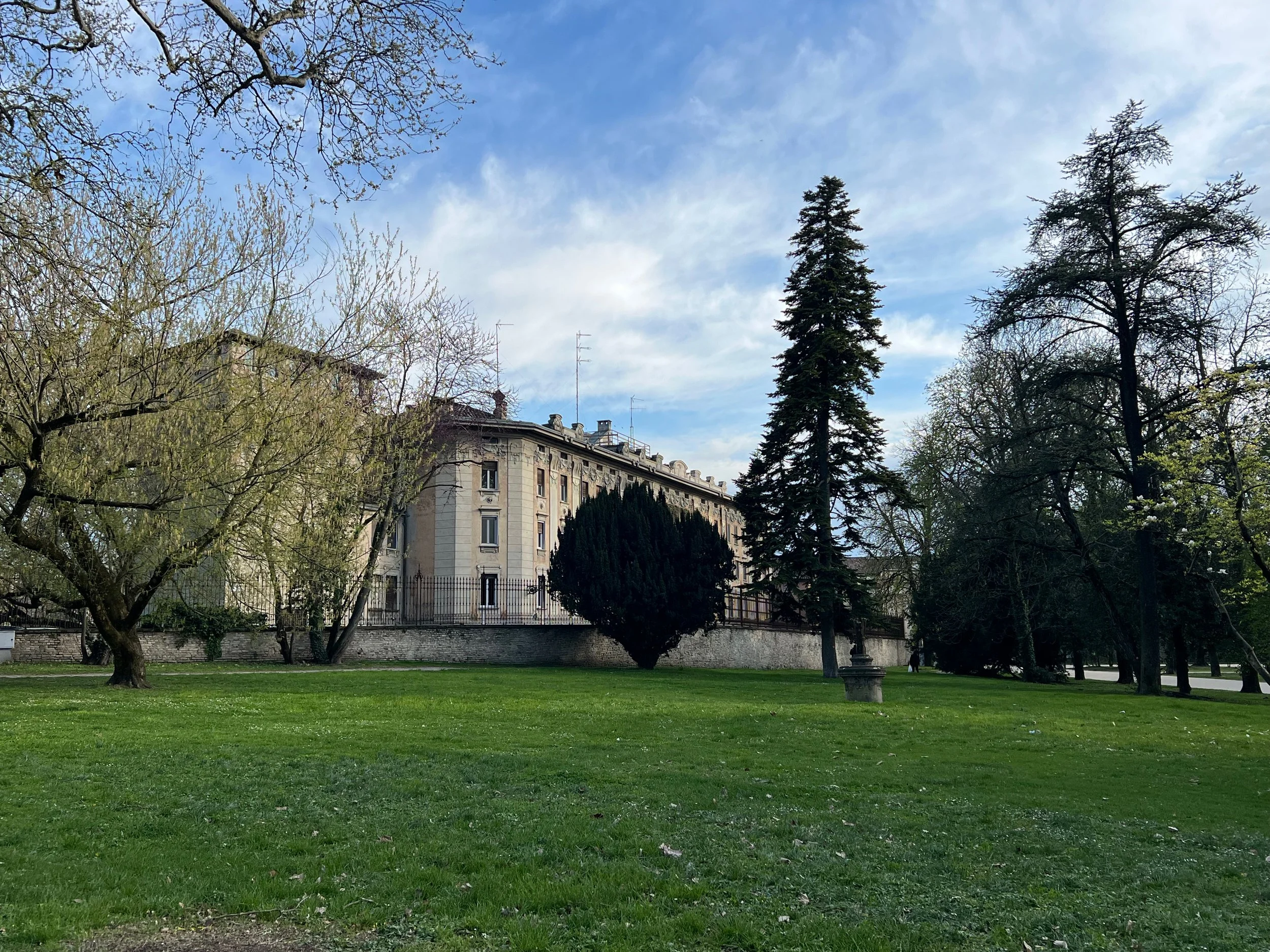
That afternoon, Oliver felt well enough to go for a run so did several miles in the Parco Ducale, or ducal park, while Tom and I walked it. It is a lovely green space across the Parma stream (I mean, stream is harsh; I think it’s a weak river; it requires bridges for goodness sakes.) built by the Farnese family in 1561. You have to hand it to wealthy Italian dynasties of centuries past: they used their money to support academic and civil endeavors that really benefitted the public in many ways (evil or not, in intention).
The Farnese family included a Pope (Paul III in 1534), a mistress to a Pope (not Paul III) dukes, military leaders, and even a queen. Their Palazzo della Pilotta, an enormous compound, today houses The Farnese Theater, the Parma National Gallery, the National Archaeological Museum and the Palatine Library, and all are stunning.
A century and some after the decline of the Farneses, Napoleon’s second wife, Marie Louise (Maria Luiga), became the Duchess of Parma (in 1814). She also did wonderful, benevolent things for the city which today has a population of, like Modena, about 200,000. Marie Louise focused on infrastructure, culture, and social welfare. She built schools and hospitals and even a center to help those with mental illness. She was, by all accounts, beloved. We learned that she adored violets and those remain a symbol of the city and homages to them and her are everywhere: we ate candied violets on yet another food tour.
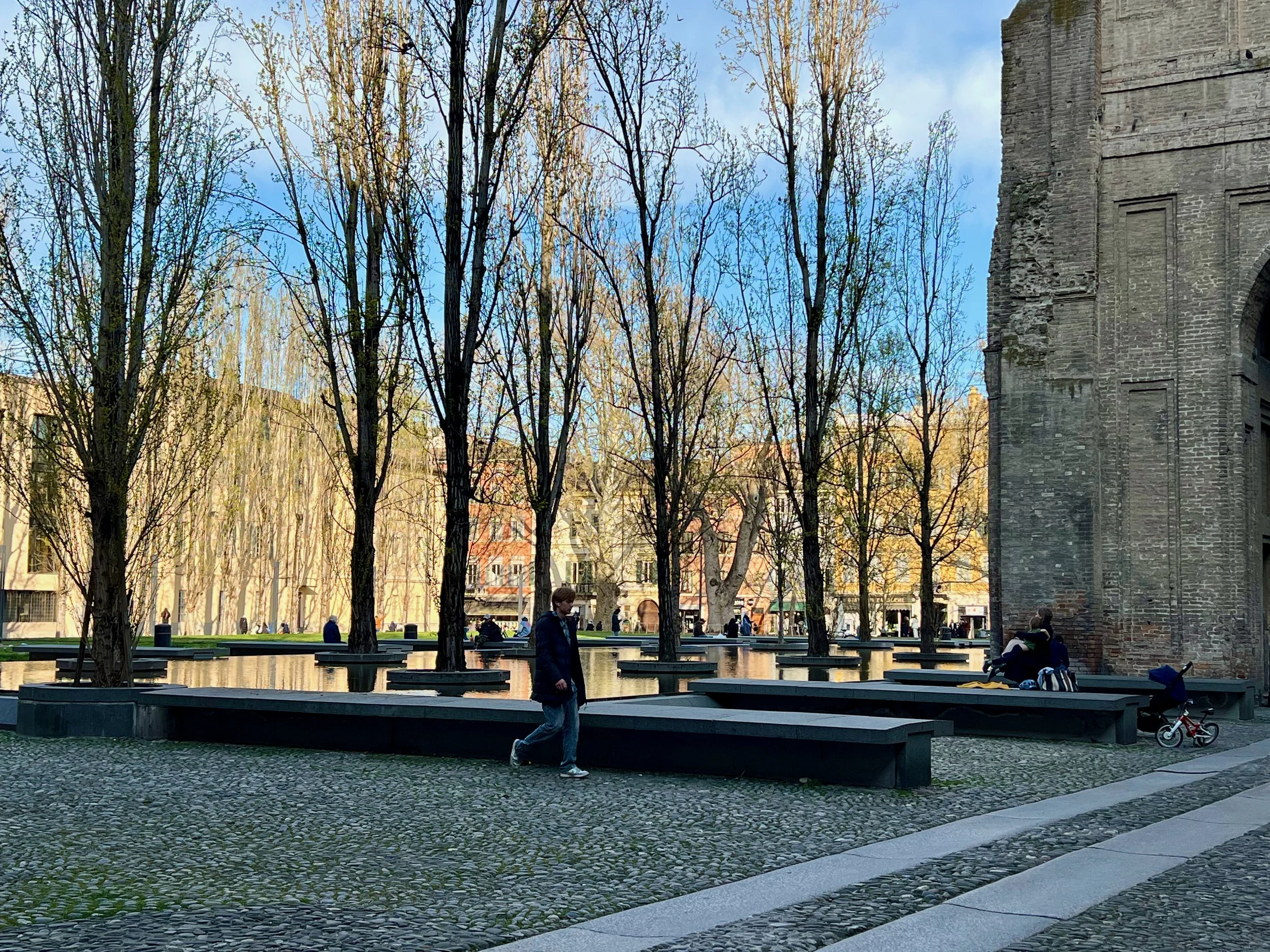
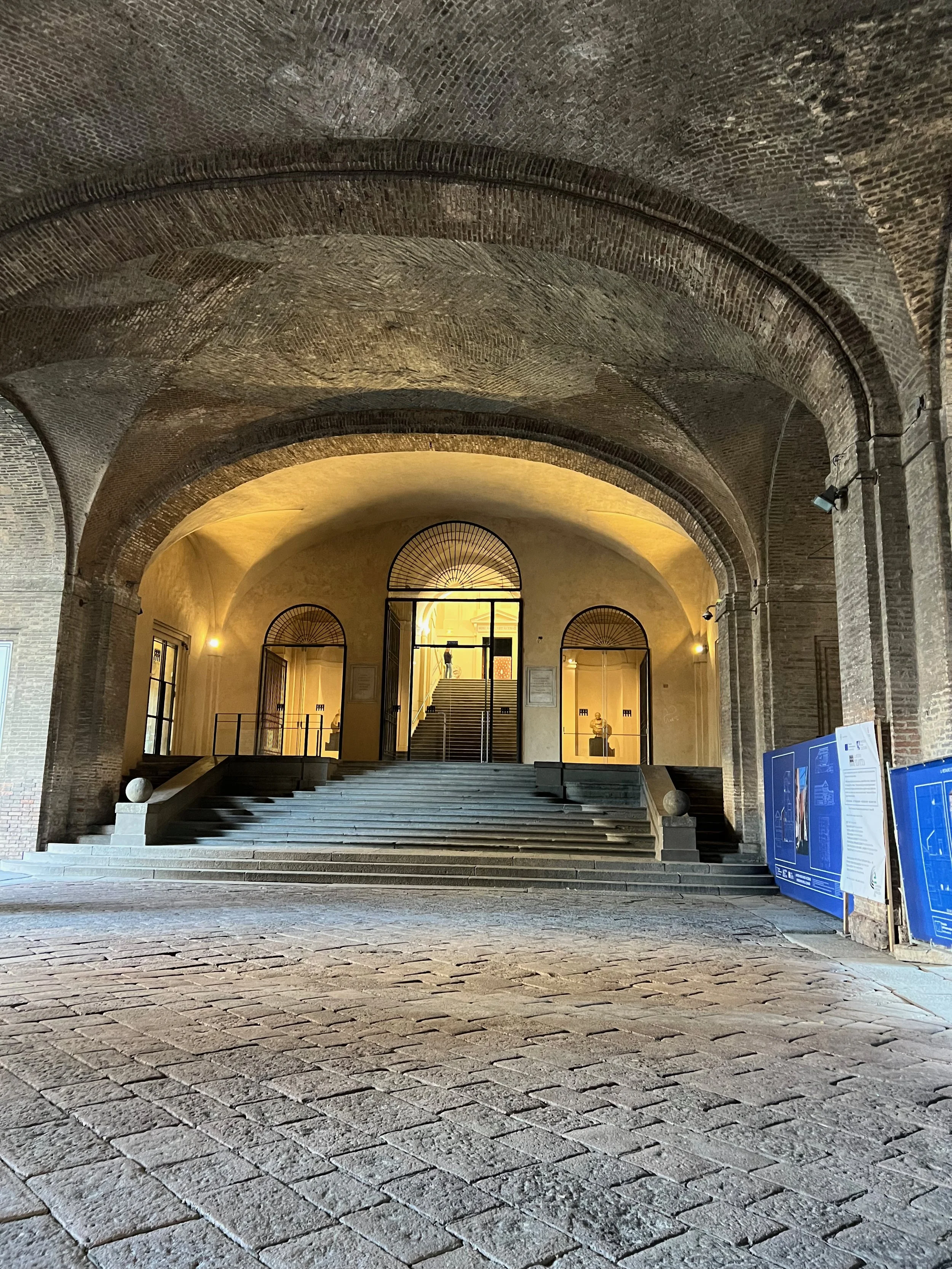
Yes, I had scheduled another half-day food-based walking tour, because when in Emilia Romagna you eat. This tour was even better than the one in Modena and solidified a definite fondness for Parma. Our guide was a gem with whom I immediately wanted to become dear friends. Roberta was born and raised in Puglia, moved to Bologna for university where she studied languages, met a man from Abruzzo (where Tom’s lineage is; in fact, Roberta has been to Tom’s ancestral town, Fara San Martino (pop 2,000) twice!!! SMALL WORLD) who now works for Barilla (based in Parma), hence her now living in Parma for nearly 14 years. We met her in front of da Michele, funny enough, walked to Carlo’s store, a tribute to Marie Louise and where we had the candied violets, then to Pepen for this insane sandwich/pie with artichoke and pesto cream and mortadella, then for wine and infinite iterations of prosciutto, to pasta and a parmesan tasting and more wine, and finally to Ciacco for gelato. Perhaps my favorite thing was the lime-celery sorbetto at Ciacco. OF.THE.GODS.
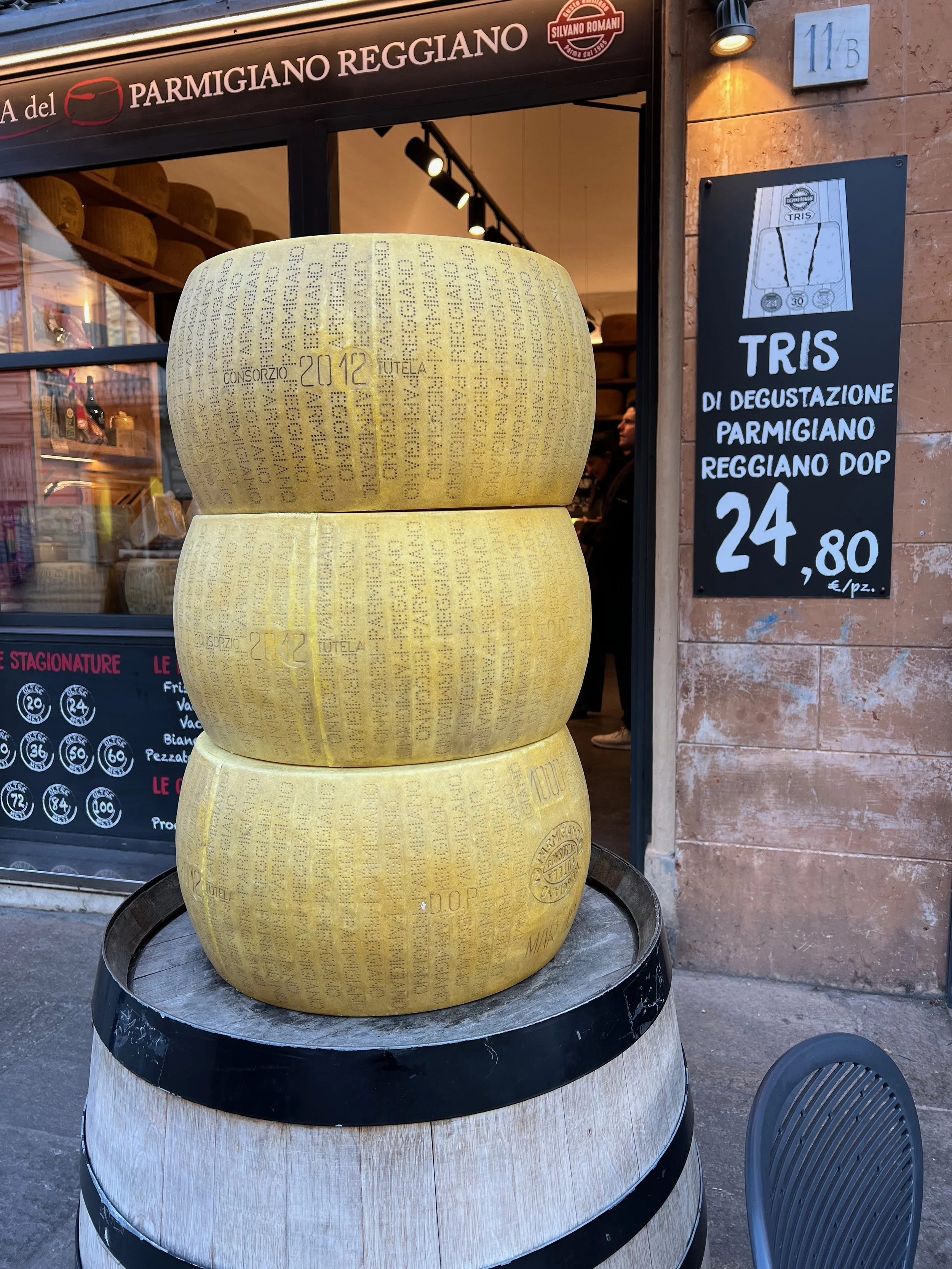
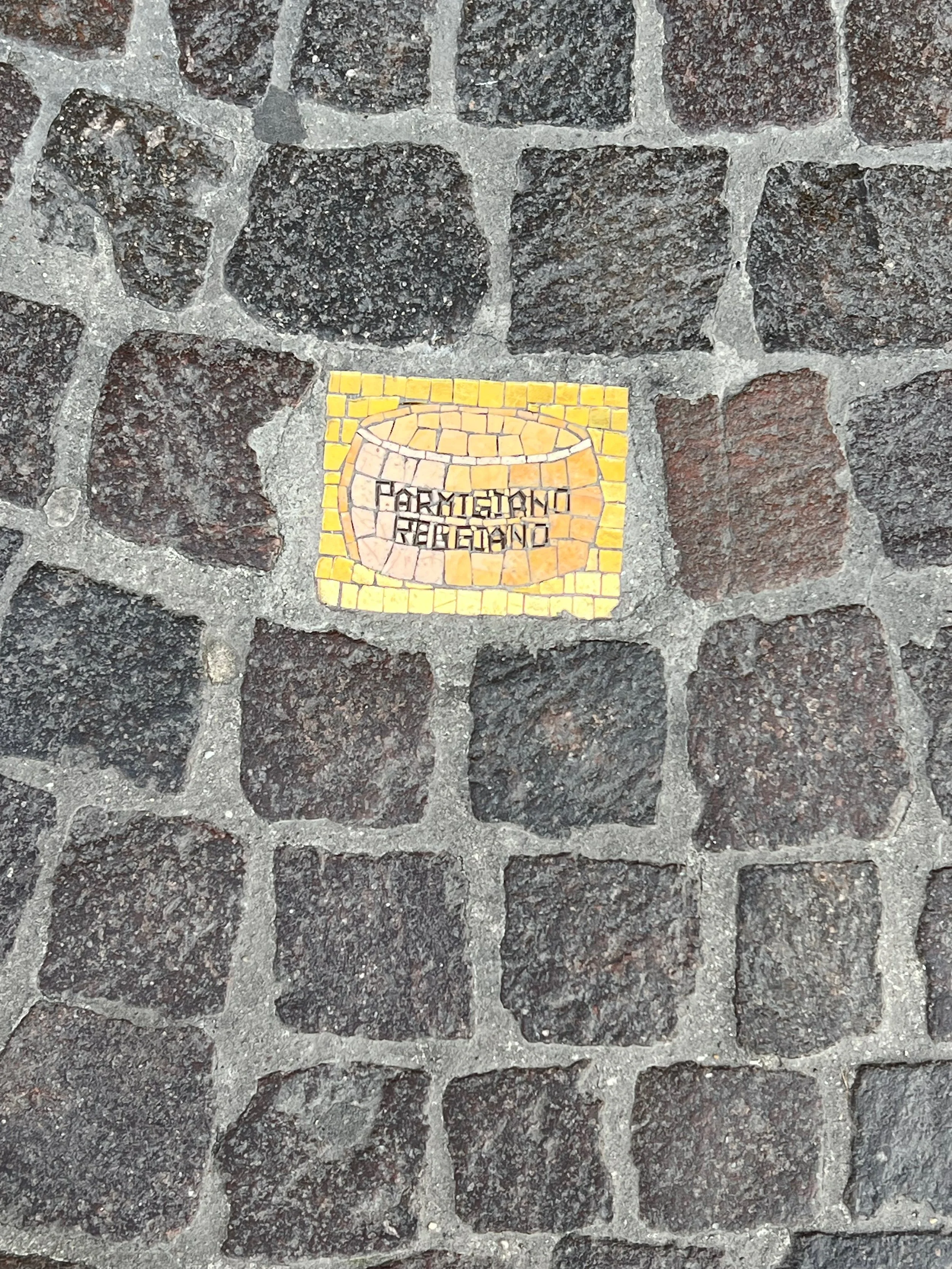
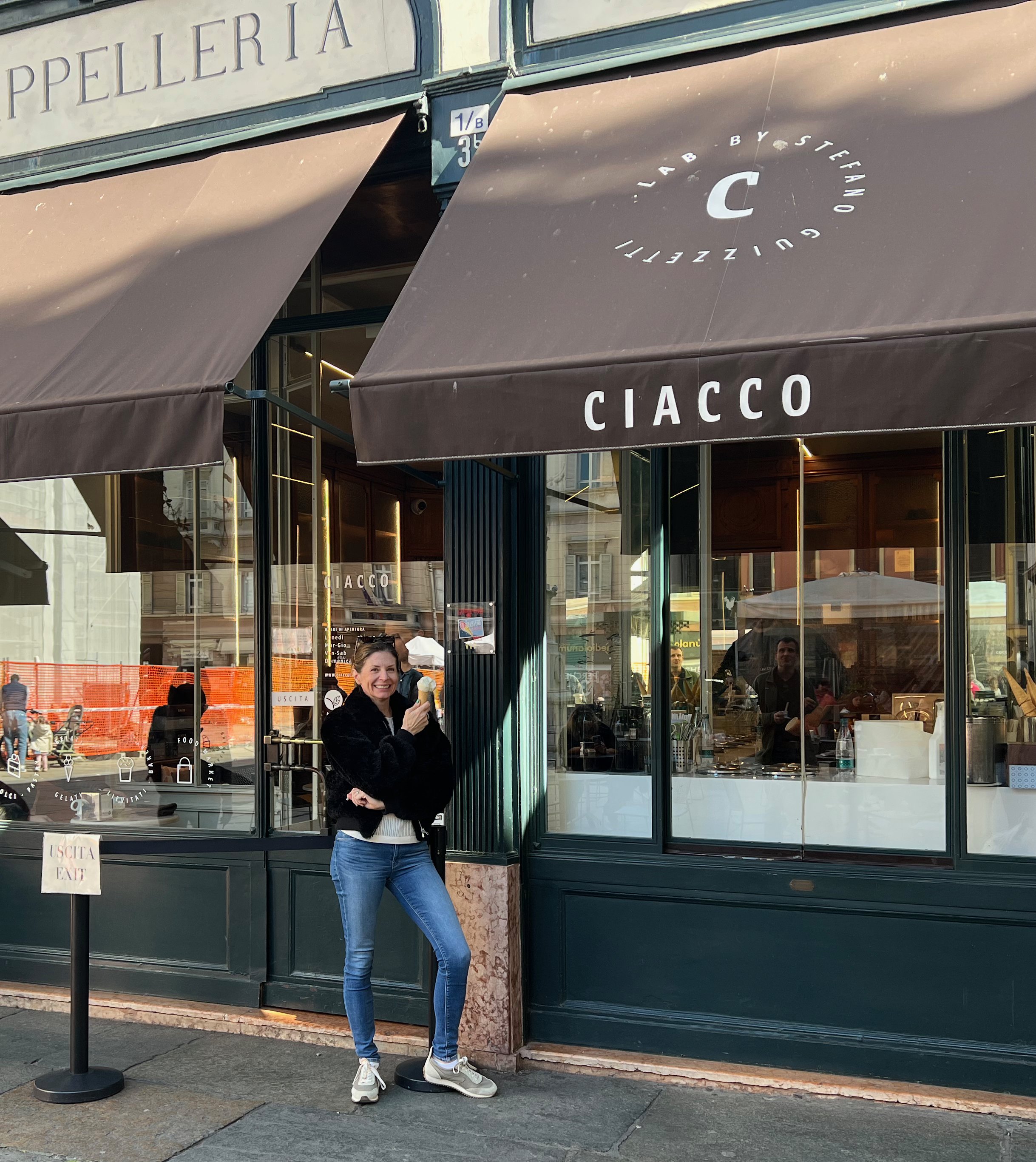
Roberta also gave us a wonderful sense of Parma as a city, its history, its present, her life there. I truly enjoyed our time with her so very much; so did Tom and Ol. Go to Parma. A. Be ready for pork. Avoid the many horse butchers!
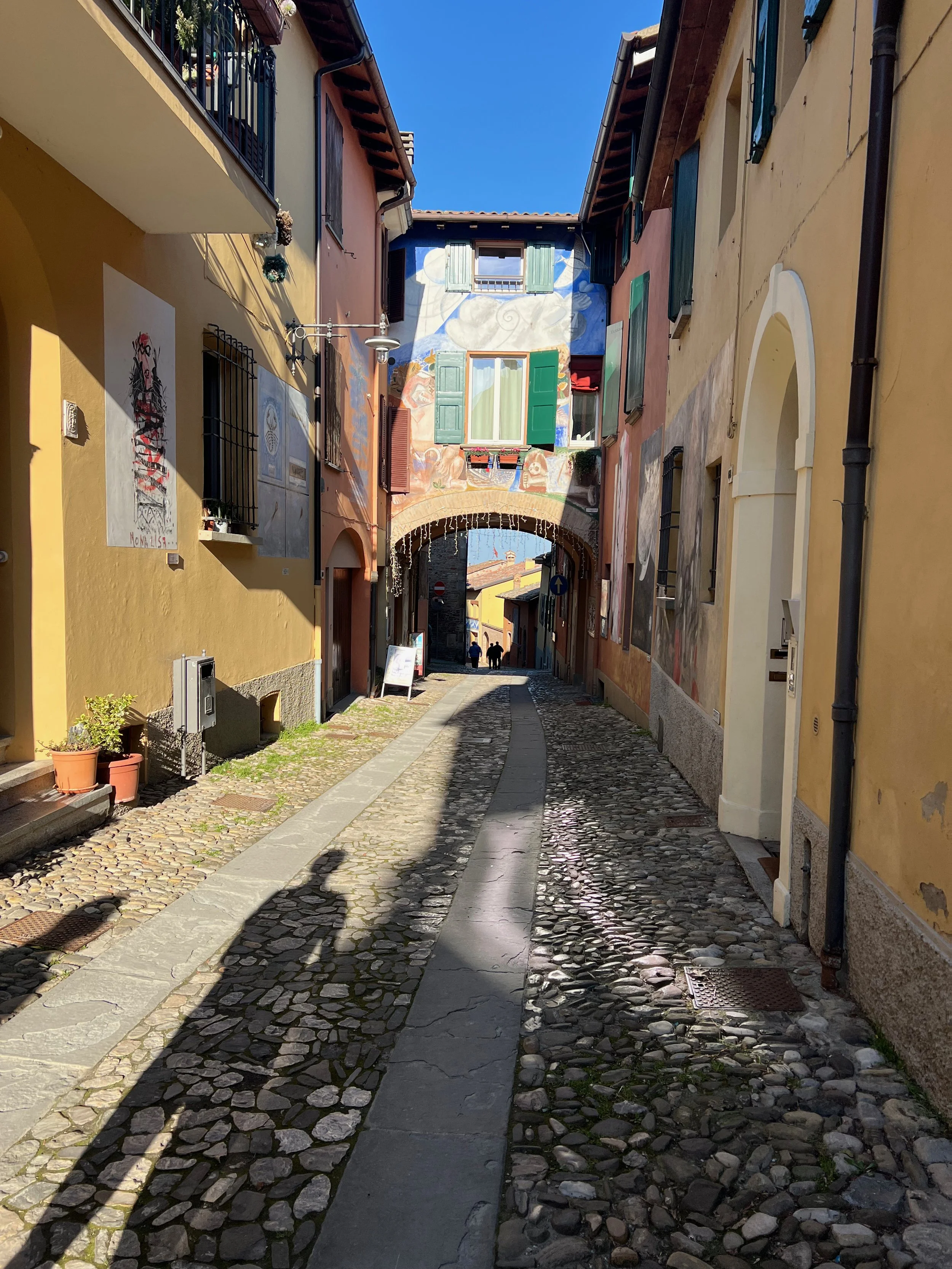
And then we had to leave because Dozza called. Dozza is a town of 300 people that most people seem never to have heard of. Roberta had been there, of course, but she said she’d never met a tourist who was going. So why were we? Because I planned this trip.
We had to get back to Bologna but I both did not want to drive in Bologna and I didn’t want to stay at some airport hotel and waste exploration time that could be better utilized. The famous F1 race track, Imola, is very near to Bologna, so initially I had us going and staying there in hopes it would be open to the public. Imola was recently removed from the F1 race roster both because it is old and dangerous and also to make room for a new host, but the autodromo remains and can be visited. That said, everyone online noted that if you can’t visit the track, Imola as a town is ass so don’t go. Sorry, Imola. So to hedge, I researched other nearby gems and discovered Dozza, a town of 300 that hosts a biannual Festival of the Painted Wall and has since 1960.
Perfetto!
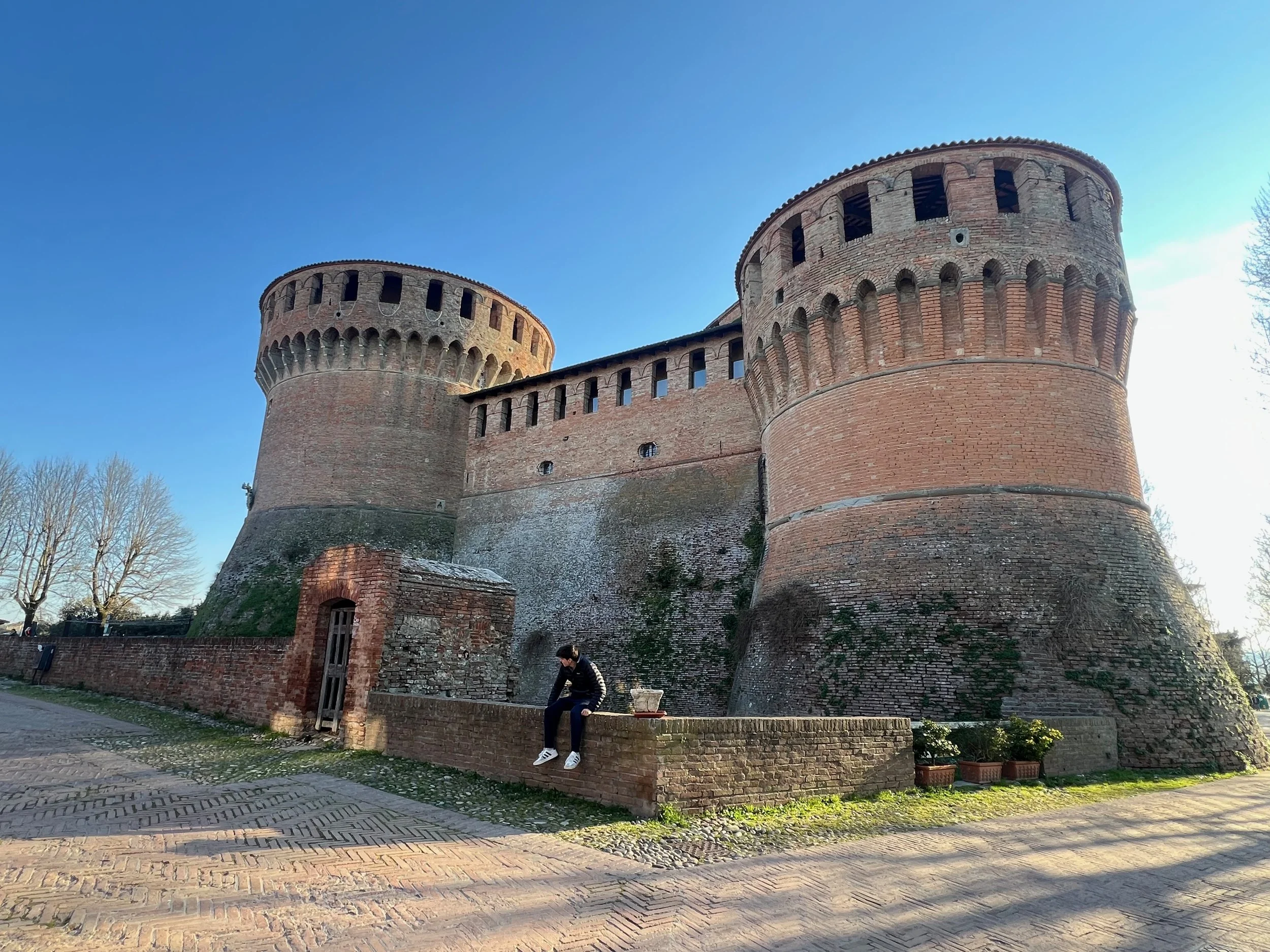
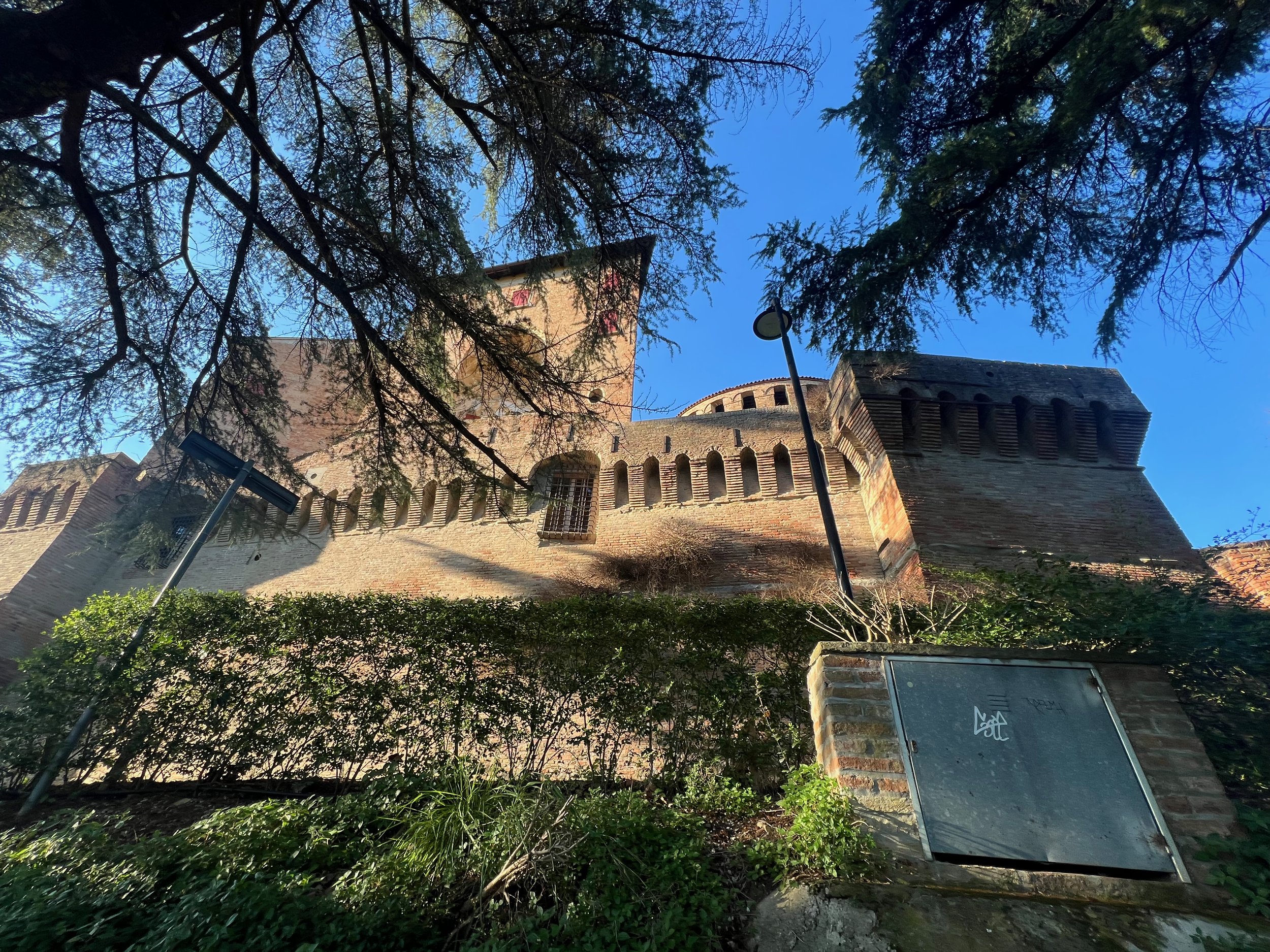
As we drove in, via a generic suburb, I could tell Tom and Oliver were like, “where are we going and why?!” but as we entered the walls of the Rocca, a fortress that comprises a castle, defensive towers, walls, moat, and merlons, they seemed more accepting. There is one street through the town, and on it we encountered a jubilant wedding reception. Fortunately, we were able to pass, connect with Mauro, the non-English speaking elderly husband of our AirBNB host whose natal home we were staying in that evening, and get our keys and instructions.
I really cannot tell you the immense satisfaction and pride I felt throughout the trip in my ability to really speak with Italians in their language and in multiple tenses with ample vocabulary and even some nuance and silliness. There is a good deal of English in Bologna, but in the cabs and at the car rental place, for example, I needed my Italian skills. In Modena and Parma they were even more helpful, and in Dozza, they were essential. I have always felt that languages are a superpower, that facility with ones you did not grow up with is an actual power, a profound connective tissue that is difficult to forge in the absence of shared tongue. It was a joy to speak with Mauro about the town, his wife’s childhood home, where they live now, how to lock up and check out. It was a joy to tell the woman at dinner that due to my two glasses of wine at lunch in Parma I would not be drinking wine with dinner. It was funny to argue with one cabbie about acceptable fillings and sauces for tortellini —SOLO EN BRODO! said he— and then to ask him to call dispatch because two days earlier Oliver had left his sunglasses in another cab and could he help us. He did. To no avail, but he did, and I was thankful.
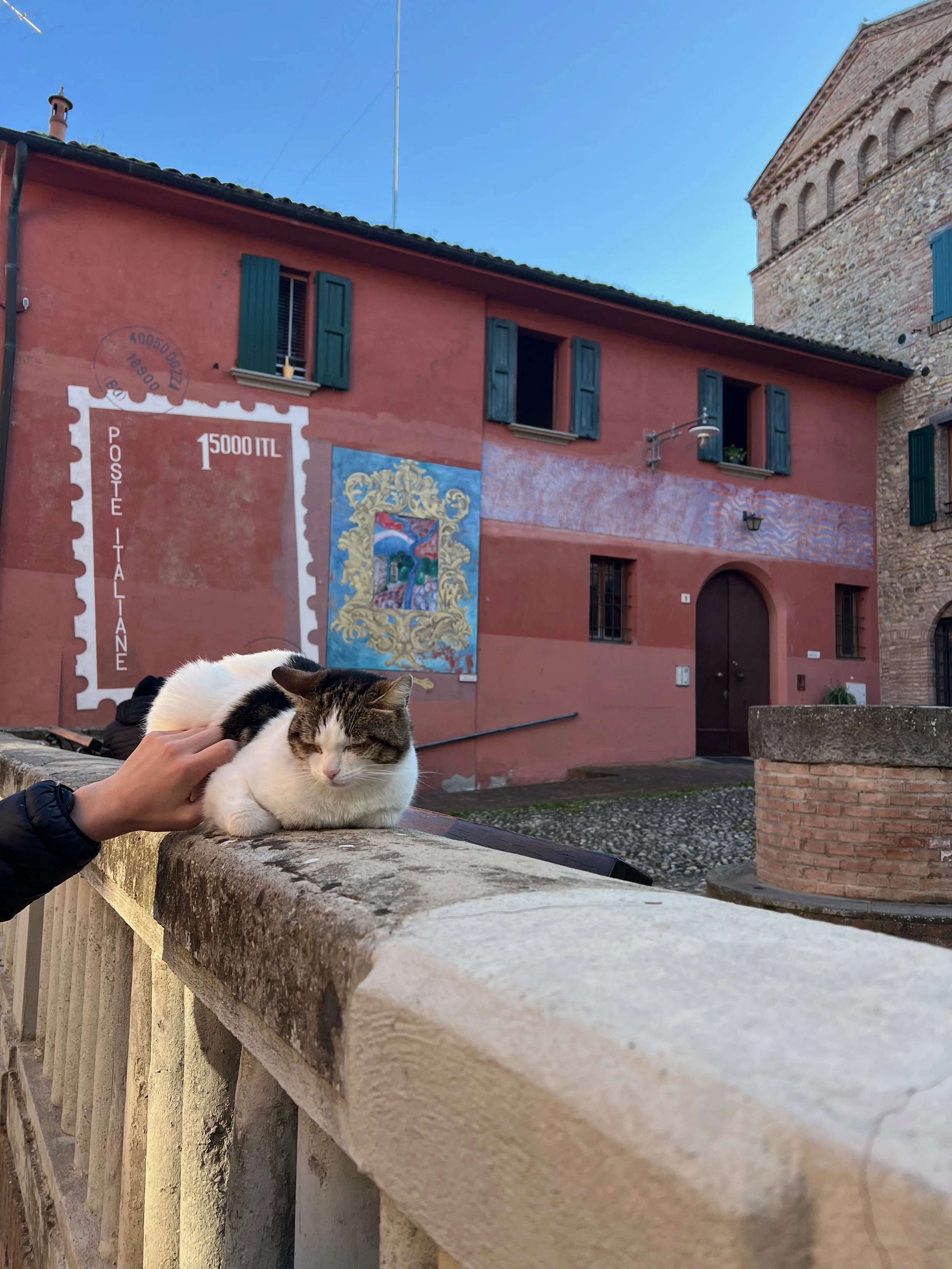
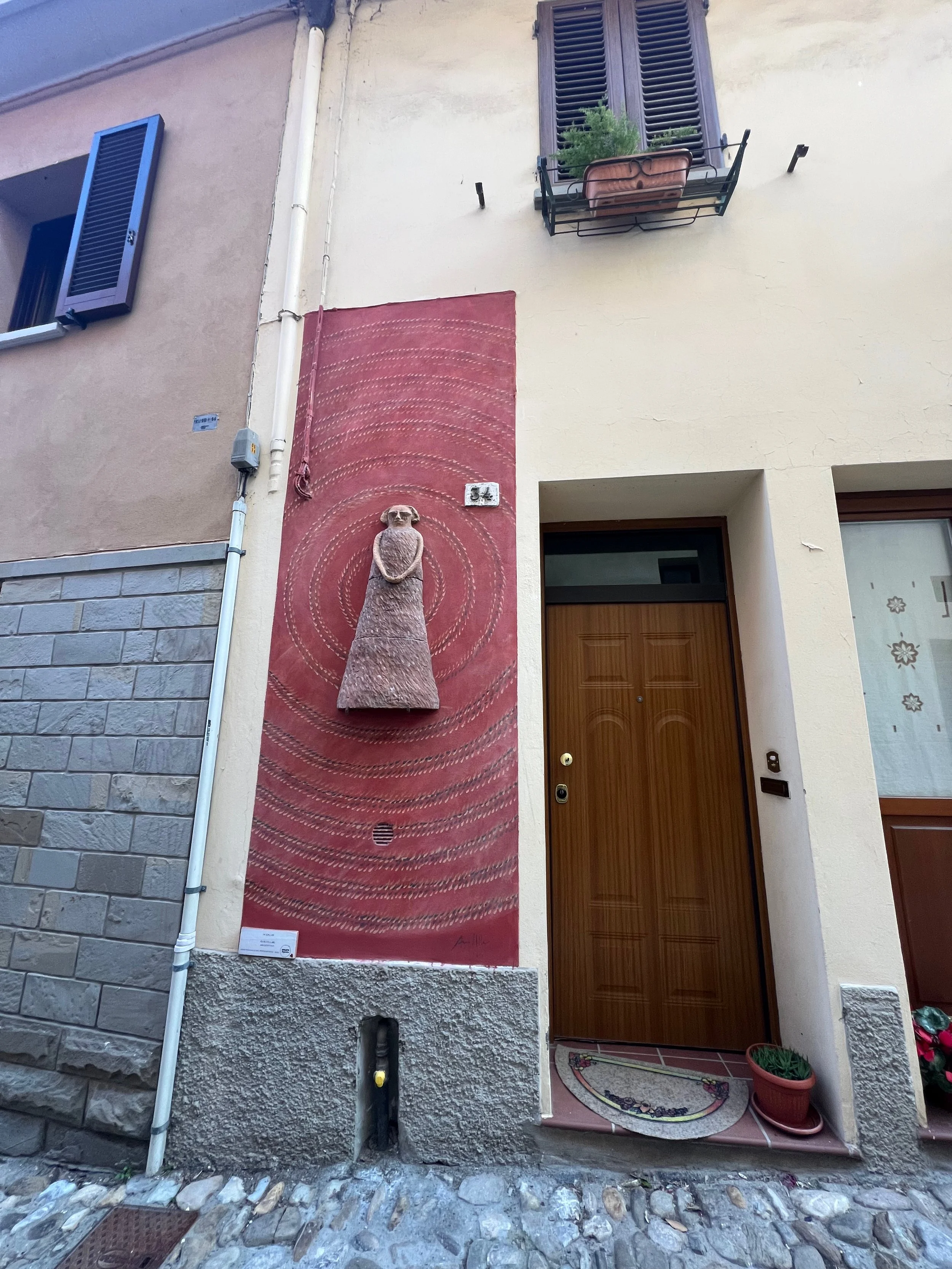
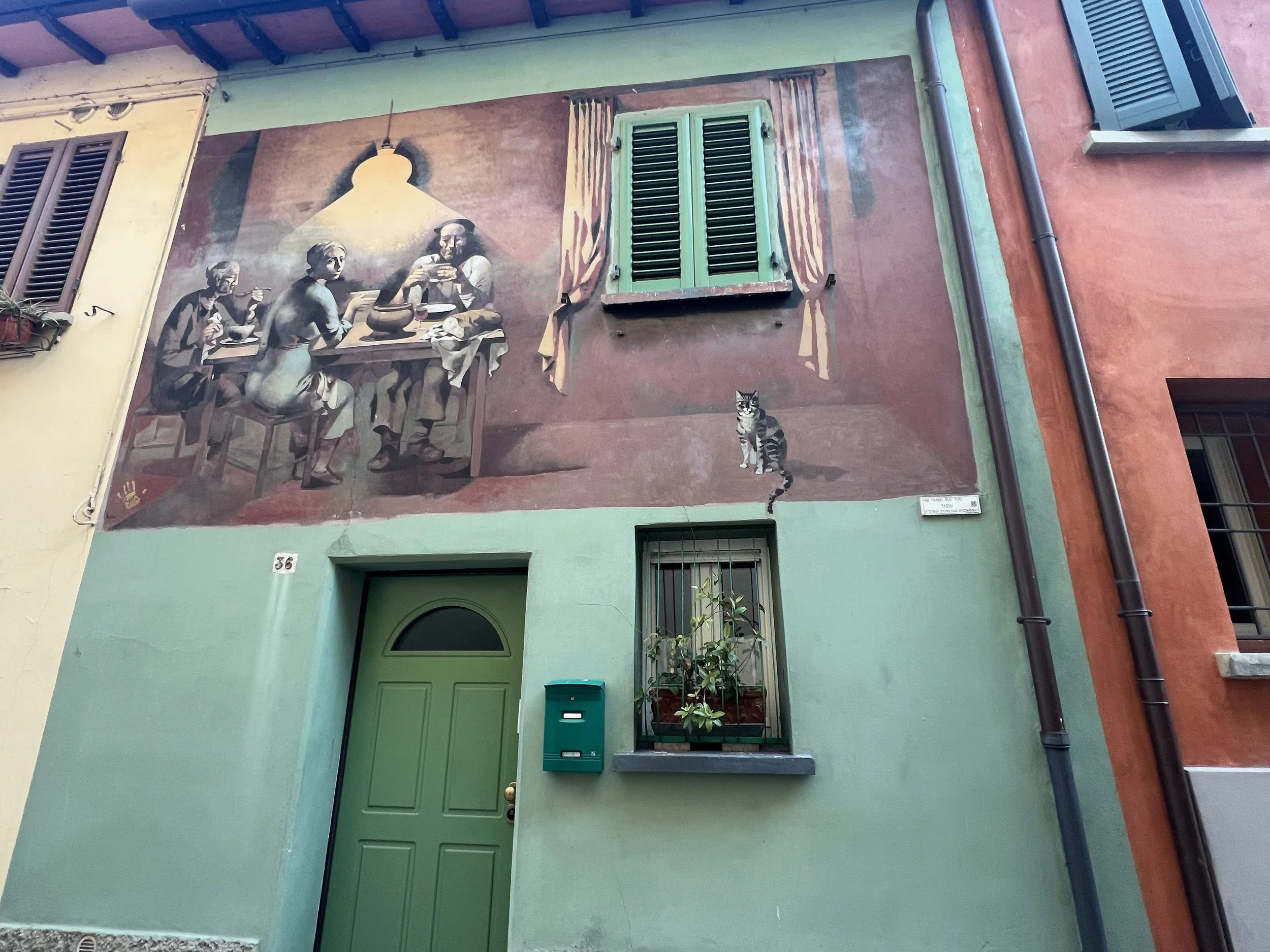
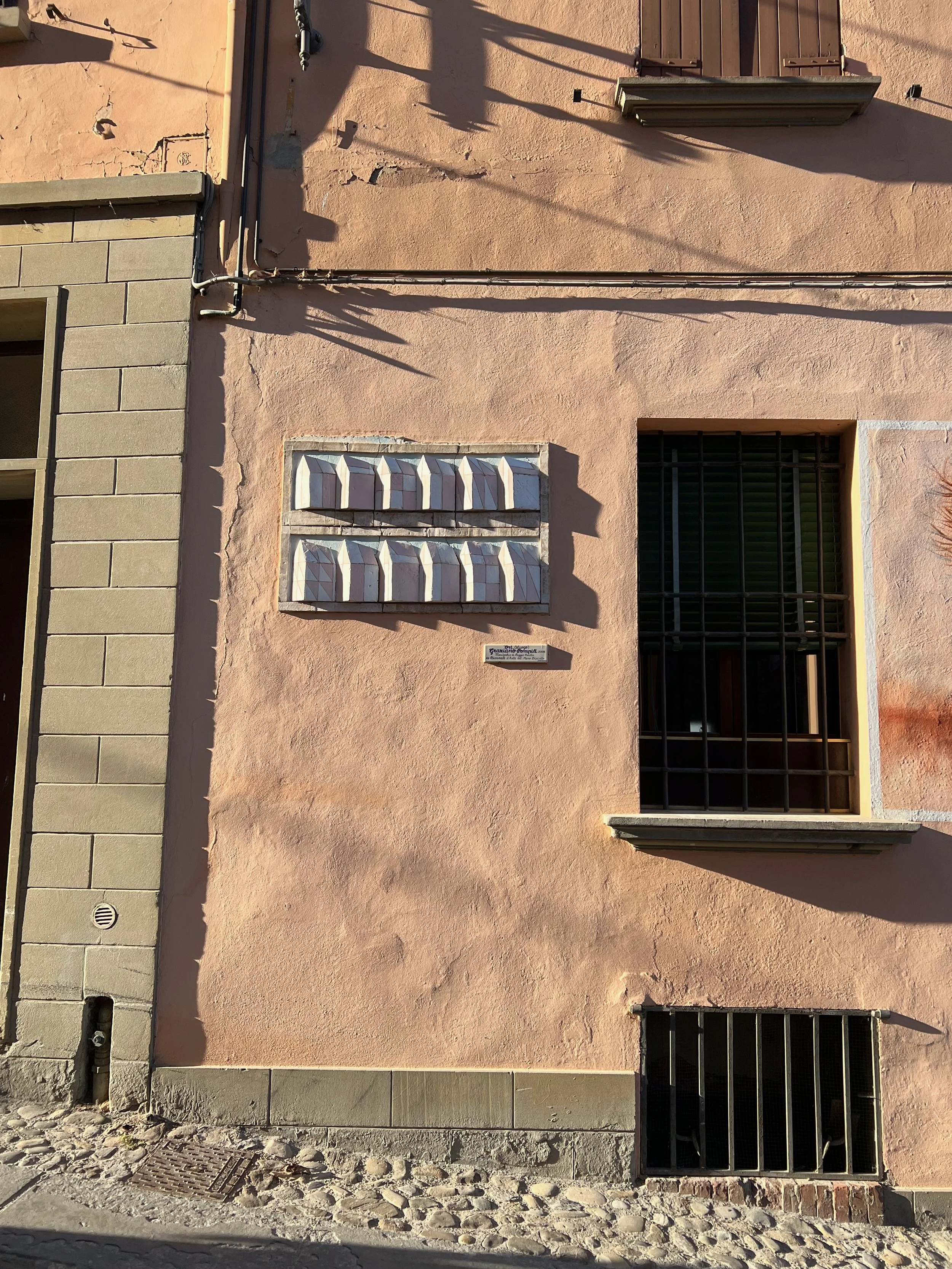
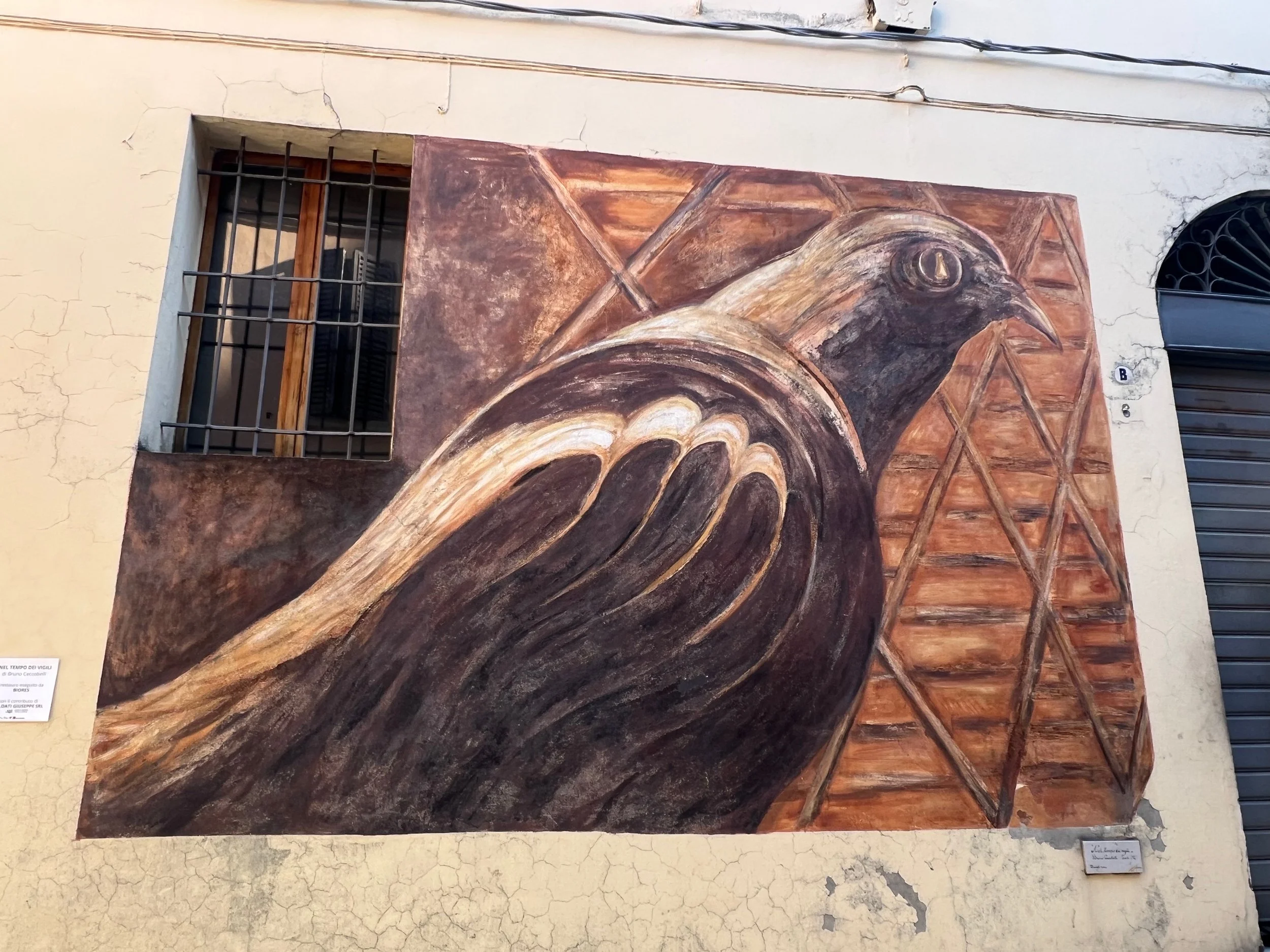
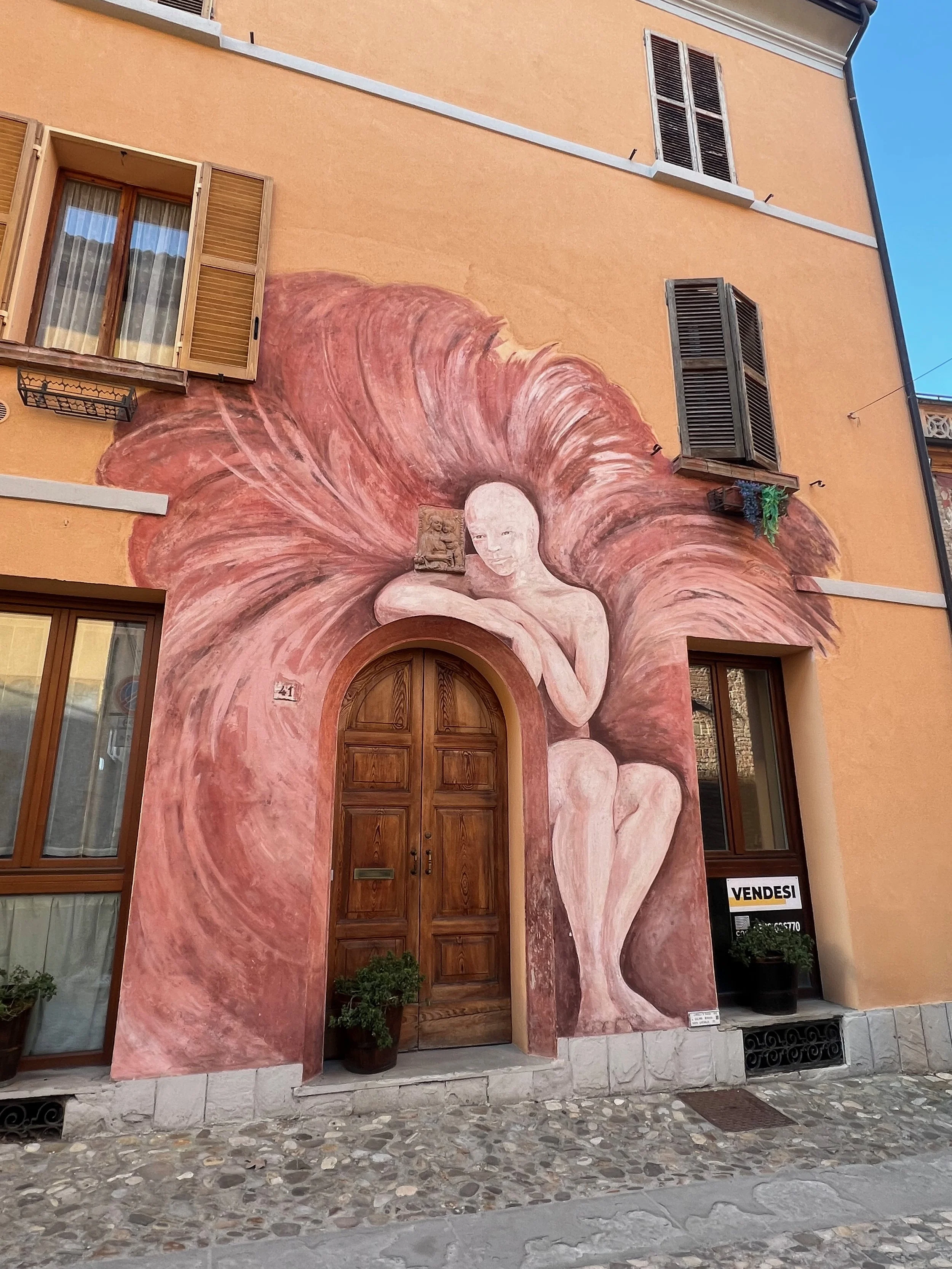
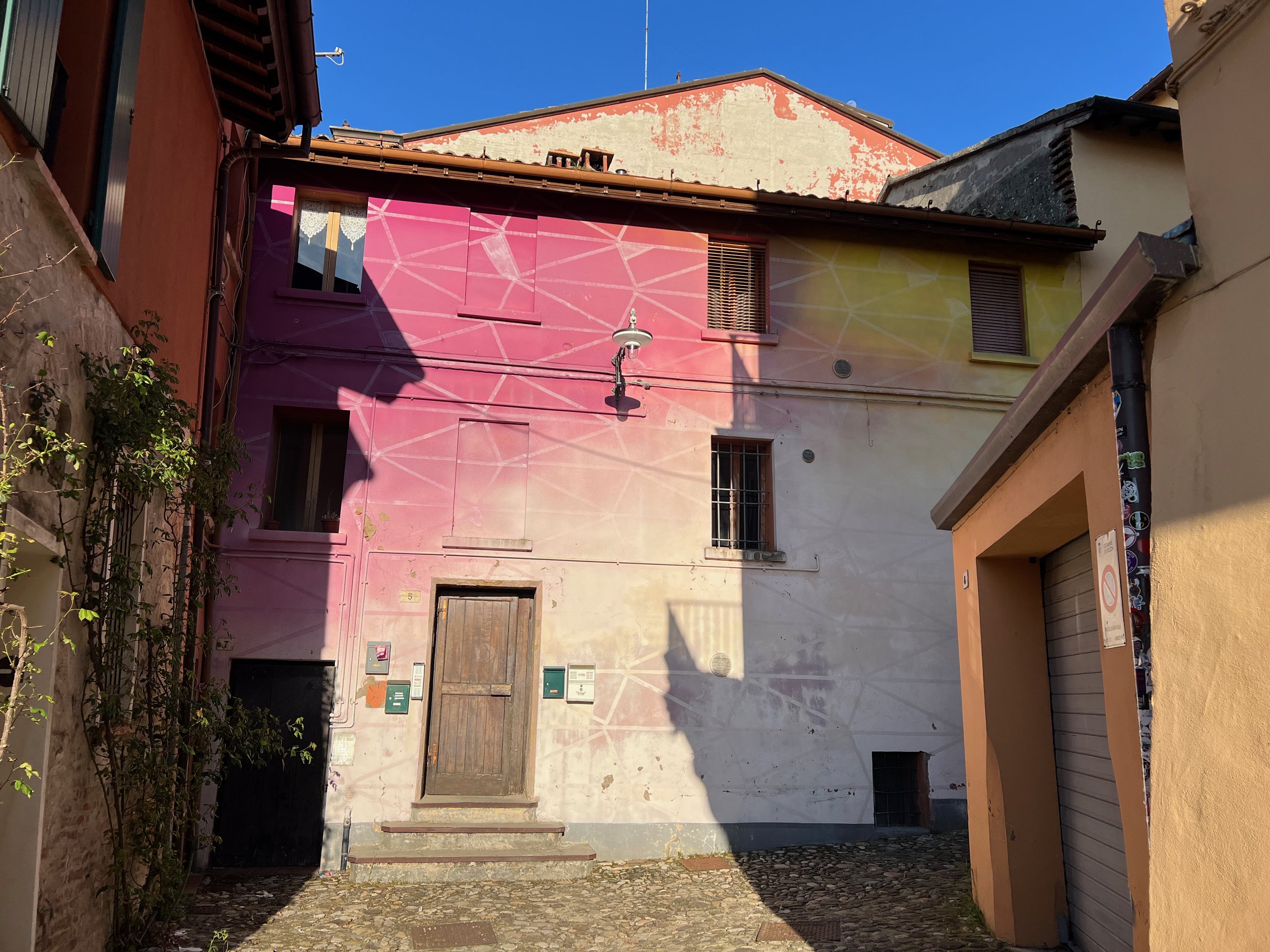
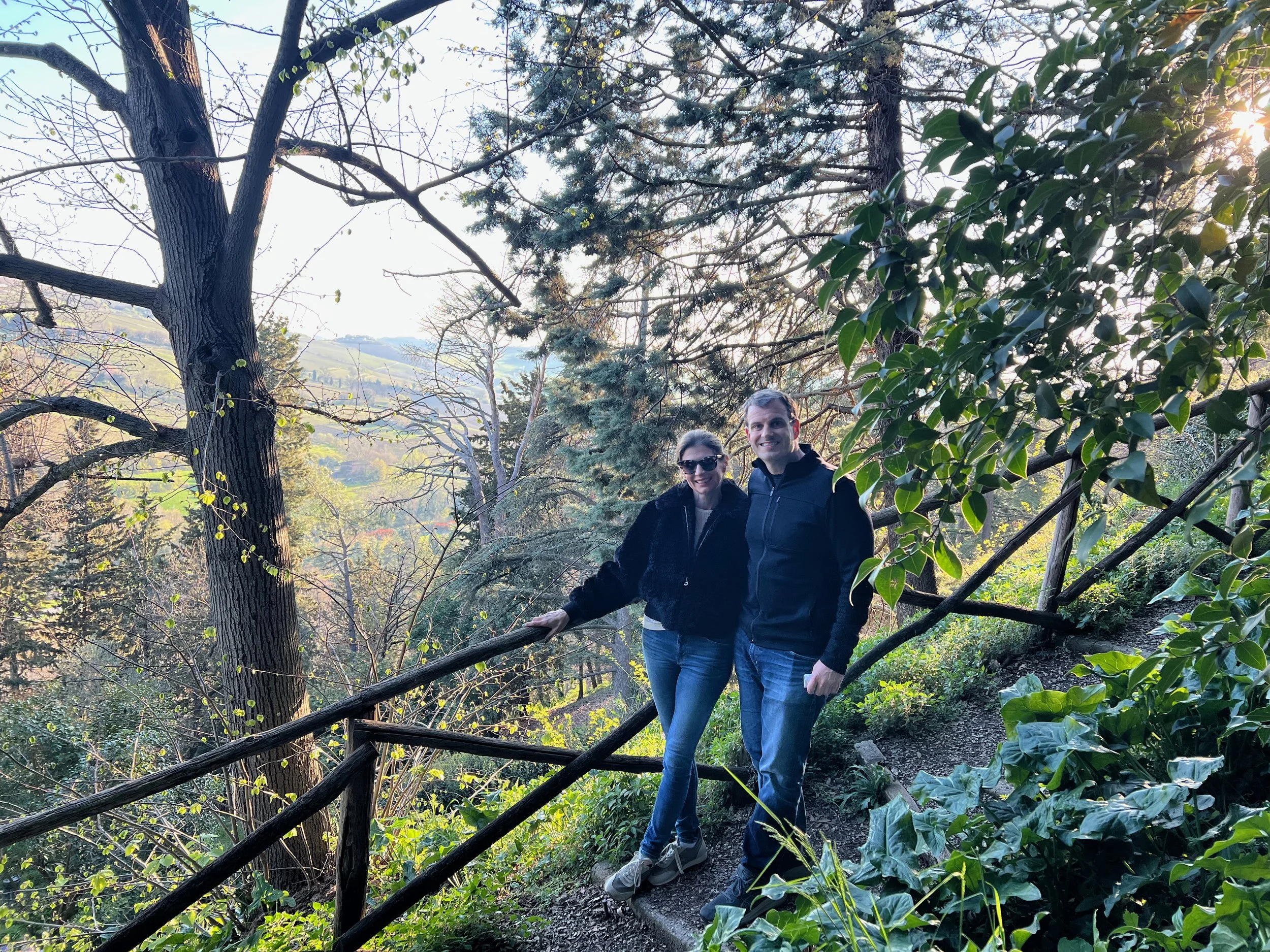
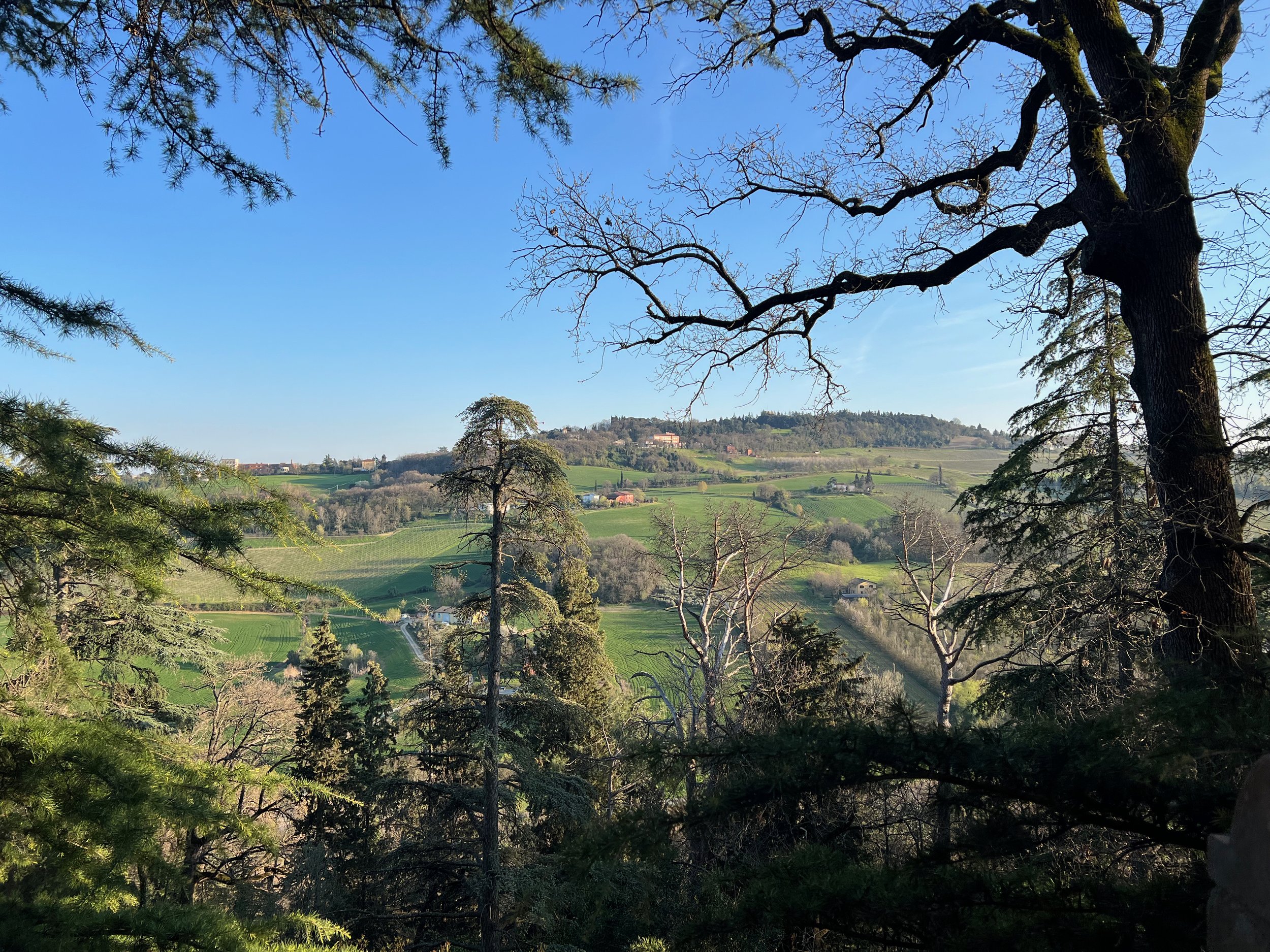
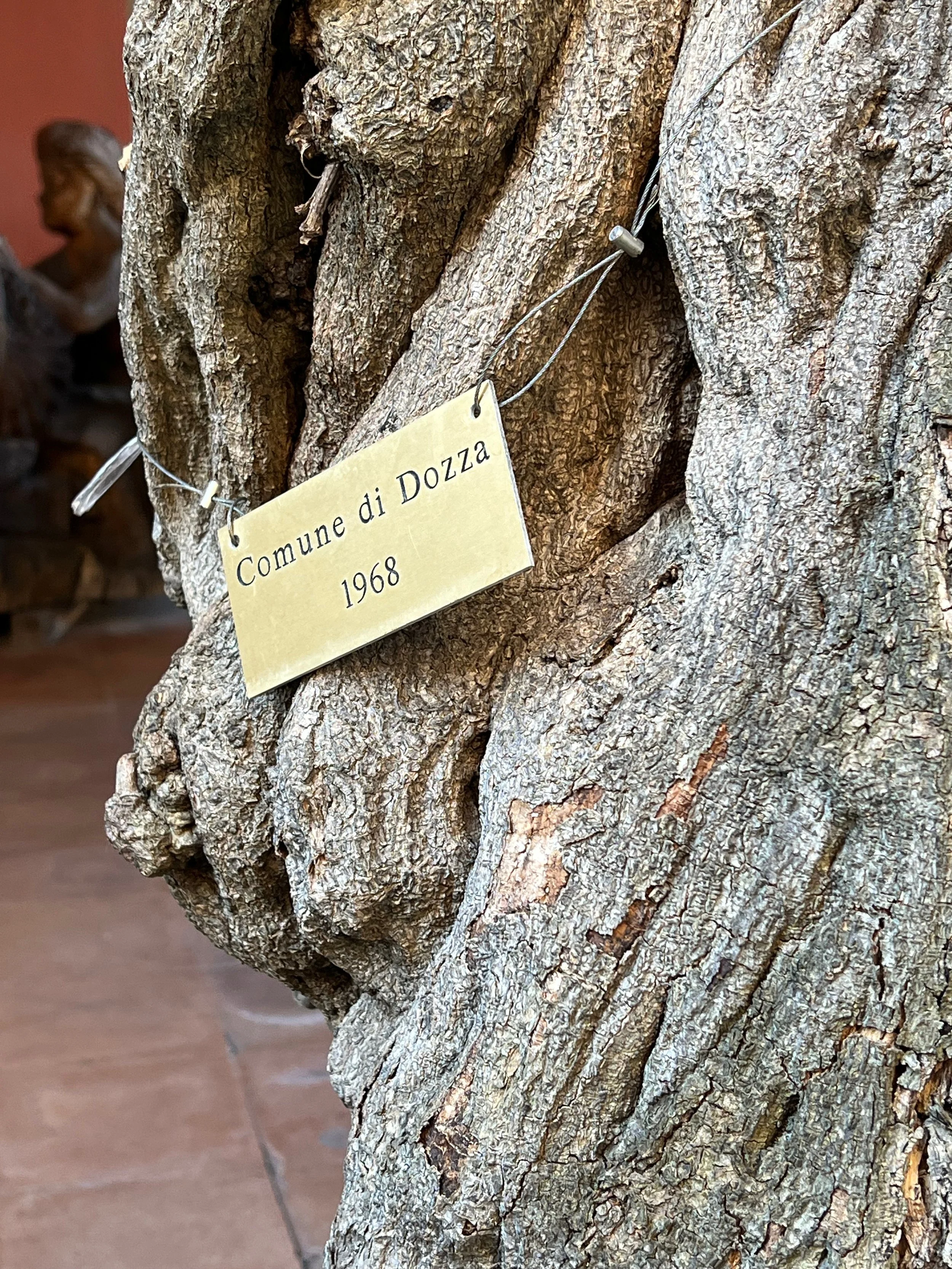
Dozza is such a special little gem. Some of the older murals are flaking away but their presence remains. Everyone seems happy there, in this town of art. The castle now houses a giant enoteca and museum of Emilia Romagna wine with a lengthy walk interested drinkers can take to explore the various wineries along it. There are many cats that roam the town in leisure; surely they run the place. They are unperturbable except when confronted with a barking dog, which we witnessed, and to which they immediately show who is boss. It’s really cool to see a town so wisely have continued to thrive, even in a time of chain stores and industrialization and capitalism and cities. The Dozza tourism board should be a case study in absolute success: they went all in history and art, and they’re killing it. We could not get into one beautiful restaurant that night because it was full but fortunately found another beautiful spot and had a delicious meal. The views from everywhere are gorgeous. We felt happy and we slept well in a wonderful old Nonna’s home.
A+. Go to Dozza.