When your child meets a hero, or For the love of books

Much to my delight, Jack is an avid, voracious reader. Reading came to him easily, so he's been at this for a while now, and I consider it a great gift that curling up with a book remains one of his most beloved pastimes. 

He relishes the feel of paper and the weight of a bound work -preferably hard cover- in hand. He enjoys series and wants to have every volume of his favorites: Harry Potter; Big Nate; everything Stuart Gibbs has thus far written. 

I try not to give the boys too many random gifts, but only rarely can I turn down a request for a new book "for my library, Mom." And I love me a full set.

In these ways, Jack is most definitely my son.

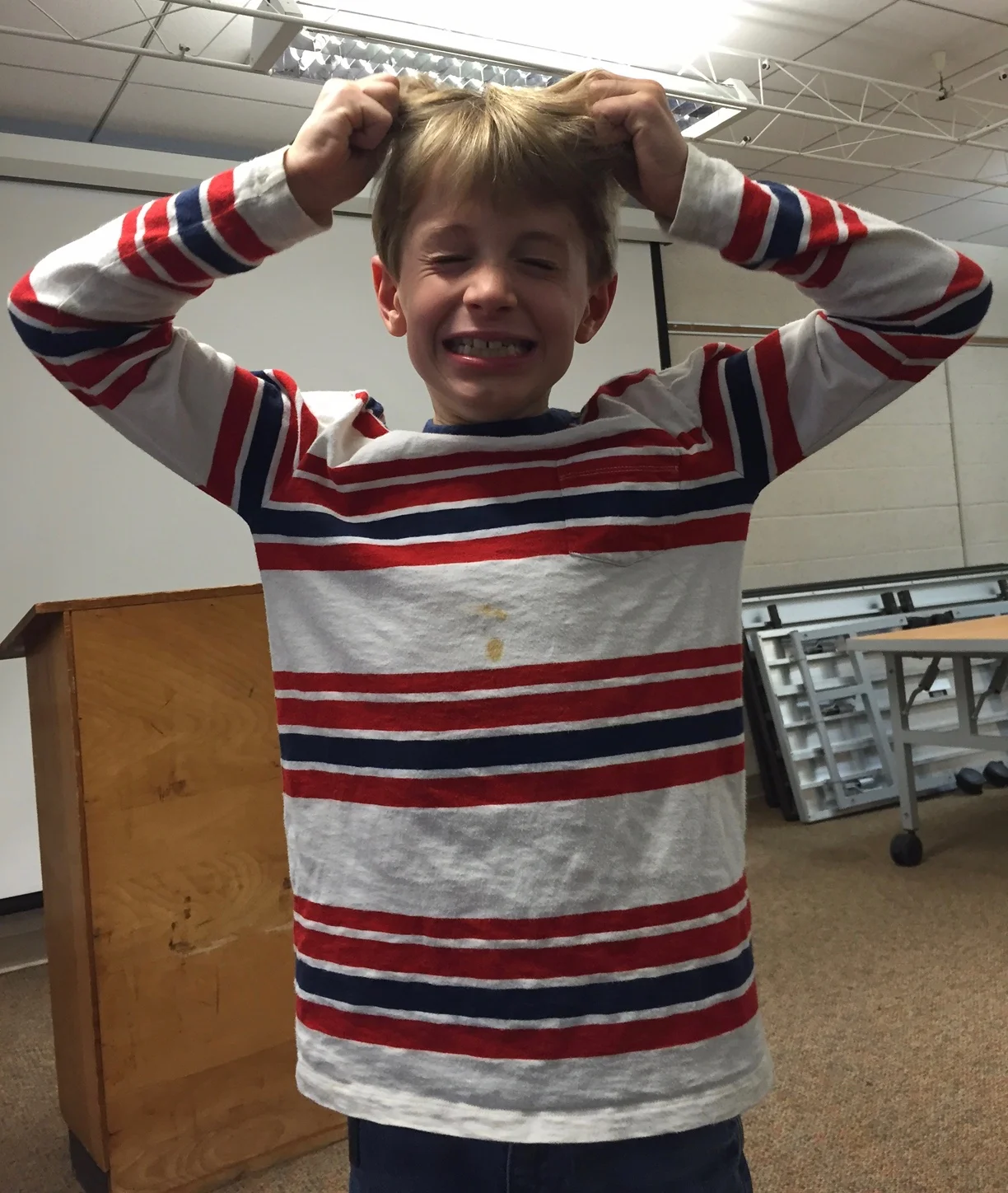
Last night, Stuart Gibbs was scheduled to give a presentation at the library near us, and today, to visit and speak with the kids at Jack's school. Several months ago, I got a sitter for Ol and planned on last night being a Mom and Jack date so that I could see him meet a hero for the first time.

To prep J, I said, "you know, every author presentation is different. Some are formal and some aren't. Some will sign all your books and some limit you to one. Some will disappoint you and others will be just what you imagined."

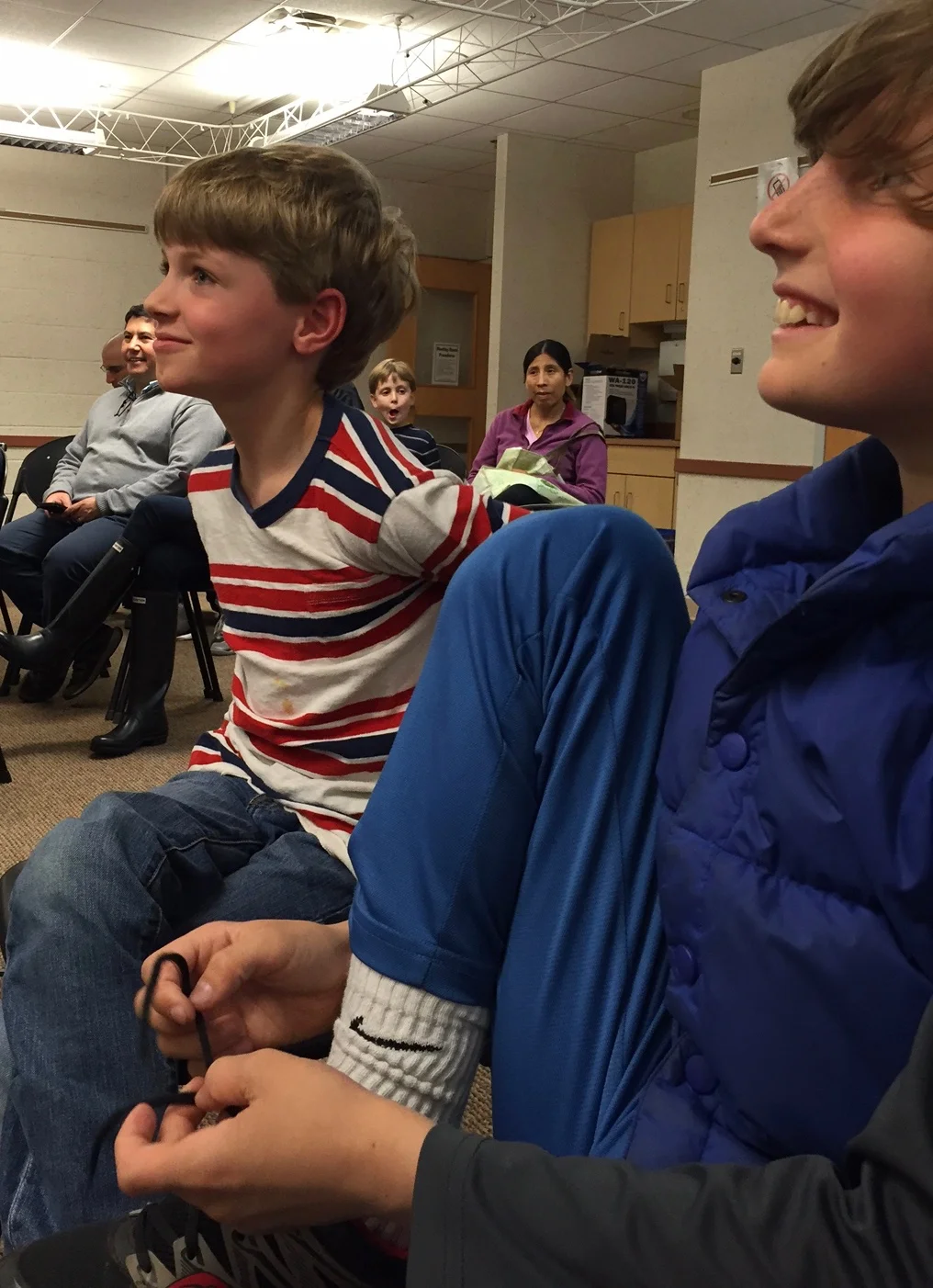
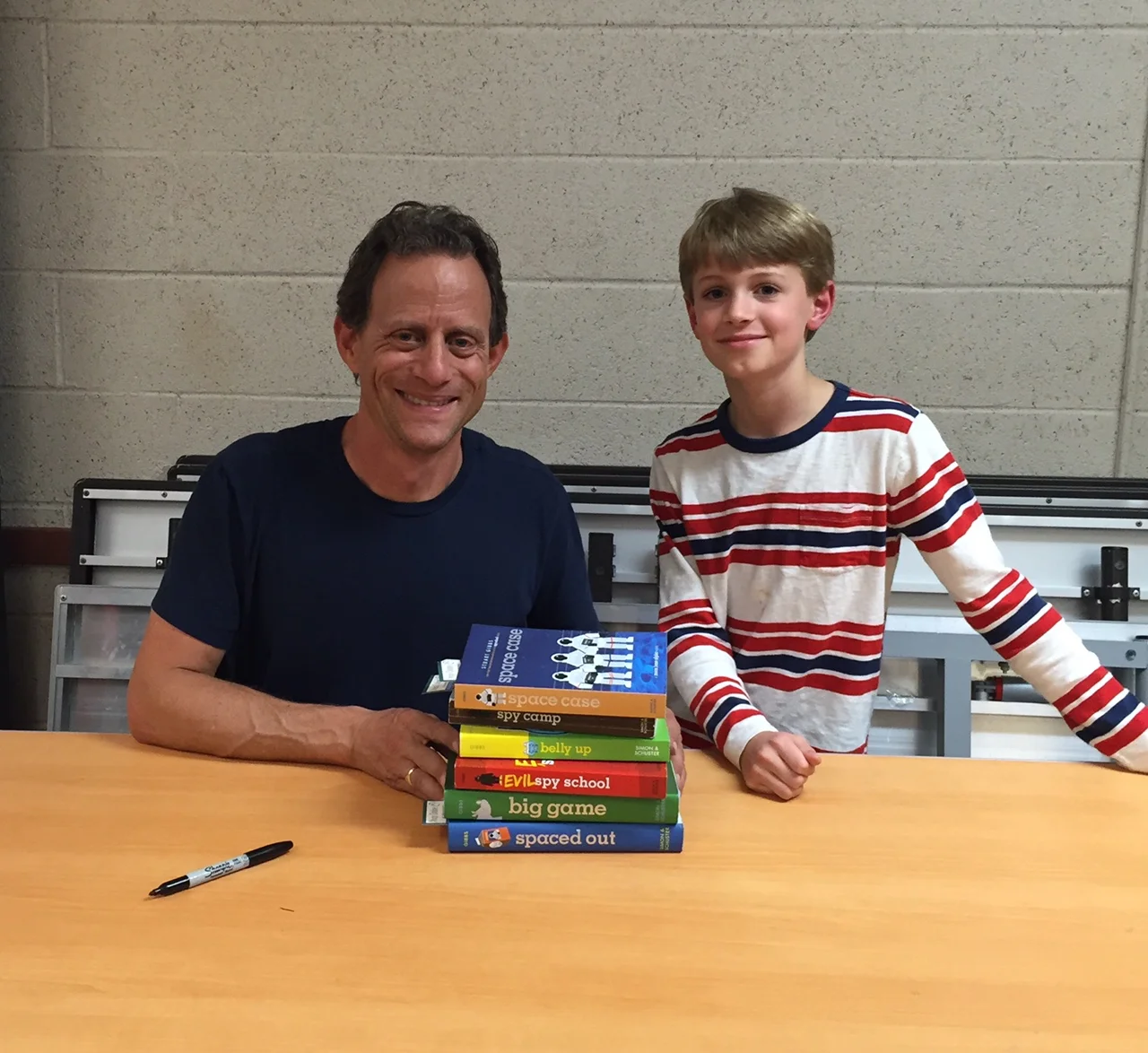
Last night was perfect. We snarfed pizza (dinner) in the car and arrived to the event an hour early. We bought three additional books (well, I bought two and J one), got front-row seats, J's best friend sat next to him, J asked multiple questions and he got all six books signed plus one for a friend who couldn't be there. We also got a photo.

Stuart and Jack, and all the books

Stuart and Jack, and all the books

Once home, Jack's feet continued to dance above the clouds with glee. I finally gave him a melatonin, kissed him goodnight and wished him luck getting to sleep: I was going to bed immediately. 

Today at school, Stuart remembered J and said "hi, Jack." I'm not sure life gets better. As it turned out, today was my library volunteer day, and Stuart and I got to hang for fifteen minutes. "I can't believe you got there an hour early," he said, smiling.

"It's not every day you get to take your child to see a hero for the first time," I replied.

I'll remember it always

A mother's day

I am in my reading chair, a languid fan spinning above me. My door is closed. I just showered after working for a couple hours in the garden. My hostas have gone wild and were crowding out other loved plants, so I relocated and weeded and visited with some worms and gave thanks that today the sun came out and started drying things up. The yard was getting so soggy I thought it might metamorphose into a writhing mess of slugs at any moment. Truly, it seemed dire.

The boys and a friend are in Jack's room playing with Legos and singing Don Gato. Listening to them makes me smile. The big kids are always kind to Oliver, they always include him, and I appreciate that. Ol is charming and fun, but I'm still grateful that the little brother gets to hang out instead of being kicked to the curb. T is making the dinner the kids will soon eat.

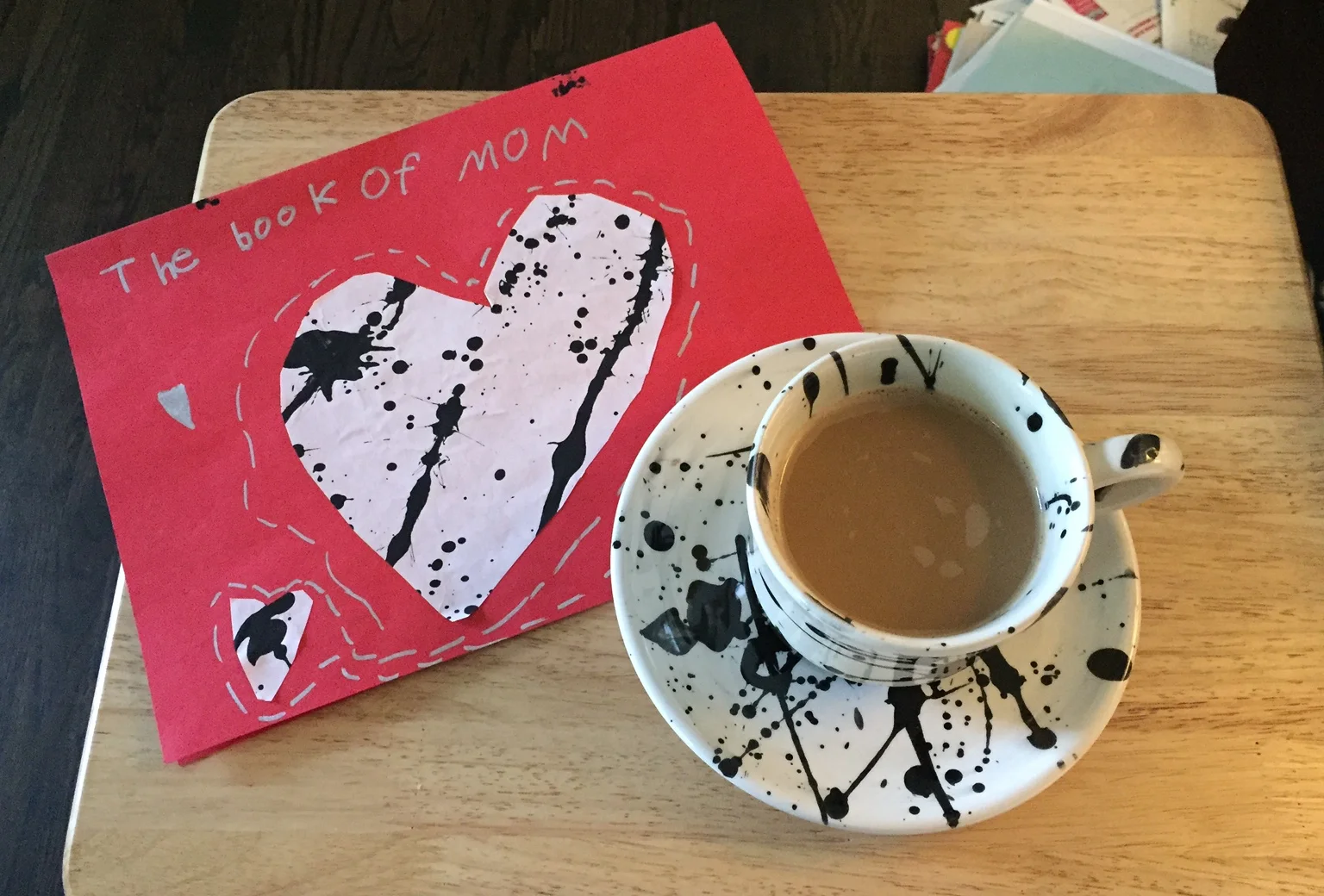
After a delicious breakfast T brought to me in bed and a latte drunk from the Pollock-inspired mug Ol made me in his art class, I took the kids to the farmers market. We saw friends, loaded up on several varieties of cherry tomatoes and the kids devoured a pizza and a mango lassi. They wanted so much more, but I bought myself a young Meyer lemon tree instead and boogied us home.

Isn't this a fabulous gift?

Isn't this a fabulous gift?

We had lunch with my in-laws, and after, while the kids played and the men talked, she and I cleaned and caught up. The women so often end up in the kitchen, don't they. 

I am in my reading chair with my door shut because while it's been an absolutely lovely mother's day, it is now Emily time. Quiet alone time in which I shut my duty light off and forward all requests to Dad. In which I remove the hat I wear every other day and let my shoulders sink and my breaths deepen.

For me, this is the essence of Mother's Day. Yes, it is about being with the boys, talking to my mother, mother-in-law, aunt and sister, celebrating and being celebrated. But it is also about being given a brief reprieve from the minutiae of daily mothering; from being on at every moment; from being the go-to for everything. It is about being appreciated for all that by getting a break from it.

It is, isn't it, a mother's day.

I think that's an important message, to send and to receive. By asserting that some solitude is one thing I really want each and every Mother's Day, I am showing the boys that mothers are people who have children but are also individuals with interests and passions and needs wholly distinct from the beings that provided the Mom label in the first place. 

In some sense too, I think shaping this day in the ways I want versus the rosy, Lifetime-channel gloss it's often shellacked with by society is a way of pushing back just a bit on the pressure too many women shoulder to love and feel wildly fulfilled by motherhood at all times. That's just not realistic for most mothers. Sometimes, all we want is some space away from our children, some time to not mediate or manage, look or acknowledge.

We want, simply, to tend to ourselves in undistracted fashion. I think that is a marvelous thing to honor.

I love my children with a joyful ferocity, but I think it is always worth understanding and acknowledging that, like most things, motherhood is complex. It is really hard and it is constant, and the gloss of perfect that is too often painted atop the enterprise can cause Moms who find its depths infinitely more variegated to feel isolated or lacking. They end up like icebergs frozen in place in an unmoving sea.

If, however, we acknowledge the murky depths as well as the glossy surface, the ice cracks, allowing us to move toward each other once more and repair the connections that will strengthen us, and by extension our kids, all. When I am in a pit and text a friend, I feel better. When she texts me back with words of understanding, commiseration and/or support, I lighten even more. We all need each other, but to really know one another, you have to dive deep.

I chose to have children, and I am lucky to have such a good relationship with them as well as with my own mother and mother-in-law. Not all women can or choose to have children, not every women has happy memories of her mother. Some women who made the same choice I did are having an awfully hard time of it.

On this day, keep in mind the total validity and worth of those who choose not to have children and also those who do and are struggling. Keep in mind those for whom today is hard, for reasons in the past or the present. If your mother is amazing, please celebrate her. Also remember that you've likely been mothered by a number of others- aunts, mentors, friends, siblings- and if they are great, celebrate them too. 

Here's hoping that your hearts feel full today, and that you got to spend it in just the ways you wanted. I did, and that is the best kind of mother's day I could wish for.

Screenagers

Have you heard about the newly-released documentary, Screenagers? Written, directed and starred in by Delaney Ruston, a Seattle primary care physician, it's about kids and screen time in our tech-oriented world today. The idea of the film came to her as she and her preteen daughter, Tessa, argued over whether to replace Tessa's flip phone with another data-less one or the smart phone for which Tessa was pining.

Screenagers was shown in DC last night (and followed by a discussion and Q&A with Ruston and Tessa), and I took the boys, hoping to impress upon them some of the reasons I refuse to buy them the smart gadgets they want as well as the myriad concerns I have about screen time and why I limit theirs.

Ruston does a great job of presenting the positive aspects of technology and online involvement (there definitely are a number of these!), the statistics and findings regarding the less positive impacts of screen time on developing brains and interpersonal behavior and relationships, and the dilemma parents find themselves in today when attempting to let their children grow up safely in an online era. The film is not heavy-handed at all and Jack (almost 10), Oliver (7), and I all came away with important take-aways.

J: "I see now why you don't want me to have a smartphone yet, and I definitely plan to stop watching certain shows. Even though I enjoy them, they are not educational and don't help my brain."

O: "I learned that screen time is not very good for my brain!"

Some of the most powerful images were of teens and adults in public and social situations: heads down, screens aglow, ear buds often in. Not talking, not looking around, tuning out everything but the often, frankly, unimportant game, headline or new photos dancing across the devices gripped tightly in hand. We model this behavior for our kids all too often.

These gadgets enable greater connectivity with others BUT do so at the cost of connecting you with those in your immediate surround. They make boredom obsolete, they make avoiding strangers and wait times easy. Gratification is immediate. But what is the cost?

I'd have argued before and I continue to argue now that the costs are pretty great. When we can withdraw from the world, forget how to entertain ourselves, lose the ability to easily make eye contact and conversation with friends and strangers, and become more used to immediate everything and disjointed encounters with others, our connection to both self and our communities frays.

One study that Ruston highlighted in Screenagers was one done with mice. When mice were exposed to screens, they took longer to get through mazes and their brains had fewer nerve cells than their non-screened counterparts. When their exposure to screens was halted, the nerve cells didn't regenerate; the brain changes were permanent.

The study's author pointed out that while we don't know for sure that human subjects would show the same results, if they do mirror the differentials between screened and non-screened mice, we are raising a generation of children that we've disadvantaged in a pretty serious way.

Teenage brains have heightened dopamine receptors which means that everything that feels good feels even better to teens. The rush they experience when someone "likes" their Facebook post or they win a round of Angry Birds is even greater than it is for kids and adults. As such, they find the constant influx of information and input from smart devices particularly "addictive." Addictive was a word the adolescents featured in the film used over and over again, and, as the studies and experts called on in Screenagers show, it's actually a pretty accurate descriptor of what's happening to them when they're allowed unlimited access to their phones and gadgets.

The worst cases of tech addiction require rehab and detox. Kids with less serious addictions still react with moody and/or angry behavior when deprived of technological "fixes." Some studies show that video games, especially violent ones, inhibit empathy in those who play regularly and much. Several teens admitted to using their phones to get out of or completely avoid uncomfortable social encounters.

Is this what we want for our children? For ourselves? 

I don't. 

The film underscores, repeatedly, the importance of making technological use and limits a family conversation. Tell kids all the whys behind parental concerns and limits but also acknowledge the environment in which they're growing up. Help them be responsible, aware digital citizens.

Seeing Screenagers with the boys really made our subsequent discussion about technology easier and richer than previous ones have been. I highly recommend using the film for just that end. Hope you can see it!

Be aware, there are some scenes that show violent video games. I was taken aback by one clip from Grand Theft Auto and am sorry my boys saw that bit. I don't like to shelter them too much, but those games are awful.
`````

For additional information, including the Screenagers trailer, information about hosting a screening, the Screenagers blog, and examples of technology contracts families can create together, visit the documentary's website