Wonder at The Renwick Gallery, DC

Spur of the moment yesterday, I proclaimed that we were soon heading downtown for a family outing. It was warm, beautiful, and I've been dying to see the Wonder exhibit at The Renwick, part of the Smithsonian dedicated to American arts and crafts.

The Gallery has recently reopened after a multiyear renovation, and as part of the debut celebration asked nine contemporary American artists to contribute to Wonder, an immersive exhibit in which unlikely or unusual materials are used to create larger-than-life surprises and experiences. Each artist was given an entire gallery, and while you can't touch anything, you are encouraged to interact -laying on the floor and looking up, for example- and photograph.

It was a spectacular show! Truly magnificent and fascinating. Here's a sampling...

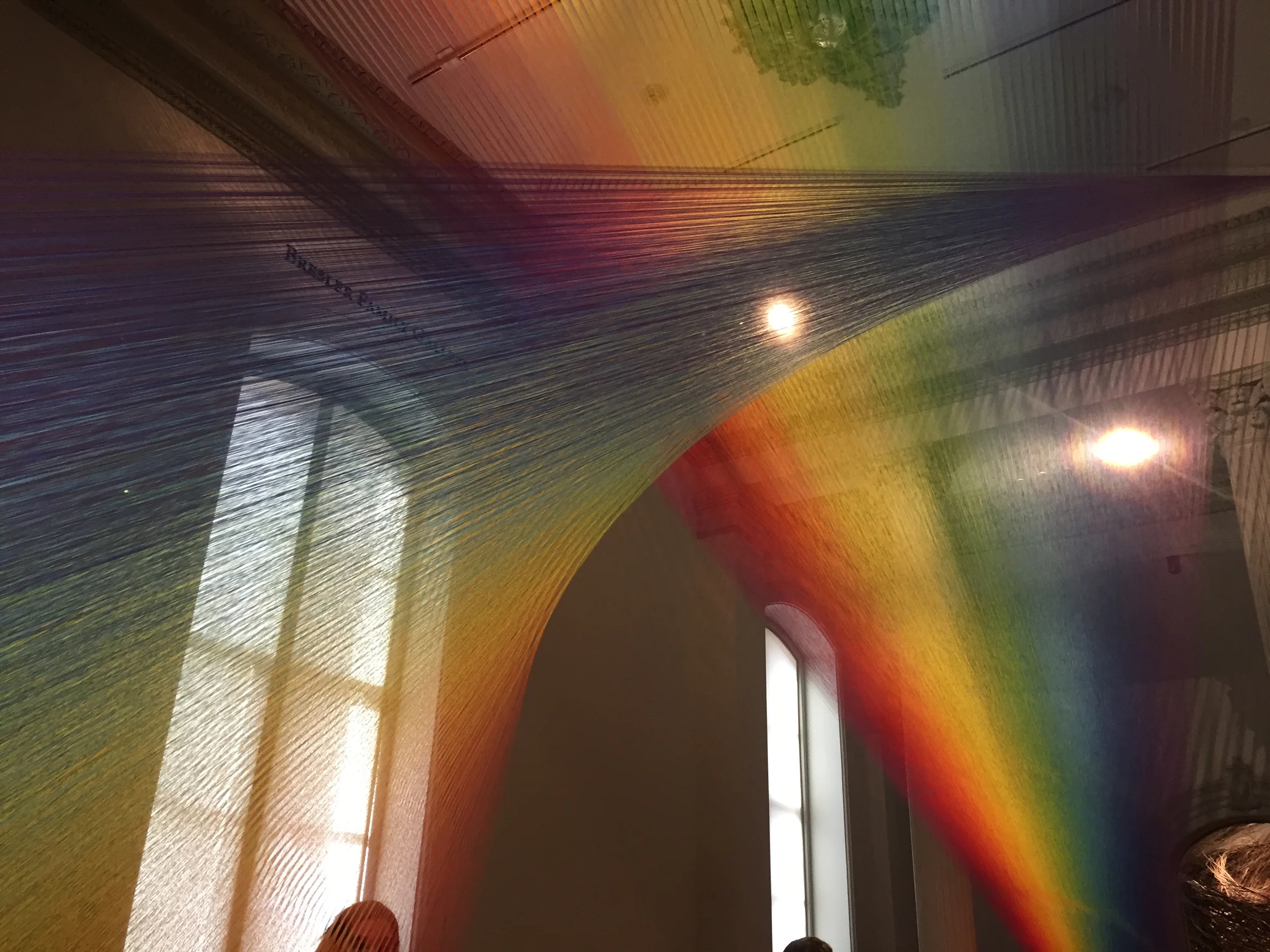
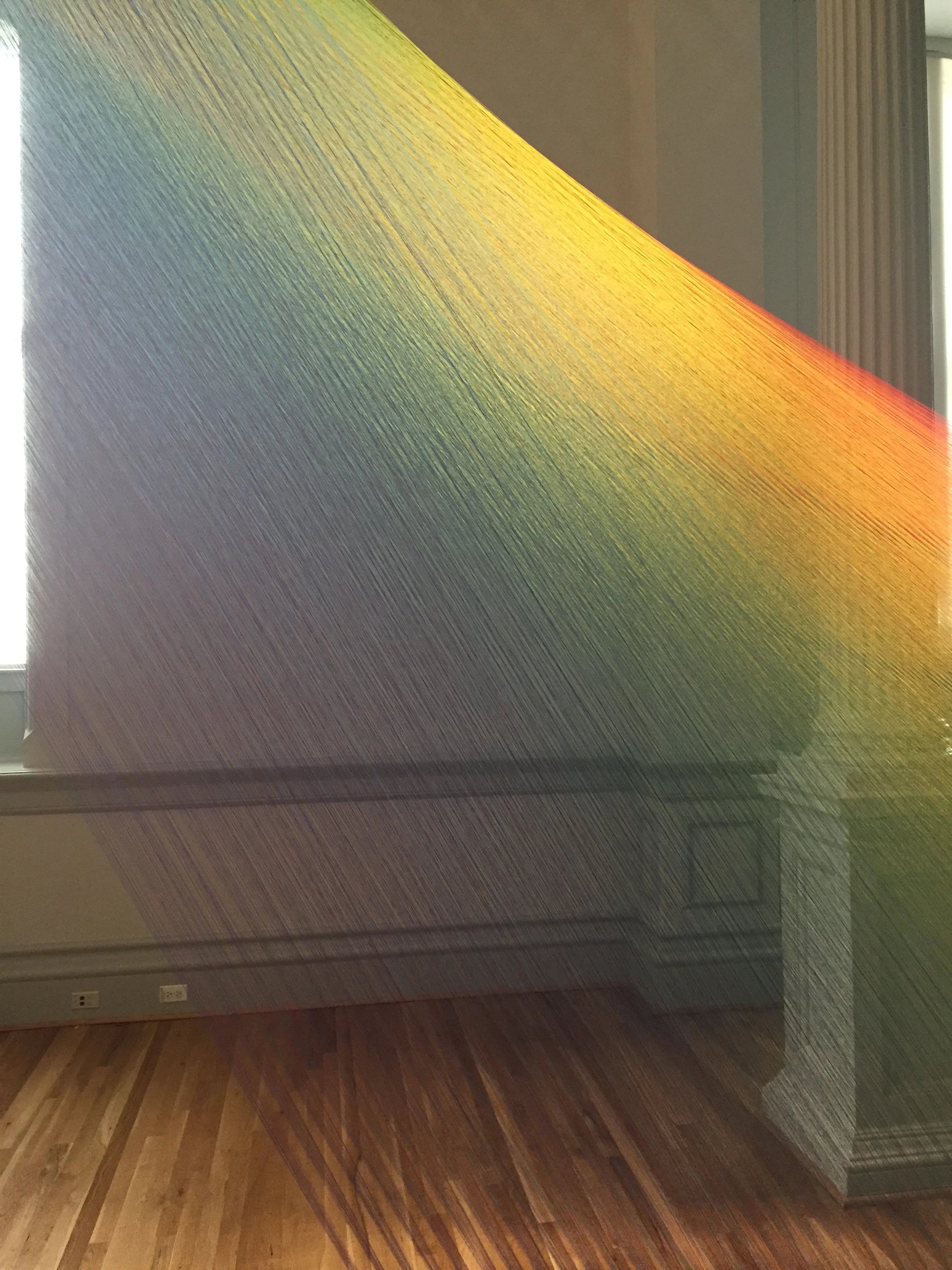
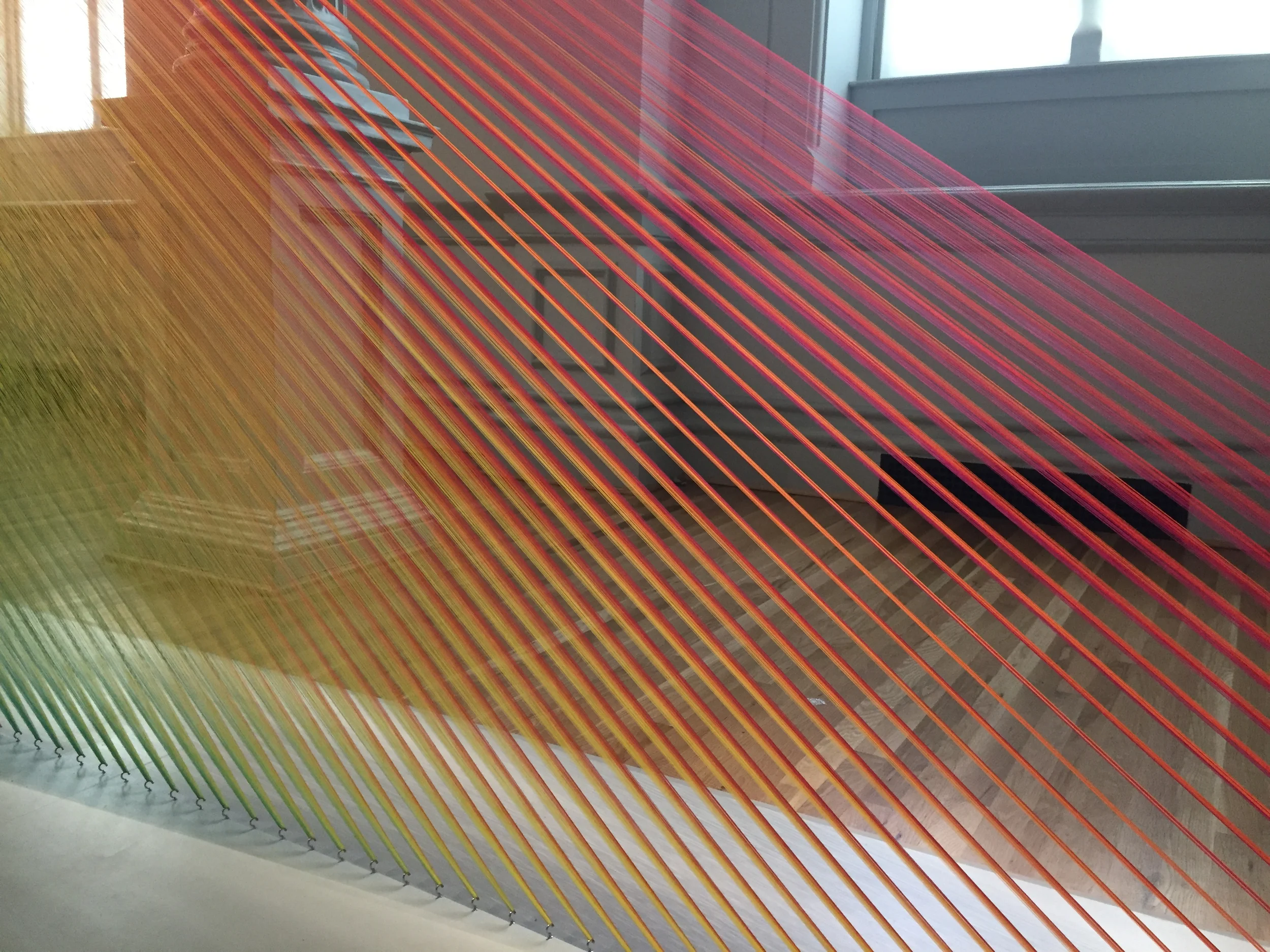
Weavings by Gabriel Dawe:
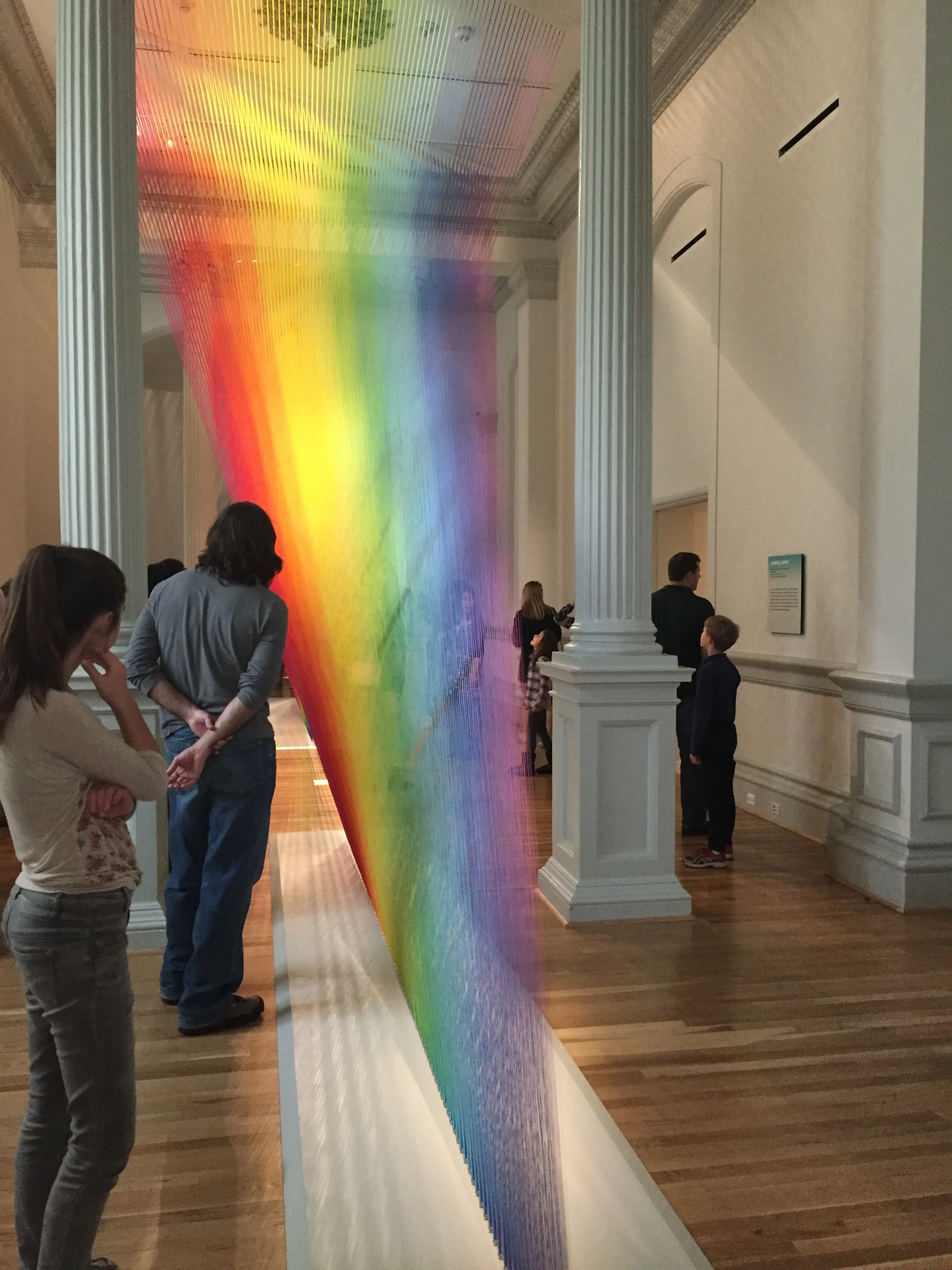
Can you imagine handling that much string, keeping it organized and creating such a stunning rainbow with it?

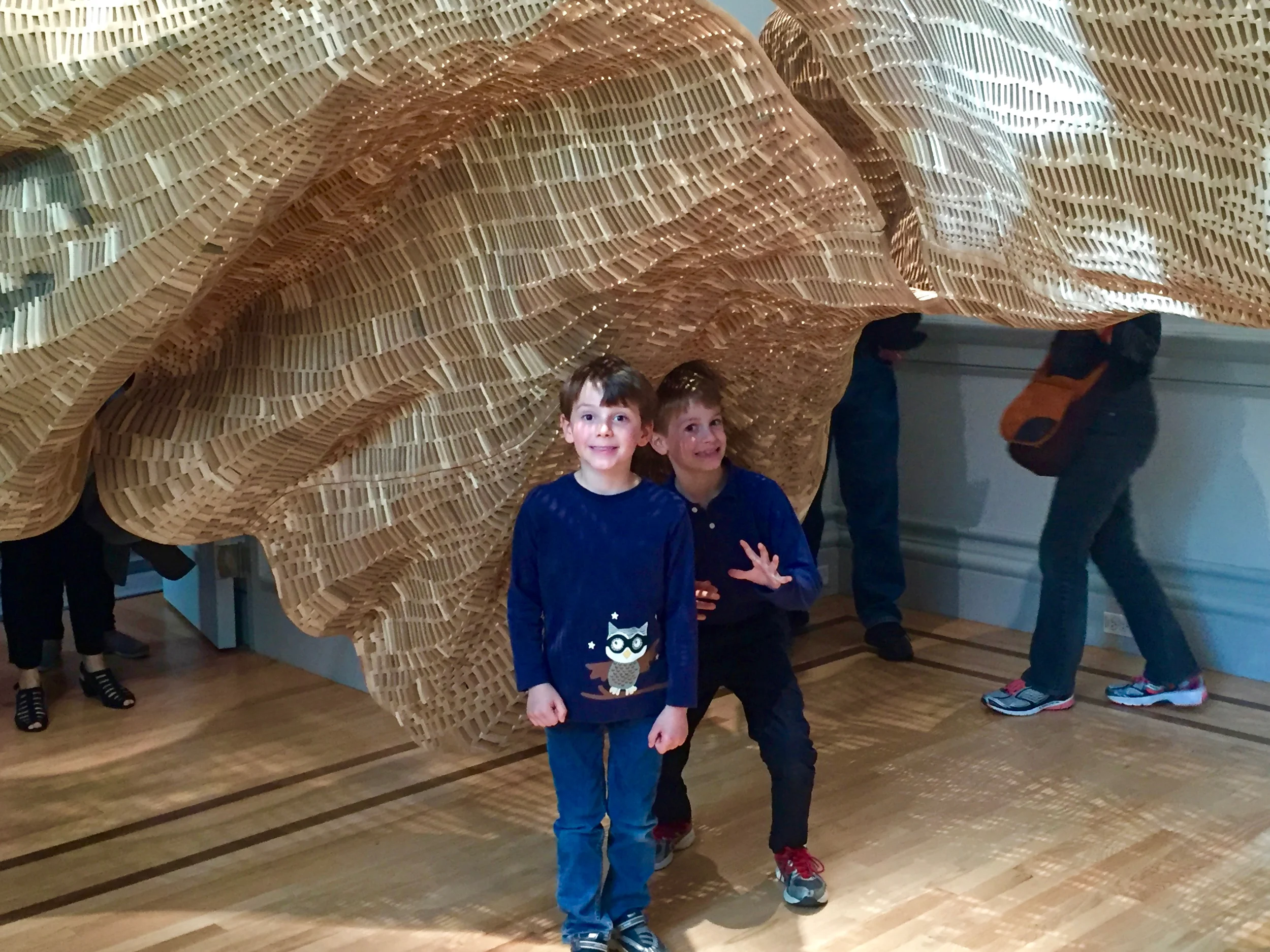
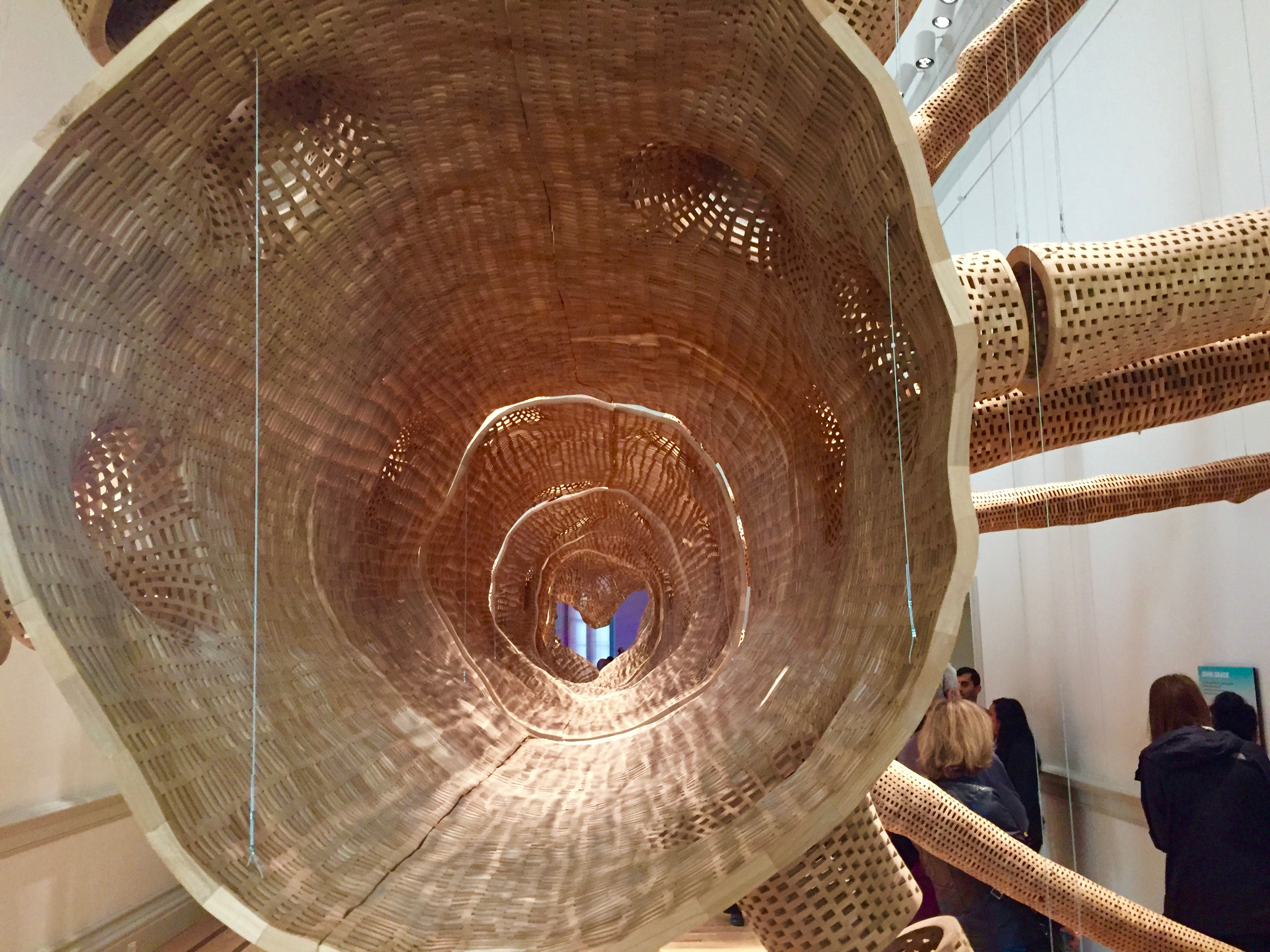
Hemlock tree rendered in reclaimed cedar by John Grade:
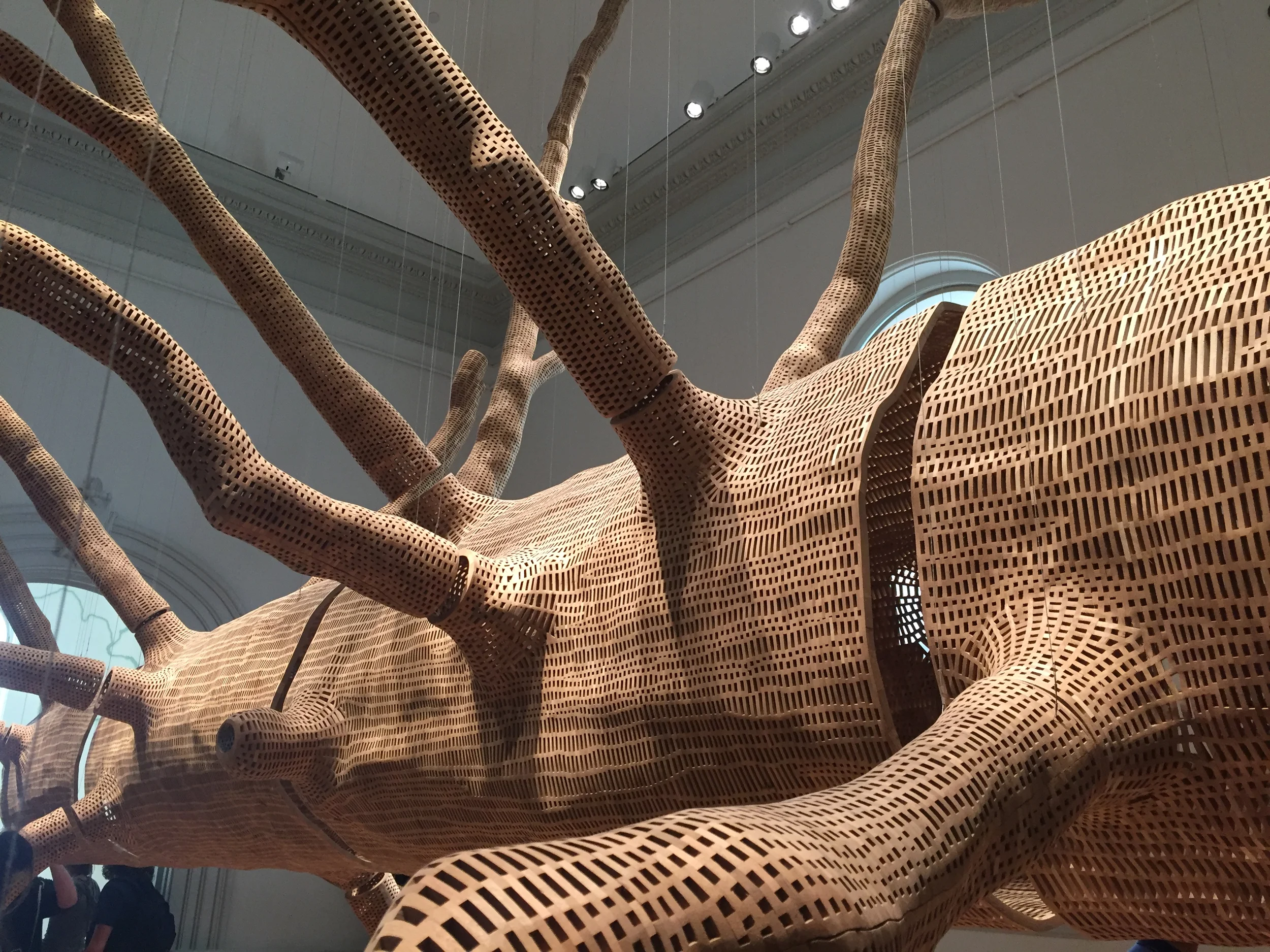
"To commemorate the Renwick’s reopening, Grade selected a hemlock tree in the Cascade Mountains east of Seattle that is approximately 150 years old–the same age as this building. His team created a full plaster cast of the tree (without harming it),…

"To commemorate the Renwick’s reopening, Grade selected a hemlock tree in the Cascade Mountains east of Seattle that is approximately 150 years old–the same age as this building. His team created a full plaster cast of the tree (without harming it), then used the cast as a mold to build a new tree out of a half-million segments of reclaimed cedar. Hundreds of volunteers assisted Grade, hand carving each piece to match the contours of the original tree. After the exhibition closes,Middle Fork (Cascades) will be carried back to the hemlock’s location and left on the forest floor, where it will gradually return to the earth." -The Renwick
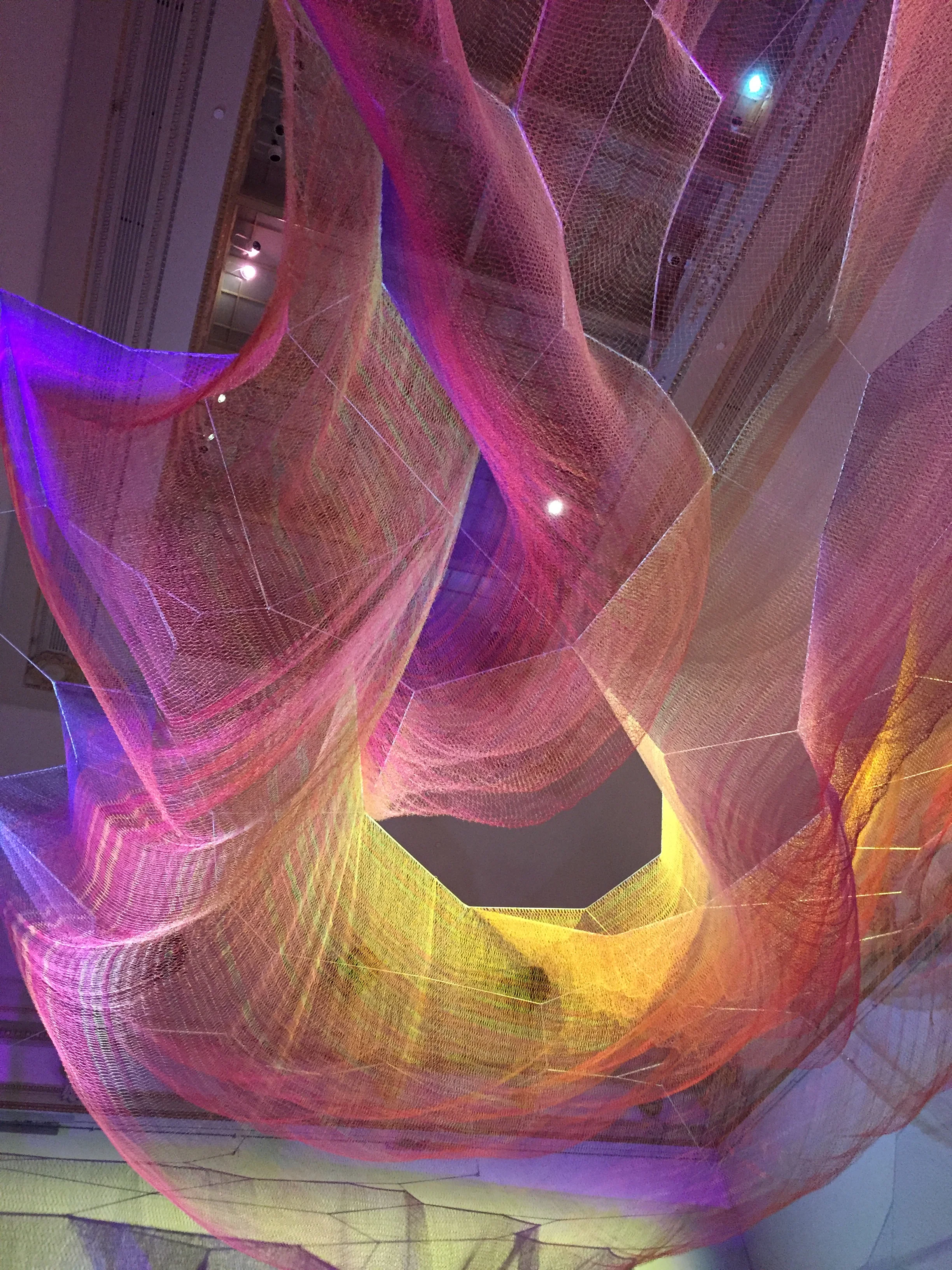
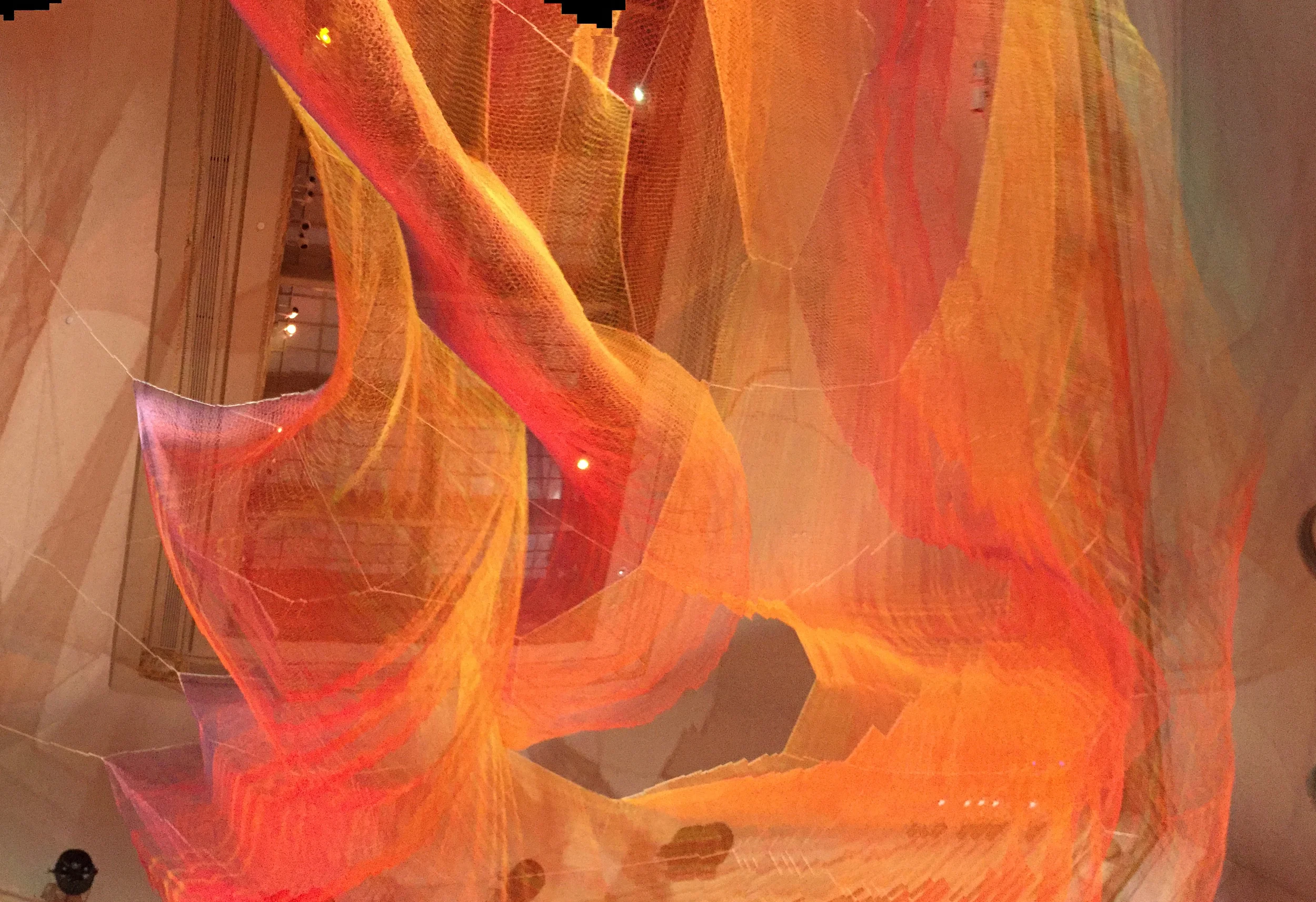
Spellbinding woven sculpture by Janet Echelman: "Echelman’s woven sculpture corresponds to a map of the energy released across the Pacific Ocean during the Tohoku earthquake and tsunami, one of the most devastating natural disasters in recorded history. The event was so powerful it shifted the earth on its axis and shortened the day, March 11, 2011, by 1.8 millionths of a second, lending this work its title. Waves taller than the 100-foot length of this gallery ravaged the east coast of Japan, reminding us that what is wondrous can equally be dangerous." -The Renwick
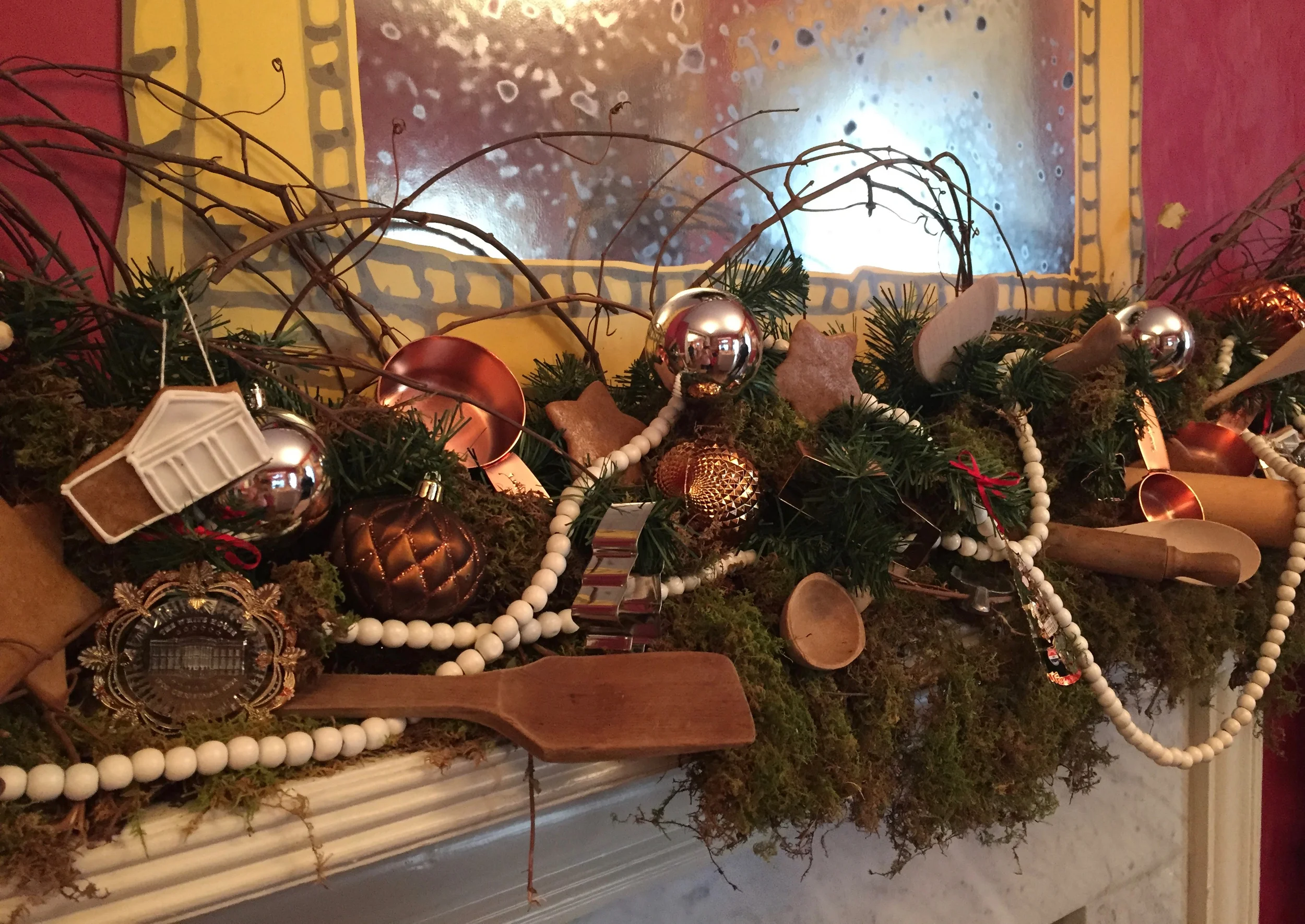
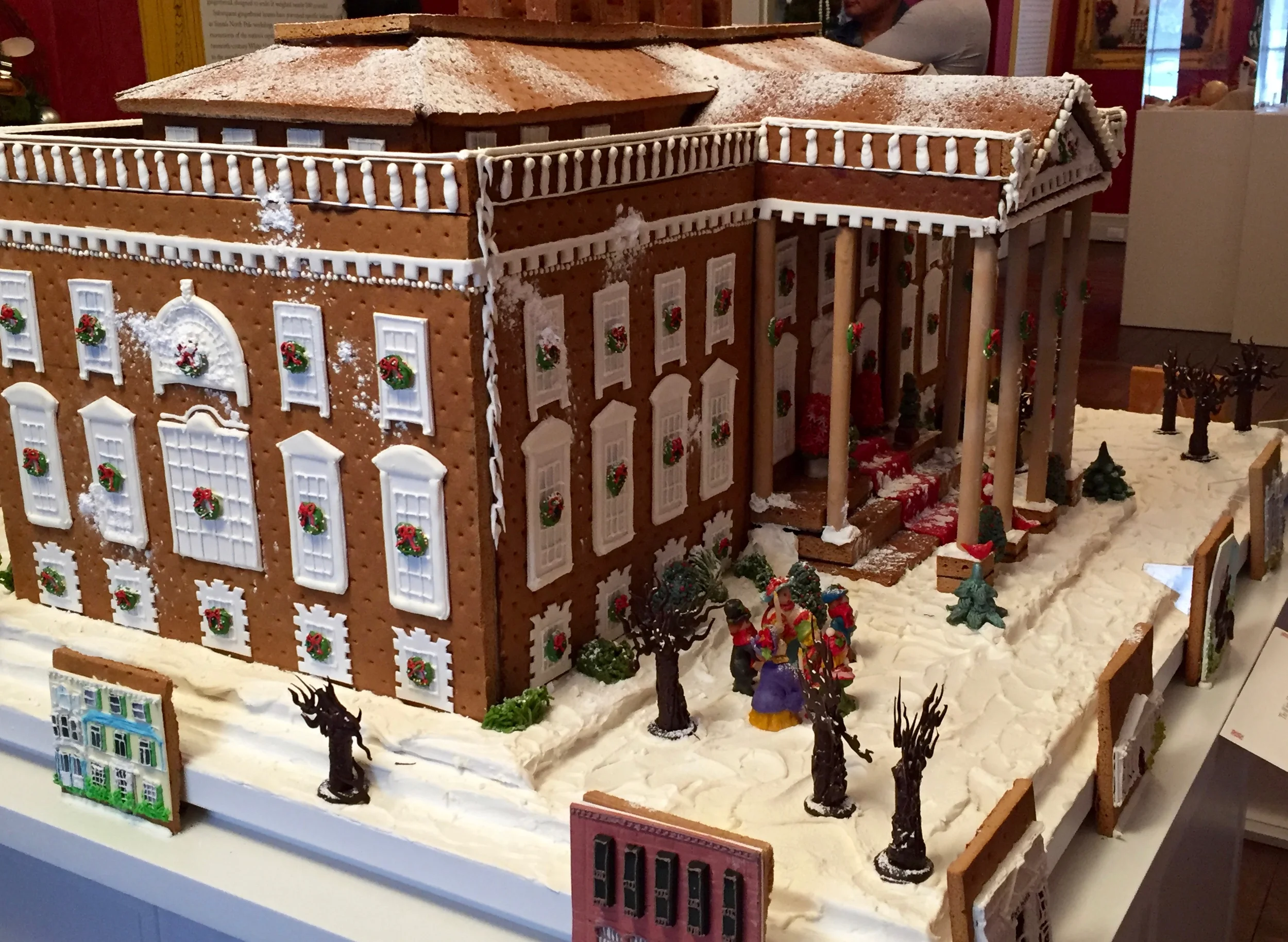
Afterwards, with the White House just a stone's throw away, we wandered over to it, looked around and then, on our way back to the car, came upon the White House Historical Association's open house: the White House gingerbread house was on display, as well as a number of historical relics and photographs (I love that culinary-themed mantle), and there was a craft area and pastry demonstration too.

All in all, such a nice way to explore our city. And every bit of it was free. Bravo and thank you!

Edible Memories Day 6: Food and Laughter

My hometown, Lake Charles, is about three hours west of New Orleans. It’s an easy drive on I-10, winding travelers across Louisiana’s southern plain and past towns like Butte la Rose, Henderson, Breaux Bridge, Ramah and LaPlace. My sister and I always started to lose it as the interstate signs announced proximity to Butte la Rose- “Butt la Rose” we’d howl, tears of laughter streaming from our eyes.

As you near Baton Rouge, you have the option to pull off for a stop at Coffee Call. It is always wise to do this because there you can get the best beignets and café au lait outside of New Orleans and Café du Monde. If I’m being honest, and not just nostalgiac, Coffee Call has even better beignets than CdM but let’s just call it a draw for now.

Last time I drove from LC to NOLA, I stopped at Coffee Call and in the parking spot next to me was an old car with a giant statue of the Virgin Mary buckled into the back seat. That is SO Louisiana, I thought, with complete love and joie de vivre.

Even with the sweet treat that is Coffee Call, my favorite part of the drive is cruising across the Atchafalaya freeway which stretches eighteen miles across the Atchafalaya Swamp. The Swamp, also but less romantically known as the Atchafalaya Basin, is a muddy convergence of delta and wetland where gators swim, egrets dive, fisherman putter, and Cypresses, both dead and alive, soar, Spanish moss hanging from their boughs. It is possibly the most gorgeous part of Louisiana; it is one of my favorite sights in all the world.

NOLA is one of a kind, and I love it. Part of my spirit resides there, even though I never have. It would be hard to live more freely –in all senses of that word- than many New Orleanians do. There is mystery and local color around every corner, hundreds-years-old Oaks offering their mighty limbs to the sky but also to the earth, suggesting you sit a spell and rest a while. It’s awfully hot, they seem to say. Sit in my shade.

Mardi Gras beads, caught by branches when tossed high from the floats during the parades, hang in trees year round. Porches so deep you can’t believe it front most homes and make perfect meeting points for early evening cocktails. The sidewalks are gauntlets, so cracked and split they’ve been by the trees determined roots.

Everything is slightly askew and in that, slightly perfect.

My family has a Christmas Eve tradition. It’s not a regular one though I often wish it were. Dressed to the nines, we meet my cousins, aunts, uncles and nieces at Galatoire’s for réveillon. Réveillon hails from French tradition and derives from “waking” or staying awake before Christmas Day. It starts at lunchtime, but lunch is a deceptive moniker because what we actually do is meet at 1p for a lunchtime meal that proceeds to last until dinnertime. I don’t know many cities or restaurants that treasure patrons sitting and eating and drinking for six hours. That is New Orleans and réveillon for you.

The waiters are veterans, they wear tuxedos. The main floor of Galatoire's is one enormous room, with big plate-glass windows looking out over Bourbon Street. The ceilings are so many feet high and twirl with fans circling at a languid pace. The walls are papered in a rich green and gold except for the huge five foot mirrors which cover a band running around the room from roughly hip height. The lights sparkle, bourbon milk punches pour like water.

It’s loud inside Galatoire’s, with laughter and convivial conversation reaching decibel levels and staying there. Everyone is happy, festive, full of seasonal and libational spirit. Kids nosh on baguettes as tall as they are, oysters sit nestled in salted ice, as does a perfect mignonette in a tiny silver bowl.

Soufflé potatoes arrive, all golden and puffed. I can never get enough of them. Shrimp remoulade and crabmeat maison vie for my attention and love. I cheat on one with the other, back and forth, on a heady loop.

Oysters Rockefeller look like spinach-topped presents, and taste even better. There are two types of gumbo, made with a roux so chocolatey brown that you can’t see beneath the surface and you don’t care. What’s in there will be divine.

There’s creamed spinach and Brabant potatoes, trout and red drum, sauce meuniére and amandine.

If you can stomach it, black bottomed pecan pie and eggy bread pudding wait to sate your sweet tooth. Chicory coffee can help cut your feelings of fullness.

All the while, you smile and laugh, clink and toast. Someone’s passed out jingle bells on velvet cord, and everyone’s wearing his or her necklace. Coats have long since been shrugged off, ties loosened, lipstick gone.

The lights never dim and when you finally stagger outside the front door, you can’t believe that the sun has bid you adieu. 

Edible Memories Day 4: Food and Childhood

Nanny was a surprise baby, born when her older sisters, Hilda and Elia, were teenagers. I never knew Elia; she died in her 50s after a fast and furious bout with ovarian cancer. Hilda was my mother’s favorite aunt. She called her Aunt Da, and so, my sister and I did too.

Aunt Da lived on a corner lot near the train tracks. I don’t remember if she was on the good side or the bad side or even if there was such a thing. I didn’t know and didn’t care. She just lived in the old part of town, and my sister, Elia (named after Aunt Da’s sister, of course) and I loved to visit.

Her house was old and creaky. It was the house she’d grown up in. I don’t know for sure, but it appeared to be raised on those flat-topped concrete cones. Was that what held it up so that rainwater could run underneath? Three concrete steps led from the sidewalk to Aunt Da’s front door, and to the right was as screened-in front porch –was it screened, actually? The memories are both vivid and faint.- on which sat four metal chairs, each painted in a different hue. They were colorful and comfortable, and for a decade now, I’ve wished I could find some like them.

Aunt Da let Elia and me take pennies over to the railroad tracks and lay them on the rails. Those rails baked in the hot Louisiana sun all day and glistened with the exertion of doing so. Gingerly, we set our coppers down and then scurried back to the safe, cool, dark confines of Aunt Da’s house.

Her kitchen was at the rear of her home, abutting the back yard. The yard where Nanny broke her back when she was little, falling off the swing and landing spine-down on the edge of the sandbox. If you looked out of the back door, you’d see a magical garden: ancient Amaryllis shooting thick and strong from the earth; a whole fence covered in Dr. van Fleets, the most beautiful, delicate climbing rose I’ve ever seen.

When Aunt Da died, Mom took some bulbs and clippings, and now most everyone has the descendants in their own yards. I love the idea of the bulbs reproducing underground, generously sharing of themselves in the ways Aunt Da always did.

She was a tremendous cook. An old-school Louisiana woman who knew what to do with flour, sugar, butter, beans and drippings. God, I can still taste her butter beans, each one big as a thumb and so tender I couldn’t understand how it hadn’t fallen apart. How did it retain its oval shape, still with the tiny embryo clinging to one side? They were soft, velvety, utterly and unabashedly beany. They tasted faintly of onions and bacon but mostly of the earth. I imagine that’s exactly what a butter bean is supposed to taste like.

After the train roared by, my sister and I would run to the tracks to fetch our pennies-now-pancakes, copper disks smooth and shiny as a water’s reflection on a sunny day. They were oval-shaped, like those butter beans, and still warm from all they’d endured. Treasures. Each one.

When we got sweaty, from too much play or from the simple fact of living in Louisiana and being in a home without central air, Aunt Da would clear off her sink and surrounding counter and tell me to jump up. I’d lay down and tip my head into the deep basin of her sink, just as the cool water began to run.

Aunt Da believed in Prell shampoo rinsed clean with cold water and white vinegar. Even though her hands were gnarled with arthritis, they were strong and the skin unbelievably smooth. She’d massage the fluorescent green Prell into my hair and scalp, and I’d close my eyes and take it all in.

Suds, vinegar, bacon, beans, her tea cakes or maybe a French Silk pie.

My dad and I loved that pie. Like the fudge his patient always made him at Christmastime, the French silk pie is not for the faint of heart. It is rich and creamy, and it is sublime. Eggs, melted Ghirardelli, Cool Whip and our family pie crust. It’ll bring you to your knees.

Years ago, so long after I was a child, the taste memory of that pie coursed over me suddenly, like the train over the pennies, like the cold water through my hair. I called Nanan, which is what I call Aunt Da’s daughter, and said, “Nanan, do you have Aunt Da’s French Silk recipe?”

She found Aunt Da’s old cookbooks which are really just journals with recipes written out in Aunt Da’s scratchy hand and sent me the prize. That very day, I made the pie and with the first bite was transported back to that old house near the tracks from which good smells always emanated, where flowers always seemed to bloom, and where a wonderful old woman waited to hug us tight, wash our hair and feed us well.