When kids should be neither seen nor heard

There are days, and today was such, I could stand to do without spending much time with the boys.

They are loud and messy and uncouth. They whine and argue and burp lyrics to songs. They scratch their butts and chew hangnails. They hide their clean and folded laundry instead of putting it away. They negotiate, futilely but aggressively, for dessert at breakfast. It is tiring to argue about nonsensical things before 8am.

We got to the camp bus stop and because Oliver insisted on bringing a robot, derby cap and walkie talkie in the car, he’d accidentally left his lunchbox at home. I knew where I’d find it: near his closet where he put it down to fetch the houndstooth cap from its hook. Another sandwich bites the dust.

Home later after the gym, I found and unpacked the lunchbox and saved what I could. I surveyed their rooms and saw dirty underpants crotch-out on the floors. Open boxes of now-stale anything littered their desks and the dark spaces under their beds. The sink looked as if they'd tried to frost a porcelain cake using toothpaste. A Jackson Pollock had been crafted on the wall with rebounding pee.

“This is what ‘I know you can do it by yourself! Independence, darlings!’ gets me,” I mused aloud.

The sheer number of crumbs that Hansel & Hansel had dropped on the breakfast table and then along the path upstairs was staggering. Surely it could wrap the Earth. The dustbuster’s battery petered out before I sucked the crap away.

I was so glad they were at camp. I was so grateful for their lengthy day away.

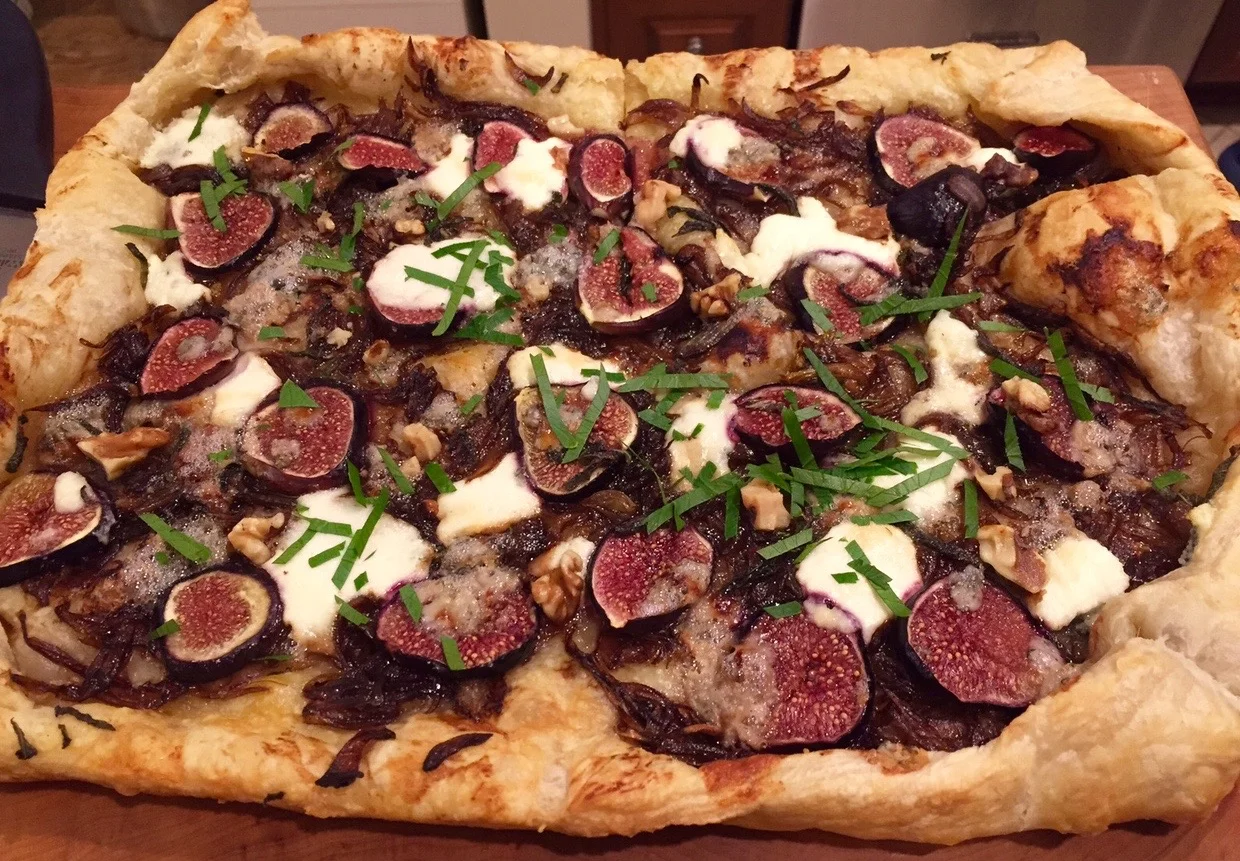
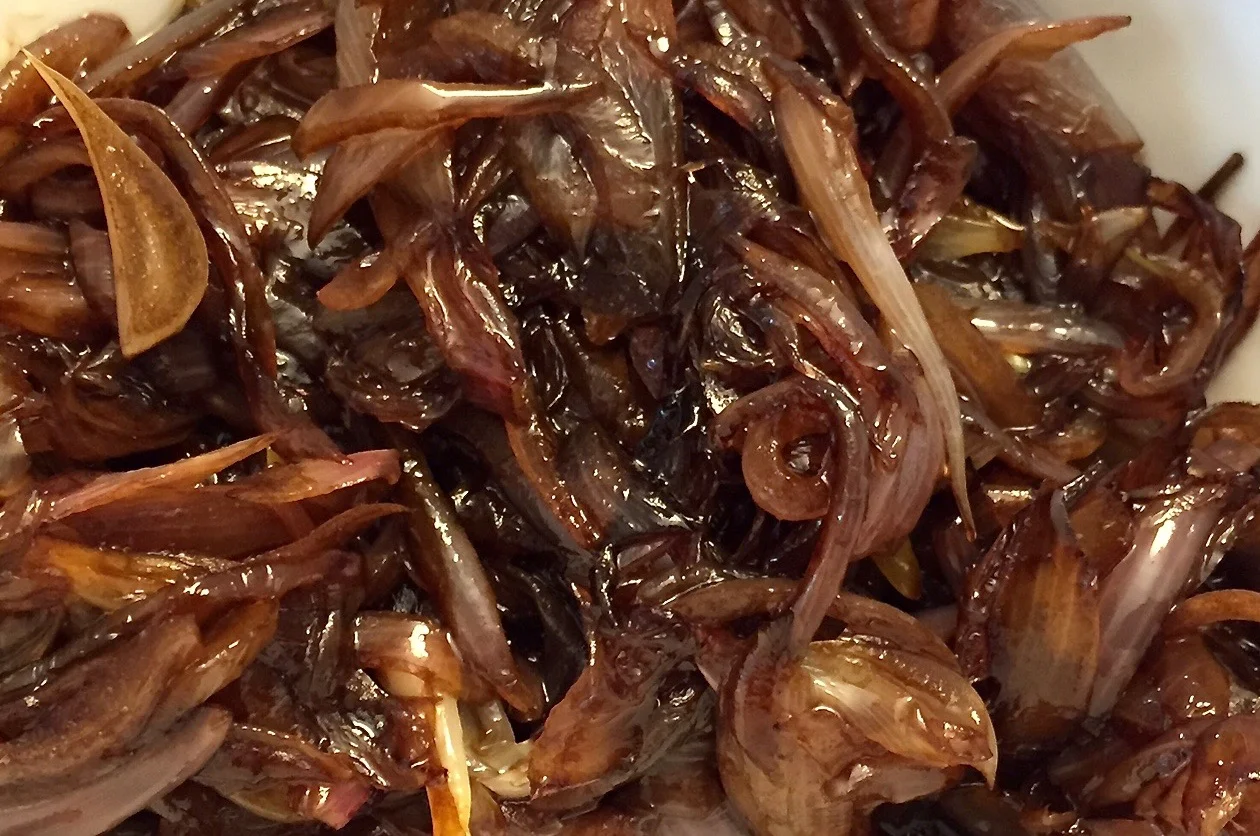
So I caramelized shallots...

So I caramelized shallots...

Days like these sometimes blindside me although I'm starting to think that if I carefully mapped my life, Mondays would really be off the chart in terms of the kids being annoying and my tolerance, or lack thereof, for it. 

Weekends are anything but Sabbathy. Come Sunday night, Tom and I often look at each other askance and ask, with both worry and hope, “Will this ever be less depleting?”

Although it is exhausting to be an at-home mom of little ones, I watch Tom leave each weekday morning and think, “How the fuck does he do it?” On, on, on. All the time on. I try to give him down time when I can because, if only for a few hours, I get a taste of that most days; if you count errands and laundry and wiping pee walls and vacuuming up the Earth’s belt as down time which I often do because at least I don’t have to be on.

Or dressed in any quasi-professional way.

I hit a wall today. Was it the training run on Saturday? The play dates + produce + family get together over the weekend? Was it being awakened well before 7am for oh, nine years now? Was it latent anxiety that just wears and erodes?

I dunno but come this evening, when Ol wouldn’t pick up the Legos that he’d cycloned throughout his room but wanted to get out the Halloween bag-of-bones (and naturally cyclone out and then not pick those up either) and then cried and went boneless over my refusal to unearth said bag-of-bones without first seeing a Lego-free floor, I just wanted to quit.

When Jack came down again and again and again from bed, despite the years we’ve spent talking about what bedtime means, I just wanted to quit.

I wanted to finish making dinner for T and me, to try and connect in the thirty minutes during which we’re both just awake enough to talk.

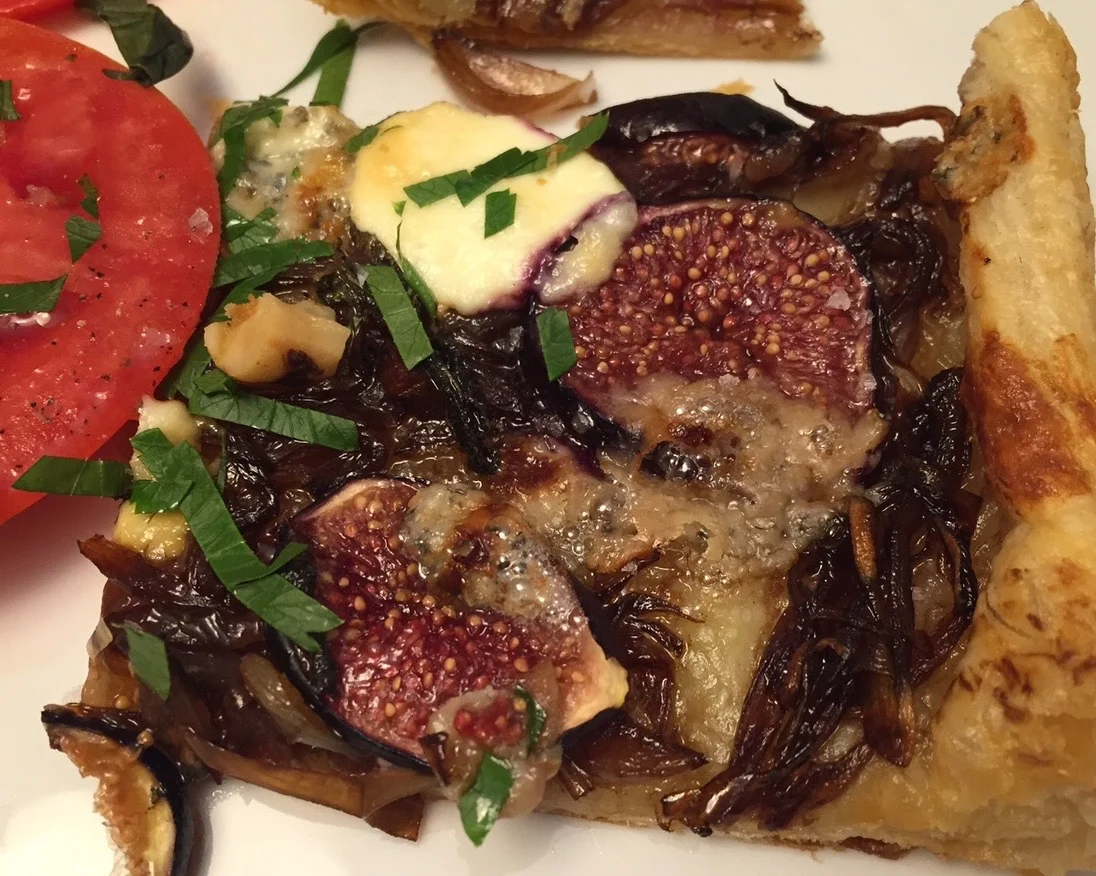
for this tart that actually came together...

for this tart that actually came together...

Another hug, another kiss, another sad glance at the newspapers that will be recycled instead of read.

“Tomorrow is anothuh day,” I intoned a la Scarlett.

It is.

I think it is.

Is that a good thing?

I think so.

I hope so.

I’m tired.

and really hit the spot.

and really hit the spot.

Tom has banished me, with all the love in his being, to the basement; our secret hideaway. I accept!

Raising children, raising adults

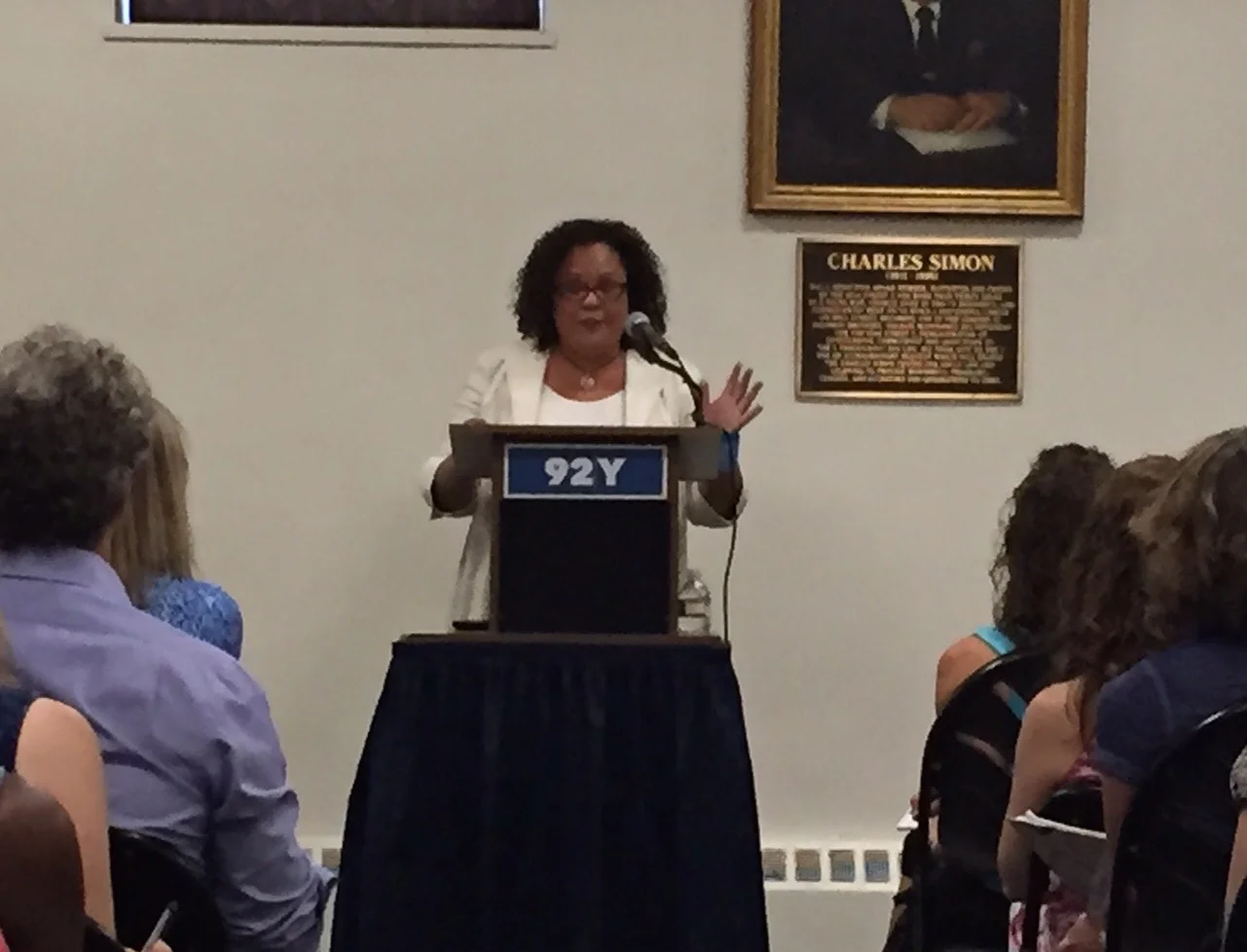
I mentioned to y'all that while in New York a couple weeks back, Shawn and I went to hear a former colleague of his, Julie Lythcott-Haims, present her new book, How to Raise an Adult. Julie is an impressive woman in many respects -Stanford undergrad, Stanford Law, lawyer, Dean of Freshman at Stanford, Obama for America volunteer, writer, TedX speaker. I really enjoyed her straightforward, warm personality, and have continued to think deeply about all she discussed.

Julie wrote this book after witnessing, during her professional tenure at Stanford, what can only be called a devolution: teenagers who arrived at college not as young adults but as kids; people more impressive on paper than in person; people who seemed less attuned to any budding sense of self than to their parents mapping their paths for them.

This was at Stanford, one of the most elite and competitive universities in the world. Arguably, these kids were those who’d most successfully navigated and completed the college admissions gauntlet our educational system presents: be the best at every turn, from the earliest age, and maybe you’ll be rewarded with a spot at a top-tier school.

And yet, what few until recently have stopped to ask is: At what cost?

In Julie's words, "when I spoke to the freshmen, they could tell me what they'd done but not why they'd done it...Chronologically, they were adults but they were largely incapable of fending for themselves...I began to wonder why childhoods were no longer preparing kids to be grown-ups. And what is getting in the way of people becoming who they really are?"

Let me be clear that Julie’s tone was not one of judgment but of concern. And, as a mother who’d found herself cutting her ten-year-old’s meat for him at dinner one night, also one of understanding. Too, as you probably suspect and as she stated, this is largely a middle- and upper-middle class phenomenon.

Julie noticed a dramatic increase over time of parents who brought their kids to college, helped them move in and settle, but then stayed -literally or virtually. And the kids were grateful. They didn’t want their parents to leave.

She recalled advising sessions during which students’ phones would ring multiple times, regularly they’d glance at the screen, say “Oh, it’s my Mom, do you mind if I take this?” and sometimes conference the parent in.

She described walking around campus and hearing students talking to their parents, often for the second or third or fourth time that day.

She started to see that helicopter parenting wasn’t just producing overly-scheduled, highly-accomplished people but also somewhat stunted kids who didn’t seem to know how to be their own selves, how to discover what made them tick, how to move through life independently.

Julie’s overarching concern is, as she said, “for humans:” for people who know who they are and can live authentically; who are tapped into their own minds and souls; who can embrace life as individuals rather than somewhat fearful automatons.

We have gotten to this “existentially impotent” state not out of neglect or lack of concern but because we parents are all trying so hard to do so right by our kids: “It’s part of the evolution of our love from umbilicus to our arms, from our breast to our early applause.”

But again, the questions: At what cost? To our kids? To ourselves?

*****

I still so clearly remember Jack’s first foray into team sports. He was almost three, and Oliver was a newborn. I signed Jack up for tot soccer, despite his protestations, because I thought it’d be nice for all of us to spend some time outdoors and for him to experience a group activity.

We gussied him in tiny shin guards and a cap (I did draw the line at cleats; no expensive cleats for two-year old soccer!) and bought a small, shiny ball pumped just so. Like Ferdinand under his cork tree, Jack proceeded to spend every practice in the backfield, picking flowers and identifying weeds instead of running laps and doing drills. I’m not sure he ever kicked his pretty ball.

I happened to find this all extremely dear and, never much of an athlete myself, didn’t care that he was not cottoning to soccer. He had tried to tell me that he wasn’t interested, yes?

When the “season” ended and the team leaders wanted to order trophies for the kids, I declined. The response, a subtle sucking-in of the breath, a vague grimace, surprised eyes, made me pause.

Jack had not played soccer, had not seemed to enjoy or even be interested in soccer, and so, in my opinion, did not deserve a soccer trophy. It made sense to me, but boy did I feel on the loser end of things. That sense of judgment  -I was the only one to say no- was an interesting pill to swallow.

It also showed me that ignoring the Joneses can take a lot of determination, especially in certain environments.

*****

I’ve thought about that soccer trophy many times in the nearly six years since and about praise in general. “What’s the end goal?” I ask myself. "What character traits might I instill by bestowing undeserved finery and zealous acclaim? What message would I send my kids if I disregarded their innate interests in favor of my own? Don't I want them to feel the power of their own agency?"

When we do what others do, either out of a desire to keep up or to avoid disadvantaging our children in any way, without stopping to think about the long-term consequences, we might later rue them. Even if the ramifications come from nothing more than sincerely having loved our kids so very much. Which is certainly where the praise comes in.

Oliver has to work hard to read, and Jack struggles with the process of getting his many thoughts from brain to paper. Those are the efforts that truly deserve parental help and praise. Where many of us get tangled is in generously praising or overly assisting that which doesn’t warrant it; the things kids can do on their own and should. Or the things they don't do, a la tot soccer.

When I think about the times in my own life when I learned the most, when I really glimpsed a piece of my truest self, when I figured out how to access that and unearth more, I see that they were all times in which I was alone in the struggle but could call upon the support I’d always had: I’d been given a great foundation but was then left to forge my own path.

So why wouldn’t I want to do the same for my kids? What does it teach them if I willingly decide for them, clean up after them, take away their chances to fall and fail and pick themselves up? 

I can do better in all these departments, and since hearing Julie speak, I've tried hard to backpedal the empty praise some, to remind the kids that doing things for their own pleasure is more important than mine (drawing a picture should make them happy; if I'm happy with it, that's great but shouldn't be the goal.), and to verbalize clearly that what I hope for them is that they find what makes them feel alive.

*****

One of the best gifts my parents gave me was saying, when I expressed my plan to change my major from environmental science to comparative religion, "That is SO cool." They didn't worry about how I'd support myself (or at least they didn't say that), they didn't say, "Hmm, that's odd. Are you sure?" They simply said, "That is SO cool." They said the same to my sister who majored in Acting and minored in Italian.

What that really acknowledged was a respect for the true passions we discovered and a belief in what we'd do by virtue of that. 

I carry all these things with me as I raise my kids, and they have coalesced into:

  • a total commitment to teaching the boys to listen to their own hearts;
  • a total commitment to not judging them for who and what those hearts are;
  • a strong belief that I can't ensure that they'll always be happy but I can help them discover the best ways to find that for themselves;
  • a strong belief that if they are always valued for the individuals they are, happiness is more likely to follow;
  • and a desire to have them emerge from my eighteen-year womb as whole people who do not want me to move to their college town with them.

Do I expect that they'll try hard and do their best? Yes. But their best isn't mine and ultimately, their lives aren't mine either. I hope this means I'm raising adults. I think Mrs. Lythcott-Haims might say I'm decently on my way.

Straddling two selves

Many who attended and relished #BlogHer15 are writing now of reentry. Of recovering from the fatigue of being "on" during the conference (even though we certainly wanted to be just that) and dealing with long trips home. Of feeling somewhat misplaced, no longer in a community in which there is a sort of shorthand and a great deal of acceptance and understanding.

In one of her summations, I think my friend, Alexandra Rosas of Good Day Regular People, said it best: "You don't want who you are when there, to disappear again."

I am lucky to have many good friends and a family with whom I am close. I belong to two writing groups that nourish me, and as an at-home mom, well, suffice it to say that I'm not lacking in the quality-time-with-my-children department. I'm active in my community, and I feel I give back regularly to it. And, my cat. Enough said.

So what's tugging at my heart right now? What feels slightly off-kilter even in the midst of all this richness?

It's that the "me" I am when I'm there doesn't often feel possible when I'm here. In the three days since I returned home, I've felt the there me constrict dramatically. It's visceral at times, the sense of being pushed and pulled from a large room in which I bloom and breathe easily into a tiny one, down the hall and to the left, in which the air must now be shared by many. The sense of disappearing.

In that cramped chamber, as I make lunch and ice bruises and listen to that infernal Gummy Bear song, I hurriedly scribble ideas and desires onto any bit of paper I can find, hoping that when finally –but when?- I unearth them once more, they will still mean something. That I will be able to summon the spark of creativity, of insight, of depth that birthed them and find the time to lay hand on pen, pen on page. That I will tease from my clues, the message I wanted to share.

In many ways what is powerful about doing things like attending conferences is that it legitimates claiming time and space. "I'm registering, paying, traveling and will be learning" feels valid in a way that "Kids, I'm gonna go write for a while now. Cheerio!" sometimes doesn't. I think it should, but it just doesn't. 

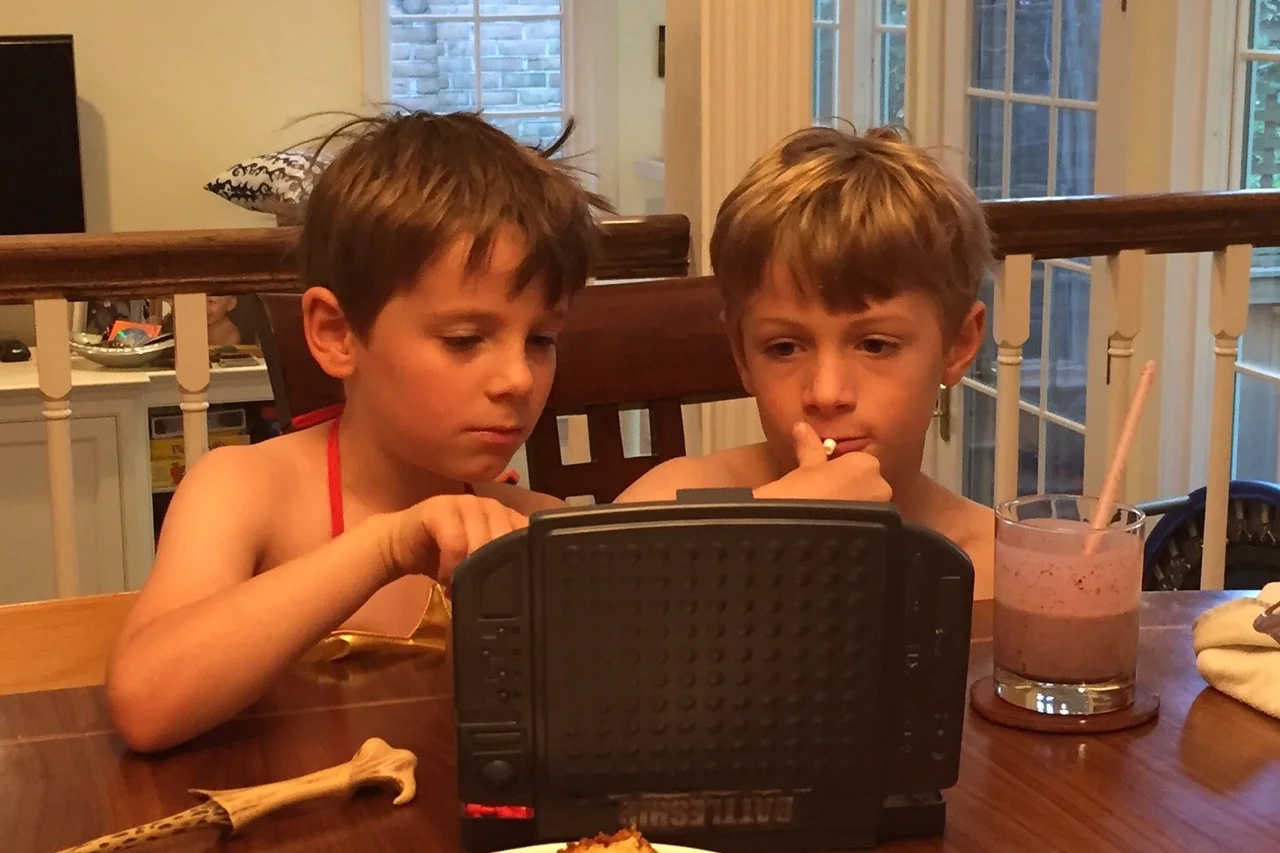
Nor is it all that feasible. I don't know many parents whose kids truly entertain themselves for hours on end, even if they're allowed to go full zombie with a screen. Something will run out of batteries, someone will fall, a fight over Legos will surely ensue, never-ending hunger will need to be fed. Likewise, I'm an at-home parent for a reason: to stew in the wonder of loving, tending, guiding and remembering. And, apparently, to be beaten in Battleship by these two kiddos. 

Please note that Oliver is dressed as wonder woman but also has voldemort's wand within easy reach. he is always both sides of the coin. hah!

Please note that Oliver is dressed as wonder woman but also has voldemort's wand within easy reach. he is always both sides of the coin. hah!

It takes time to really think through something and then craft a piece about it. It takes time to consciously read a good book or magazine, to ingest the words rather than skimming them so distractedly that they never enter one ear, much less leave the other. It's lovely to cook a dish without worrying if I inadvertently added a cup of salt instead of flour because I was also filming a Magna-Tile explosion. 

Alone time is any parent's rarest commodity. But it is in that time that I not only remember who but also pursue and refine all that I am beyond Mom, and so it is especially precious. 

My mother asked what my favorite part of Big Boy Week was (the annual week that the boys spend in Louisiana with her and my dad). Without hesitation, I said, "the luxury of being on no schedule. Of being able to be spontaneous. Of being able to let responsibility go. Of being able to open myself up to myself, and to see where that takes me."

I love my children with something that must approximate feral instinct. And yet.

Like a brilliant, low-slung moon sinking too quickly into the horizon, I feel there me receding into the folds of memory. Even though I wouldn't trade the sources of this dilemma for the world, the frizzled middle sometimes feels agonizing. How to live in both worlds, as a friend wondered. How indeed.