
Evenings with Ta-Nehisi Coates and Ruth Reichl

I love living in a city that teems with cultural opportunities. This past week felt especially rich, and although I cannot wait, literally, to go to bed tonight, the fatigue is worth it.

On Wednesday, not two hours after traffic mayhem, swimming lessons, gobbling pizza, hopping the Metro and arriving in Chinatown, I made it to the historic Sixth & I synagogue where an energetic line stood waiting for the doors to open, 

I took my seat, the closest to the dais I've ever had at Sixth & I, and took in the effervescent buzz of anticipation around me. Ta-Nehisi Coates was soon to take the stage.

Have you read any of Coates' work? He writes for The Atlantic (The Case For Reparations was an incredibly journalistic accomplishment; The Black Family in the Age of Mass Incarceration is in the Oct 2015 issue), has been published in the New York Times and has written two books. Between the World and Me is on the short list for the 2015 National Book Award, and Coates was just awarded a MacArthur Fellows grant.
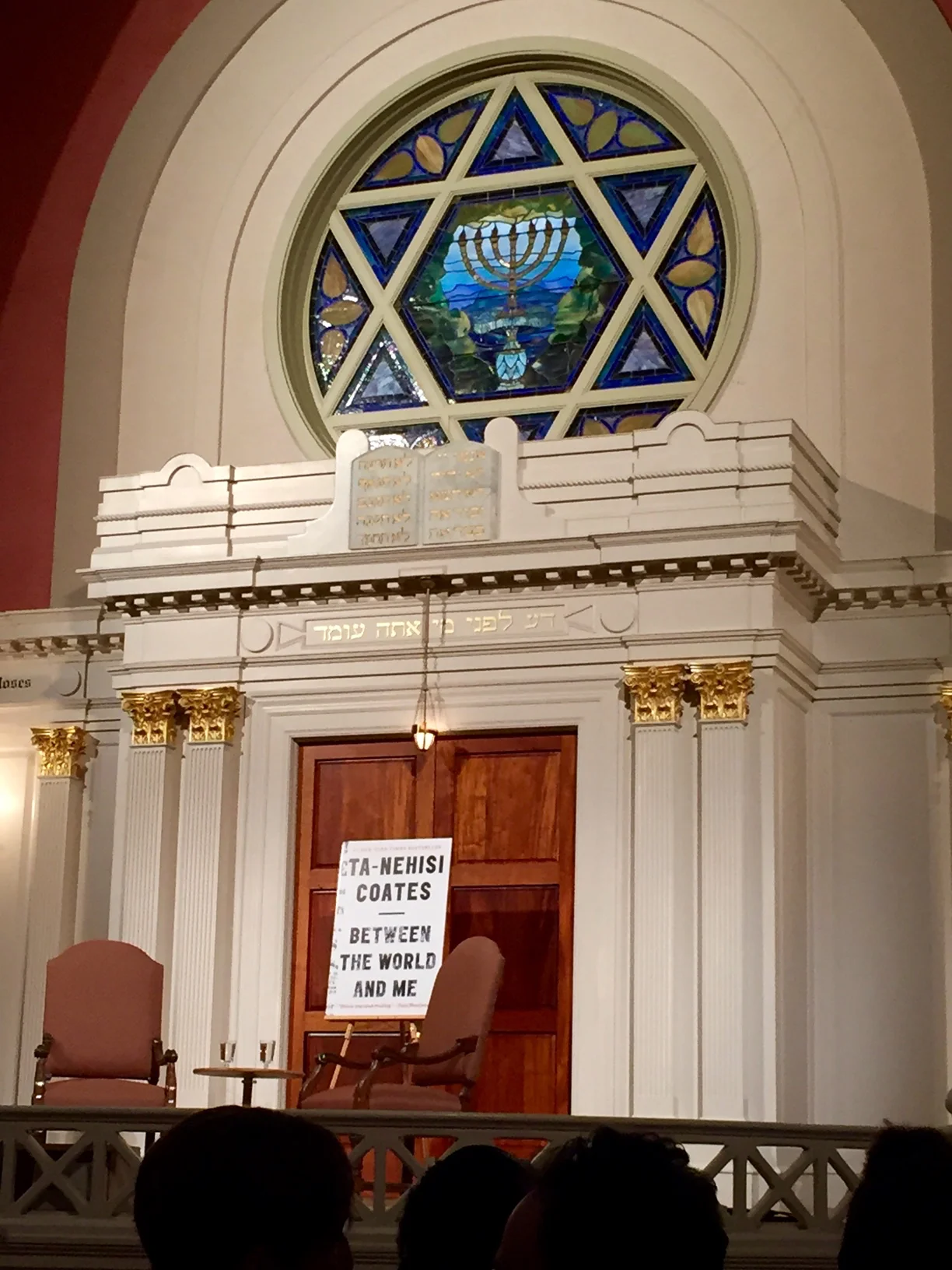
Wednesday's talk was part of his book tour for Between the World and Me, his recently published letter to his son about the history and present of being black in America. Of blacks never having had full access to what Coates calls The Dream.

It is perfect houses with nice lawns. It is Memorial Day cookouts, block associations, and driveways. The Dream is treehouses and the Cub Scouts. The Dream smells like peppermint but tastes like strawberry shortcake. And for so long I have wanted to escape into the Dream, to fold my country over my head like a blanket. But this has never been an option because the Dream rests on our backs, the bedding made from our bodies.

The letter is, as he said in an interview, a literary construct, but Coates told us that he tried to be as unsparing in this book as he is when speaking with his son. Which is to say, brutally candid about his perspectives and confusion and fears, for blacks, America and his boy. 

He feels that in doing so, real trust is built, and I agree. He has a presence and authority that comes from mincing no words and buttressing his arguments with research and facts. 

Coates grew up in Baltimore. Looking back, after college at Howard University -which he credits as the watershed experience of his life- he believes it wasn't rage or violence that really explains all he saw and witnessed on his childhood streets. It was fear. 

Not being violent enough could cost me my body. Being too violent could cost me my body. We could not get out. I was a capable boy, intelligent, well-liked, but powerfully afraid. And I felt, vaguely, wordlessly, that for a child to be marked off for such a life, to be forced to live in fear was a great injustice. 

Coates' writing is so powerful. In print he often seems a hyper-intellectual firebrand. I love reading his work and admire him tremendously, but I wasn't sure what his in-real-life presence would be like. Would he seem prickly?
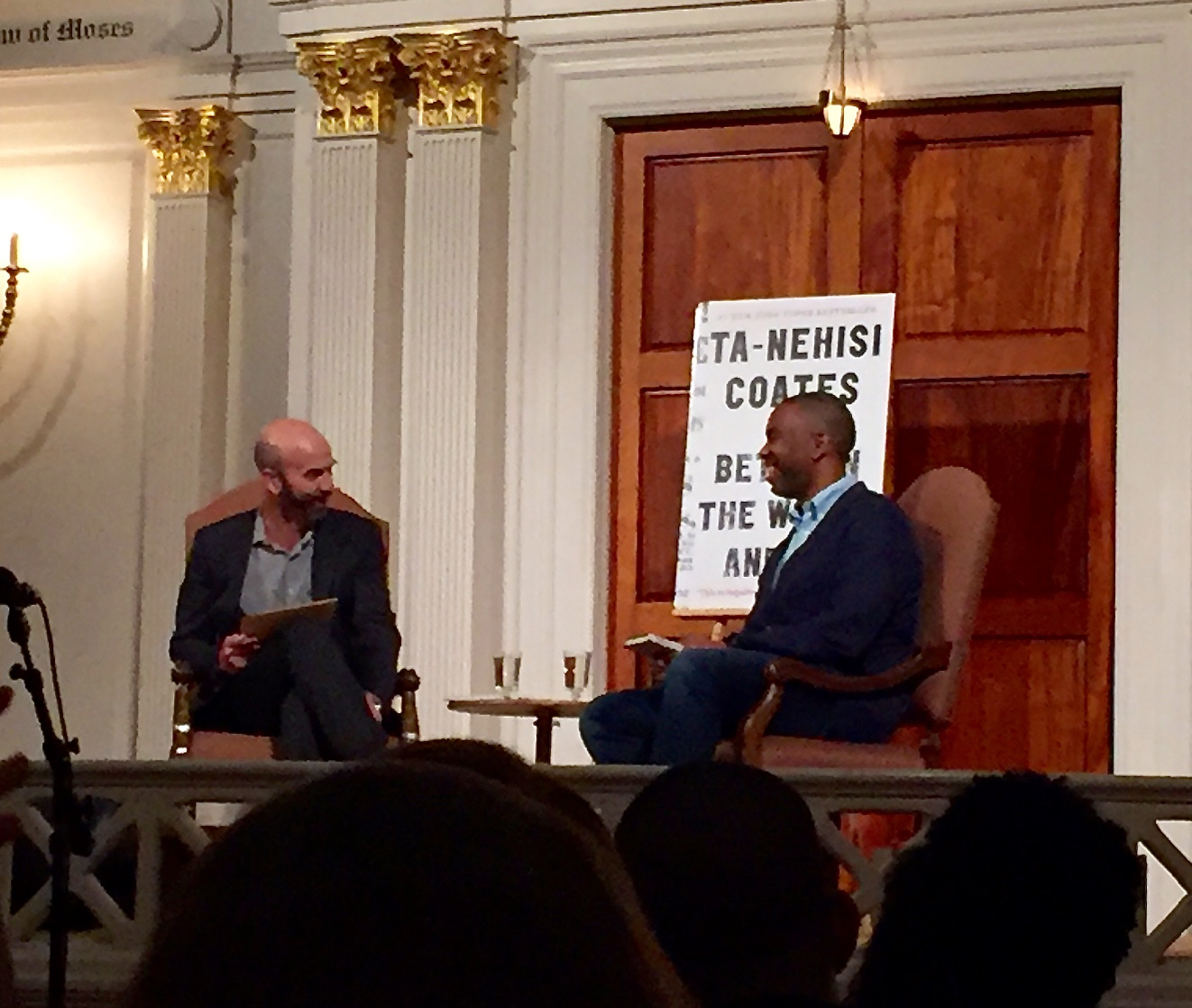
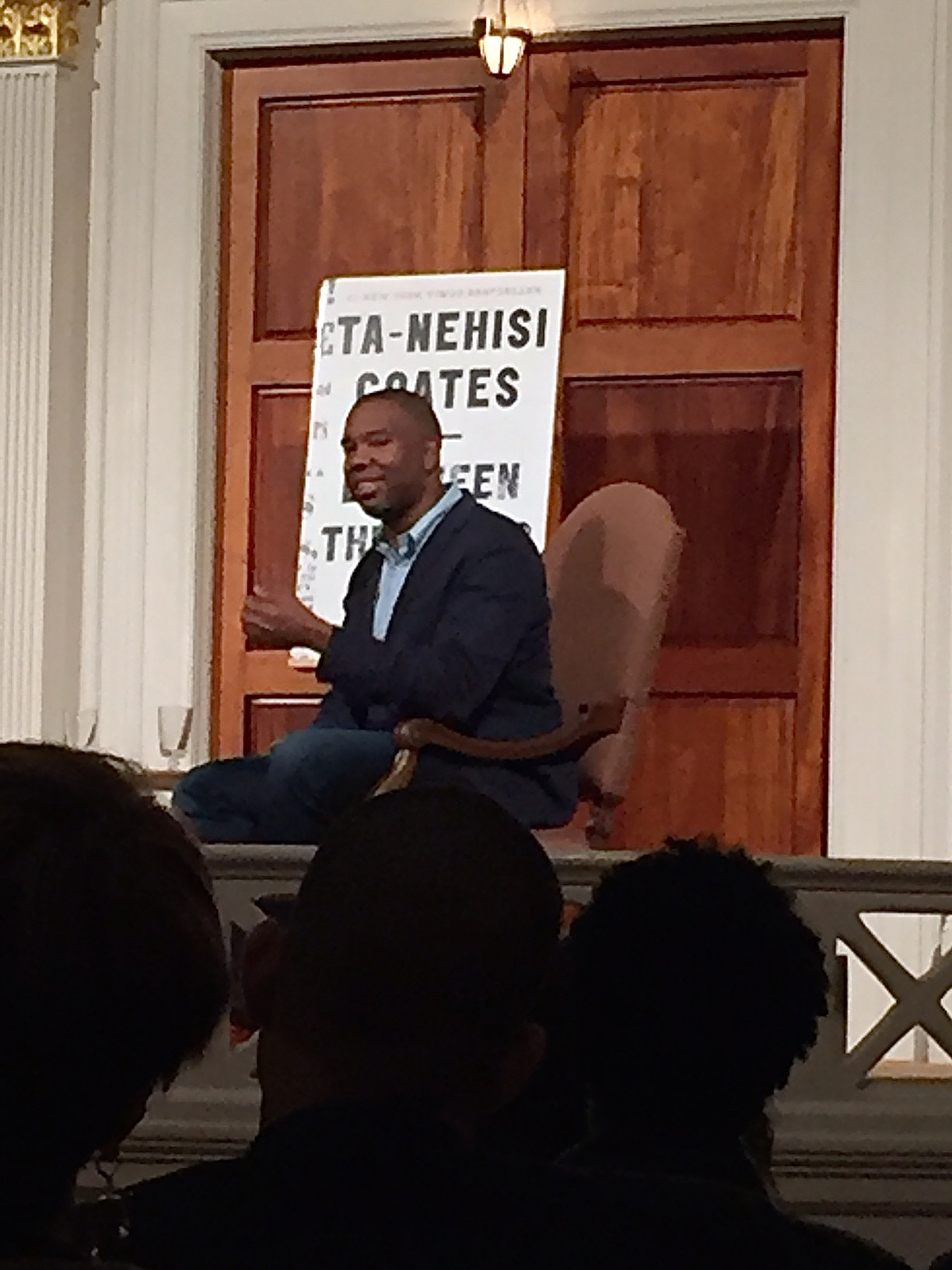
Not in the least. He is totally charming, affable, funny, warm, at ease and so very bright. I laughed, was brought to tears, and found myself repeatedly nodding my head in agreement or disbelief. It was an important night for me, and I enjoyed myself tremendously.

*******

Last night, T and I joined friends at Buck's Fishing and Camping (same place the Gabrielle Hamilton dinner was held; remember? I asked a three-part question!) for a dinner celebrating the release of Ruth Reichl's new cookbook/memoir, My Kitchen Year.
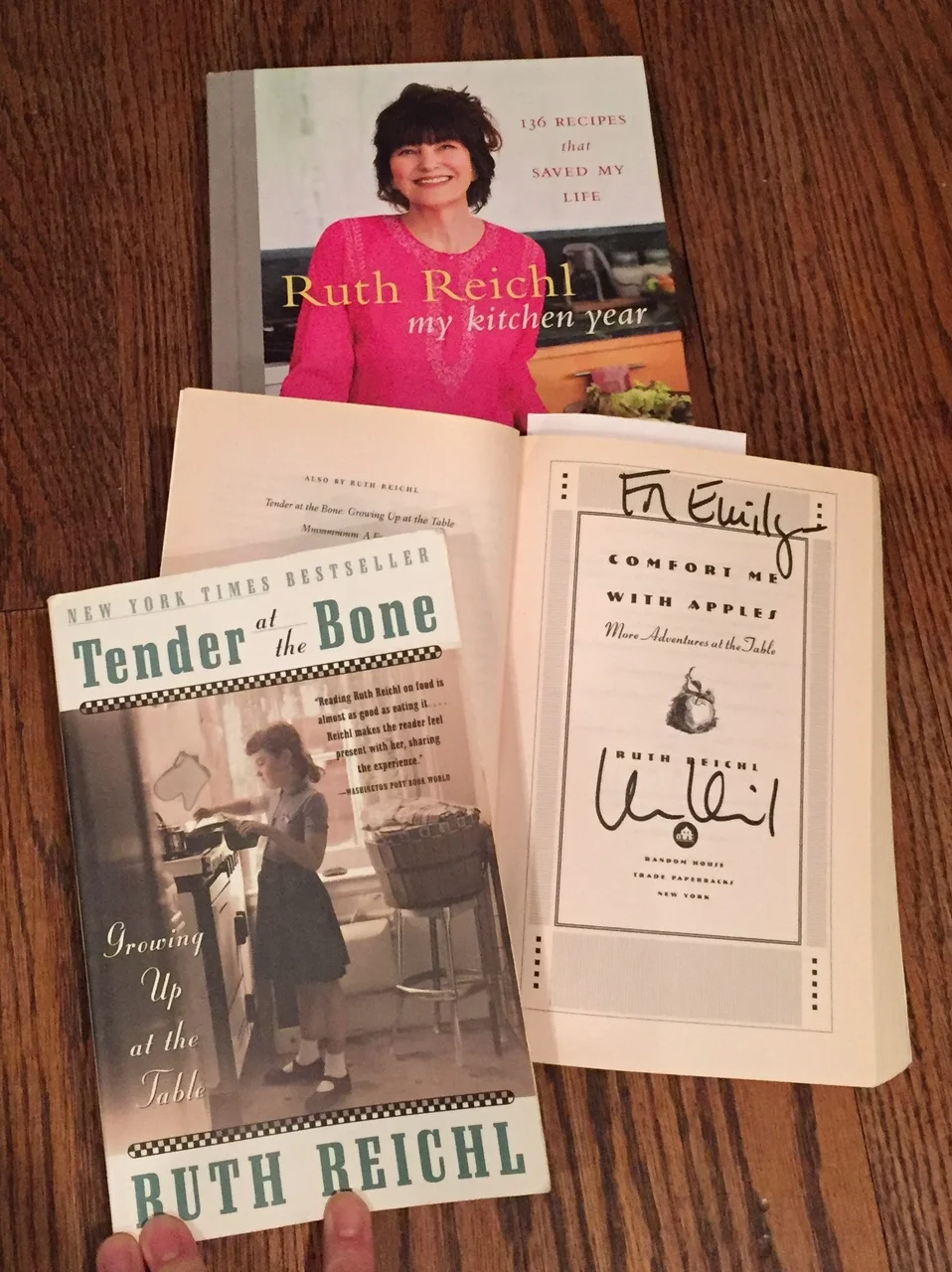
Long, long ago, I read two of Reichl's memoirs, Tender at the Bone and Comfort Me With Apples. I can hardly remember the details, but I remember feeling enveloped by her stories, her writing, the way she wrote about childhood, adulthood, food.

I thought she was a marvelous editor at Gourmet and loved her emphasis on publishing long-form food writing. Real, substantive, literary work. When Conde Nast suddenly and unceremoniously shuttered the magazine's doors in 2009, I was both surprised and deeply disappointed. At that time, Reichl was 62, and couldn't recall the last time she hadn't had a job. What was her identity without one?

She did what she'd always done when stressed or sad. She went to her kitchen and cooked. My Kitchen Year is the result. It's a simply presented book, 136 recipes dancing with stretches of Reichl's effortless prose. You feel you can make these recipes and do so successfully, and I believe that's Reichl's aim.

She wants people back in the kitchen because she knows what transpires when one cooks to nourish oneself and others. It's something along the lines of healing. At least it was for her. 

Of course I asked a question, which was along the lines of the place and future of food memoir in a time that often prefers soundbites, and later got to sit by Ruth for a while. She was gracious and lovely and signed not only my copy of My Kitchen Year but also the old paperback copies of Tender at the Bone and Comfort Me With Apples I'd pulled from my 'favorites' shelf as I ran out the door.
Under the gloss

For the past several months, the color of our basement bathroom's walls has made me feel peevish. I get a burr in my butt every time I go in there.

The lovely shade of green I once found peaceful and whose name, Sweet Caroline, I continue to adore, lately smacks of institutional hallways in need of scrubbing and better lighting. 

On Tuesday, Jack stayed home with an upset stomach, and during our hours together, I began outlining the dingy green room with thick strips of bright blue painter's tape. Pull, rip, align and press. Pull, rip, align and press. And on and on, in fits and starts, long strips and short ones, around the corners and up and down.

Yesterday, I finished the first coat of Smoke Embers plus 25%, a soothing dove gray. Already I feel the burrs slinking away.

I love to paint walls, or any flat expanse really. There before me lies the proverbial empty canvas, ready to be given new life with little more than a clean brush and a freshly shaken gallon.

Up and down I roll the brush, pausing only to dip it in more paint or check for spots I’ve missed. It’s meditation in action. Not only is a room transformed, colored anew with promise, but so too is my mind, blissfully unfettered now from having focused on just one repetitive task for the unknown number of minutes that have swept by.

This sort of focus, on a basic job that requires concentration but little other effort, allows me to both lose myself and remain present. My subconscious mind can flit and flutter, processing all manner of idea and query on which I may have been noodling.

During the brief, intimate time I spend with the walls, I see cracks and imperfections that I didn’t before. I run my fingers over slightly protruding nails, the drips and scuffs, the unknown gunk that landed on the surface one day and decided to stick.

It's not a perfect plane underneath an aging coat of shine but rather an imperfect thing that's been added to and taken from over the years. It has supported and weathered, been asked to hide and also to bare itself completely. I like being reminded of this. I like knowing these walls better.

The walls are much like people really, even those who seem glossy and impervious to bump or fault but who, of course, aren’t. It’s worth taking time to get to know people, and it’s worth letting people really get to know us.

In all the ways society today makes us feel more connected, I think it often does so only superficially. It’s so easy to show and share only what we want others to see; impressions more than selves. A coat of paint rather than the supporting structure.

But what’s lost is depth. History. Knowing. Being known. Being proudly unique and proudly fallible, for each of us is both original and imperfect. That’s what makes us human.

Three girlfriends came for breakfast this morning. One brought fruit, unwashed and still in the plastic clamshells, and apologized for that. Another teared up as we talked about our kids and our pride in and worries for them, and she apologized for that.

But I couldn’t have been happier because plastic clamshells and random tears are just real life slowing down long enough on a busy Friday morning to wash fruit and share a Kleenex or two with unvarnished friends. That’s what’s under gloss. No apologies needed. 


Time's determined march

Leaves are changing color and falling, but the high temperatures and humidity persist. My habanero plant is flowering again; it is confused. Summer and fall are duking it out in the final battle for seasonal primacy.

I step from my bath, dripping and thoughtful. Epsom salts and heat help my achy back, the scar on which hasn’t faded over the years as much as I’d have liked. I am prone to all manner of irregular freckles and moles; some need to be removed, while others are simply physical manifestations of my idiosyncrasies and can stay and remind me of such. 

I study my face and its newer wrinkles, my belly and hips. My eyes look tired. Things everywhere are both taut and soft, as aging bodies are wont. Thinner here, fuller there.

It occurs to me that the seasons aren’t the only things fighting for supremacy.

I used to know everyone in the school pick-up line. But during the past two years, waves of new families have reached the shore, and now, I sometimes feel slightly meek and anonymous. Friendships are being forged, over children and similarities I may never know. 

I haven’t felt that way in a long time, and I’m not sure if I like it or don’t.  

My big boy will graduate this year and move to the older campus. I think I like that but nostalgia grabs my heart and makes me unsure. I glean comfort from the fact that even if I’m then just part of the crowd, my younger one will tether me to the special place for a couple years more.

A friend writes with disbelief, “I can’t believe you volunteer at school so often.” I reply, “I love it because not only can I give back but also I can see my children as their best selves.” I had never thought about that before and am again struck by the power of writing without thinking, of responding without editing myself immediately and repeatedly.

There is a lesson there.

I awoke this morning as might a furious storm, swirling and messy and vexed. My agitation could have been for so many reasons, or none at all. I cried, and cooked. I talked to a dearest friend and kept cooking. I poured my soul into my friend and my food. And, later, into my boys.

They were both darling and not, thankful and spoiled, perfect and ugly. My mind told me to run, my heart urged me to stay. Both were right. I am no longer interested in the not-rare arguments about, for example, how much of a body one will willingly bathe. But I am inordinately grateful to be the one asked for advice and trusted with deep secrets.

Finally, the pregnant skies have opened, releasing their watery savings with an unapologetic gush. The parched earth yawns, gratefully lapping up what is shared. Mud splatters, newly sown seeds are unmoored. Wild animals take cover, my domesticated ones snooze obliviously, comfortable and secure on blankets and in beds.

Time marches inexorably on, battling towards the future and against the past. I see it in the seasons, and on my body. In the wave of new faces and the six years that have flown by, a blip in a vast sea, since my family joined the school community we hold so dear. In my dog’s gray whiskers, and in my husband’s too. In the rain that pours down and my sons as they mature.

In the belief in tomorrow and the fresh start it holds.